Begin of page section:
Page sections:

  • Go to contents (Accesskey 1)
  • Go to position marker (Accesskey 2)
  • Go to main navigation (Accesskey 3)
  • Go to sub navigation (Accesskey 4)
  • Go to additional information (Accesskey 5)
  • Go to page settings (user/language) (Accesskey 8)
  • Go to search (Accesskey 9)

End of this page section. Go to overview of page sections

Begin of page section:
Page settings:

English en
Deutsch de
Search
Login

End of this page section. Go to overview of page sections

Begin of page section:
Search:

Search for details about Uni Graz
Close

End of this page section. Go to overview of page sections


Search

Begin of page section:
Main navigation:

Page navigation:

  • University

    University
    • About the University
    • Organisation
    • Faculties
    • Library
    • Working at University of Graz
    • Campus
    Developing solutions for the world of tomorrow - that is our mission. Our students and our researchers take on the great challenges of society and carry the knowledge out.
  • Research Profile

    Research Profile
    • Our Expertise
    • Research Questions
    • Research Portal
    • Promoting Research
    • Research Transfer
    • Ethics in Research
    • Commission for Scientific Integrity
    Scientific excellence and the courage to break new ground. Research at the University of Graz creates the foundations for making the future worth living.
  • Studies

    Studies
    • Prospective Students
    • Students
  • Community

    Community
    • International
    • Location
    • Research and Business
    • Alumni
    The University of Graz is a hub for international research and brings together scientists and business experts. Moreover, it fosters the exchange and cooperation in study and teaching.
  • Spotlight
Topics
  • Sustainable University
  • Researchers answer
  • Work for us
Close menu

End of this page section. Go to overview of page sections

Begin of page section:
You are here:

University of Graz News Schwermetall

End of this page section. Go to overview of page sections

Thursday, 16 September 2021

Schwermetall

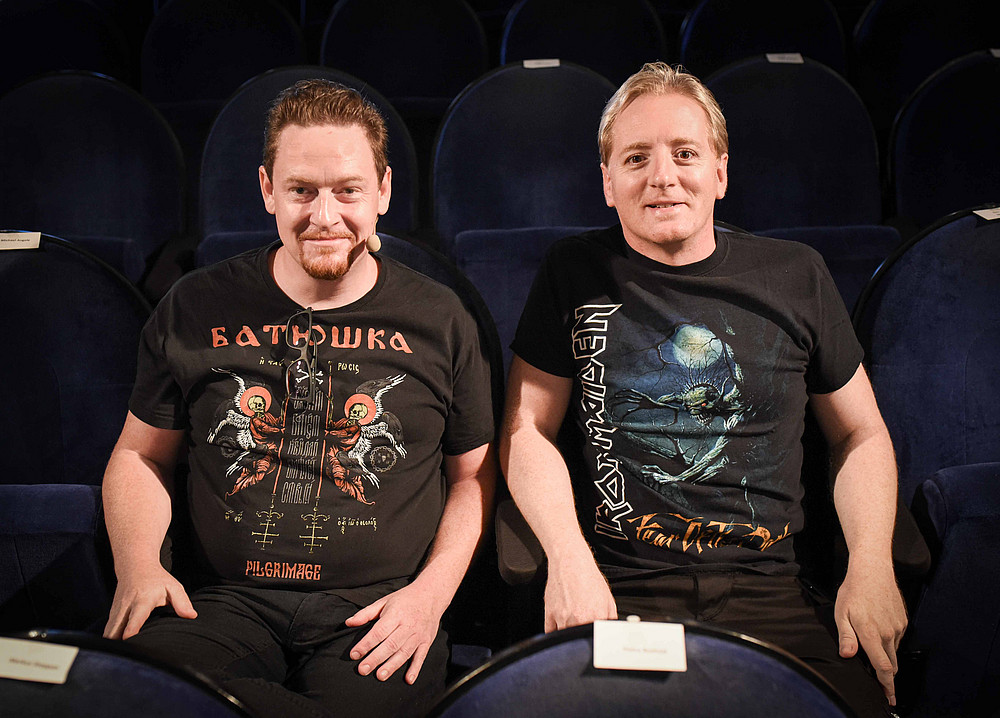
Peter Pichler (links) war diesmal zu Gast bei Fritz Treiber im Science & Cinema. Gesprächsstoff hatten die beiden Metal-Fans ausreichend, sie brachten mit Charme und Witz dem Publikum die Geschichte der Schwermetall-Musik näher. Foto: Uni Graz/Tzivanopoulos

Peter Pichler (links) war diesmal zu Gast bei Fritz Treiber im Science & Cinema. Gesprächsstoff hatten die beiden Metal-Fans ausreichend, sie brachten mit Charme und Witz dem Publikum die Geschichte der Schwermetall-Musik näher. Foto: Uni Graz/Tzivanopoulos

Religion trifft auf Rebellion: Science & Cinema entführte in die wilde Welt der Heavy Metal-Musik

666 is the Number of the Beast: Mit dem Refrain des gleichnamigen Liedes und Albums setzte die britische Heavy Metal-Band Iron Maiden 1982 einen Meilenstein. Die Bedeutung der Zahl Sechshundertsechsundsechzig ist für Metal-Fans bildhaft – in der biblischen Auslegung der Offenbarung des Johannes wird sie mit der Zahl des Tieres und des Antichristen, sprich des Teufels, interpretiert. „Der Antichrist als Gegenspieler Jesu Christi ist ein zentrales Motiv in unterschiedlichen Ausprägungen der Musikrichtung. Von Thrash bis Black Metal“, weiß Peter Pichler. „Rebellion gegen die Religion sozusagen.“ Der Historiker und Kulturwissenschafter war am 15. September zu Gast beim Uni-Graz-Format Science & Cinema. Gemeinsam mit Moderator und Metalhead Fritz Treiber analysierte Pichler im Filmzentrum Rechbauer Filmausschnitte aus bekannten und weniger bekannten Heavy Metal-Streifen und Dokumentationen. Dabei wurden auch die Ursprünge dieser Musikrichtung definiert: „Sie finden sich im Blues, bei Johann Sebastian Bach, aber auch in den großen Konzertwerken von Richard Wagner wieder“, weiß Pichler. Black Sabbath war, sind sich die Experten einig, wohl die erste Band, die „teuflische“ Riffs auf der Gitarre umsetzten, das Fundament legten und so als Begründer des Metals gelten.
 

Schwermetall ist zweifelsohne seit Jahrzehnten sowohl eine der stabilsten und homogensten als auch eine der am wenigsten beachteten kulturellen Formationen. Generationen von Menschen aller Altersgruppen folgen der Musik, verehren ihre Idole von Black Sabbath, Dio, Motörhead, Metallica, Megadeath, Judas Priest oder Iron Maiden. Jüngst beschäftigt sich auch die Wissenschaft mit dem Thema. Dazu arbeitet auch Pichler im FwF-Projekt „Breaking the Law...?! Normenbezogenes klangliches Wissen in der Heavy-Metal-Kultur. Graz und die Steiermark, 1980 bis zur Gegenwart“. Er durchleuchtet die historische Rolle von Vorstellungen von Recht- und Rechtsbruch sowie der Einstellung in dieser Subkultur zu (Rechts-)Normen.
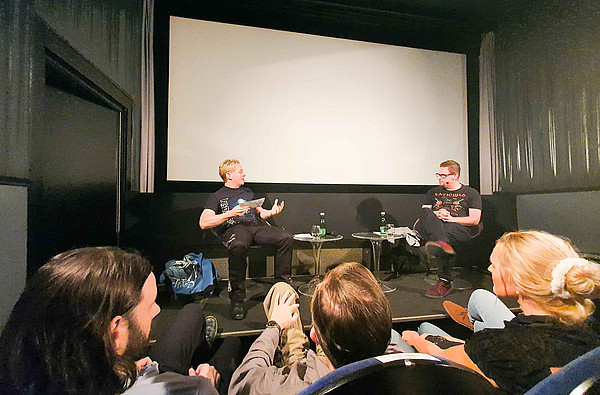
Voller Saal im Rechbauerkino. Foto: Uni Graz/Tzivanopoulos
created by Konstantin Tzivanopoulos

Related news

Climate at the cliffs: Researchers unravel the evolution of the Greenland ice margin

Vertical ice walls, up to 40 metres high: in "Game of Thrones" they were dramatised as fortifications; during the Cold War, they were studied with great interest. How these imposing walls along Greenland’s 80,000-kilometre-long ice margin formed, how they are evolving, and what impact they have on the climate is not yet fully understood. Researchers from the Universities of Graz and Innsbruck have come one step closer to solving the mystery. The results of their latest study have been published in the journal The Cryosphere.

Achieving climate goals: Researchers highlight need for fair country shares in CO2

As the war in the Middle East is currently reminding us once again, many countries around the world are heavily reliant on oil and gas. Lax climate policy and limited options for removing CO₂ from the atmosphere could cement this dependence for future generations. Scientists at the University of Graz highlight this danger in a new study published in the journal Global Environmental Change. They find that rights to carbon dioxide removal should be distributed across countries just as fairly as emission budgets in order to halt global warming.

Electrons and AI: New approaches to the search for new medicines

Researchers at the University of Graz are revolutionising the development of new medicines by combining electrochemistry and artificial intelligence. Thanks to smart optimisation, the search for new active ingredients will in future be faster, more sustainable and safer.

Film und Fakten im Freien: Uni Graz lädt zu Open-Air-Kino am Campus

Der Innenhof des Uni-Graz-Hauptgebäudes wird vom 1. bis 12. September 2025 (montags bis freitags) zum stimmungsvollen Kinosaal. Nach Blockbustern wie „Top Gun: Maverick" und „Fack Ju Göthe" in der ersten September-Woche führen in der zweiten Woche bei zwei Filmen Wissenschaftler:innen Regie. Sie werfen auf „Konklave" und „Gladiator II" einen fachkundigen Blick: Was ist Fiktion? Was ist Fakt? Den wissenschaftlichen Vorspann moderiert Fritz Treiber, Molekularbiologe und Ernährungsexperte der ORF-Sendung „Studio 2“.

Begin of page section:
Additional information:

University of Graz
Universitaetsplatz 3
8010 Graz
Austria
  • Contact
  • Web Editors
  • Moodle
  • UNIGRAZonline
  • Imprint
  • Data Protection Declaration
  • Accessibility Declaration
Weatherstation
Uni Graz

End of this page section. Go to overview of page sections

End of this page section. Go to overview of page sections

Begin of page section:

End of this page section. Go to overview of page sections