Begin of page section:
Page sections:

  • Go to contents (Accesskey 1)
  • Go to position marker (Accesskey 2)
  • Go to main navigation (Accesskey 3)
  • Go to sub navigation (Accesskey 4)
  • Go to additional information (Accesskey 5)
  • Go to page settings (user/language) (Accesskey 8)
  • Go to search (Accesskey 9)

End of this page section. Go to overview of page sections

Begin of page section:
Page settings:

English en
Deutsch de
Search
Login

End of this page section. Go to overview of page sections

Begin of page section:
Search:

Search for details about Uni Graz
Close

End of this page section. Go to overview of page sections


Search

Begin of page section:
Main navigation:

Page navigation:

  • University

    University
    • About the University
    • Organisation
    • Faculties
    • Library
    • Working at University of Graz
    • Campus
    Developing solutions for the world of tomorrow - that is our mission. Our students and our researchers take on the great challenges of society and carry the knowledge out.
  • Research Profile

    Research Profile
    • Our Expertise
    • Research Questions
    • Research Portal
    • Promoting Research
    • Research Transfer
    • Ethics in Research
    Scientific excellence and the courage to break new ground. Research at the University of Graz creates the foundations for making the future worth living.
  • Studies

    Studies
    • Prospective Students
    • Students
  • Community

    Community
    • International
    • Location
    • Research and Business
    • Alumni
    The University of Graz is a hub for international research and brings together scientists and business experts. Moreover, it fosters the exchange and cooperation in study and teaching.
  • Spotlight
Topics
  • Our digital Advent calendar
  • Sustainable University
  • Researchers answer
  • Work for us
Close menu

End of this page section. Go to overview of page sections

Begin of page section:
You are here:

University of Graz News Schnee-Geschichte

End of this page section. Go to overview of page sections

Tuesday, 14 February 2023

Schnee-Geschichte

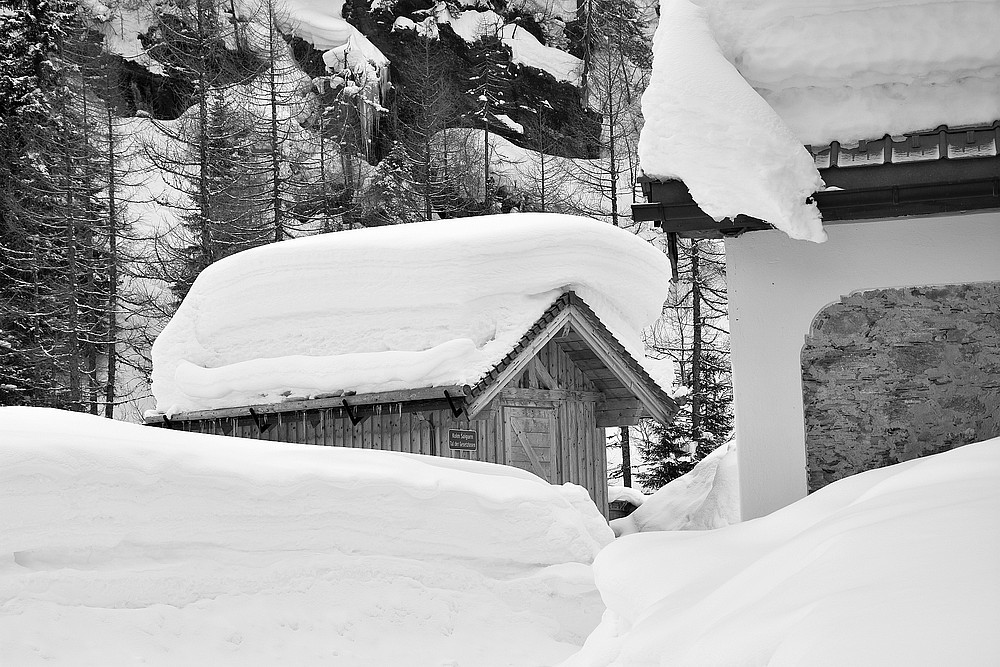
tief verschneite Hütte in Kolm-Saigurn ©Jakob Schoener

Auch Fotos können Wetterdaten liefern: eine Aufnahme aus dem Jahr 2018 vom Winter im salzburgischen Kolm-Saigurn am Fuße des Sonnblick; Foto: Schöner

Uni Graz erhebt mit Hilfe von Schüler:innen historische Wetterdaten

Bilder von Kunstschneepisten auf grünen Wiesen sind diese Saison um die Welt gegangen. Trotz der jüngsten Niederschläge erleben wir einen der wärmsten Winter seit Beginn der Aufzeichnungen. Abseits der Alpen – etwa in Grönland – wurde die weiße Pracht in den letzten 150 Jahren allerdings lückenhaft erfasst. Anhand von privaten Fotos und Postkarten aus früheren Jahrzehnten möchte Wolfgang Schöner, Klimaforscher an der Universität Graz, fehlende Daten ein Stück weit rekonstruieren, und zwar gemeinsam mit Schüler:innen aus Eisenerz und Grönland. „Die Kinder können praktisch arbeiten, auch selbst aktuelle Schneehöhen messen, und bekommen dadurch ein besseres Verständnis für den Einfluss der Klimaveränderungen auf das Leben der Menschen. Der interkulturelle Austausch ist ein zusätzlicher Nutzen“, schildert der Wissenschaftler. Er selbst kann die im Rahmen dieses Sparkling-Science-Projekts gesammelten Informationen mit den Aussagen von Klimamodellen vergleichen. „Das hilft uns, deren Simulationen insbesondere für Grönland zu überprüfen und sie gegebenenfalls zu verbessern“, ergänzt Schöner.

Niederlassung im Norden
Daten sammeln wird der Geograf auch verstärkt in Grönland. Dort ist eine Forschungsstation im Entstehen, die die Universität Graz betreiben wird. Die Lage an der Schnittstelle zwischen Meer, Gebirge, Eis und Atmosphäre ist ideal, um das Zusammenspiel von Wettergeschehen, Klima und Wasserhaushalt zu analysieren. „Klimaveränderungen in Grönland haben globale Auswirkungen und können auch unser Wetter mitbestimmen“, erklärt Schöner. Die Eröffnung der Station ist im Herbst geplant.

created by Dagmar Eklaude

Related news

Raising a Treasure Trove: Austrian Polar researchers re-calculate climate change with historical data

Ice cover and weather conditions in Greenland have a clear impact on the climate in Europe. Jakob Abermann from the Institute of Geography and Regional Sciences at the University of Graz devotes his career to studying the environmental conditions on the largest island in the world. Together with colleagues from the Know Center Graz, and the research institution GEUS, Denmark, he has now gained new insights using historical information from the legendary Alfred Wegener expedition to Greenland. Based on these data and on modern re-evaluation, this work can help understand climate change over a century. The results were published this week in the journal Scientific Reports.

Raising a Treasure Trove: Austrian Polar researchers re-calculate climate change with historical data

Ice cover and weather conditions in Greenland have a clear impact on the climate in Europe. Jakob Abermann from the Institute of Geography and Regional Sciences at the University of Graz devotes his career to studying the environmental conditions on the largest island in the world. Together with colleagues from the Know Center Graz, and the research institution GEUS, Denmark, he has now gained new insights using historical information from the legendary Alfred Wegener expedition to Greenland. Based on these data and on modern re-evaluation, this work can help understand climate change over a century. The results were published this week in the journal Scientific Reports.

Jahrhundert-Fund: Polarforscher:innen der Universität Graz berechnen Klimawandel mit alten Daten neu

Eisbedeckung und Wetterverhältnisse in Grönland haben deutliche Auswirkungen auf das Klima in Europa. Jakob Abermann vom Institut für Geographie und Raumforschung der Universität Graz befasst sich deshalb intensiv mit den Umweltbedingungen auf der größten Insel der Welt. Gemeinsam mit Kolleg:innen vom Know Center Graz und GEUS Dänemark hat er nun neue Erkenntnisse aus historischen Daten gewonnen, die unser Verständnis von Klimaänderungen verbessern können. Die Ergebnisse wurden in der Zeitschrift „Scientific Reports“ veröffentlicht.

Raising a Treasure Trove: Austrian Polar researchers re-calculate climate change with historical data

Ice and weather in Greenland have a clear impact on the climate in Europe. Jakob Abermann from the Institute of Geography and Regional Sciences at the University of Graz researches conditions on the island and has now gained new insights from historical data that can improve our understanding of climate change. The results have been published in Scientific Reports.

Begin of page section:
Additional information:

University of Graz
Universitaetsplatz 3
8010 Graz
Austria
  • Contact
  • Web Editors
  • Moodle
  • UNIGRAZonline
  • Imprint
  • Data Protection Declaration
  • Accessibility Declaration
Weatherstation
Uni Graz

End of this page section. Go to overview of page sections

End of this page section. Go to overview of page sections

Begin of page section:

End of this page section. Go to overview of page sections