Begin of page section:
Page sections:

  • Go to contents (Accesskey 1)
  • Go to position marker (Accesskey 2)
  • Go to main navigation (Accesskey 3)
  • Go to sub navigation (Accesskey 4)
  • Go to additional information (Accesskey 5)
  • Go to page settings (user/language) (Accesskey 8)
  • Go to search (Accesskey 9)

End of this page section. Go to overview of page sections

Begin of page section:
Page settings:

English en
Deutsch de
Search
Login

End of this page section. Go to overview of page sections

Begin of page section:
Search:

Search for details about Uni Graz
Close

End of this page section. Go to overview of page sections


Search

Begin of page section:
Main navigation:

Page navigation:

  • University

    University
    • About the University
    • Organisation
    • Faculties
    • Library
    • Working at University of Graz
    • Campus
    Developing solutions for the world of tomorrow - that is our mission. Our students and our researchers take on the great challenges of society and carry the knowledge out.
  • Research Profile

    Research Profile
    • Our Expertise
    • Research Questions
    • Research Portal
    • Promoting Research
    • Research Transfer
    • Ethics in Research
    • Commission for Scientific Integrity
    Scientific excellence and the courage to break new ground. Research at the University of Graz creates the foundations for making the future worth living.
  • Studies

    Studies
    • Prospective Students
    • Students
    • Welcome Weeks for First Year Students
  • Community

    Community
    • International
    • Location
    • Research and Business
    • Alumni
    The University of Graz is a hub for international research and brings together scientists and business experts. Moreover, it fosters the exchange and cooperation in study and teaching.
Topics
  • Sustainable University
  • Researchers answer
  • Work for us
Close menu

End of this page section. Go to overview of page sections

Begin of page section:
You are here:

University of Graz News Schlag auf Schlag

End of this page section. Go to overview of page sections

Thursday, 11 April 2013

Schlag auf Schlag

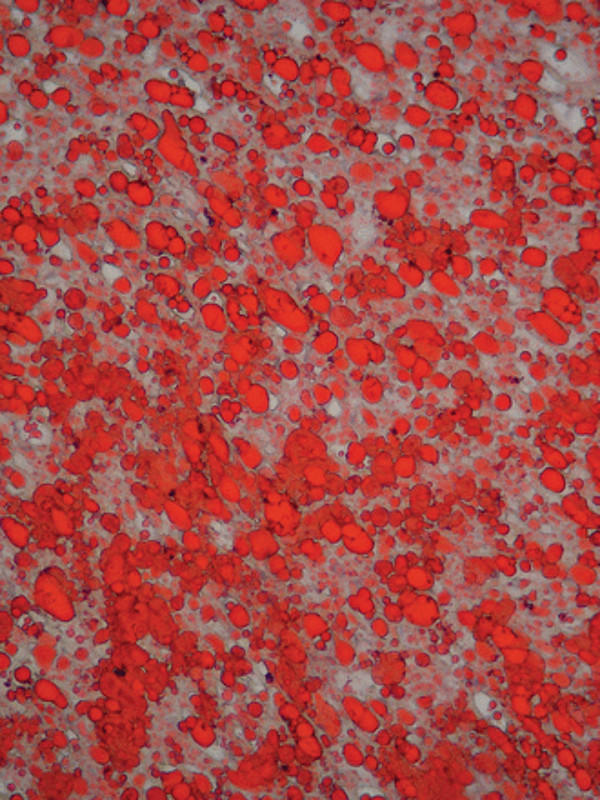
Schnittpräparat eines Herzmuskels. Da CGI-58 fehlt, kommt es zur Fettakkumulation (rot gefärbte Tröpfchen), sichtbar gemacht durch eine Färbelösung (SudanIII). Das Bild ziert auch das Cover der aktuellen Ausgabe des Journal of Biological Chemistry. F

Schnittpräparat eines Herzmuskels. Da CGI-58 fehlt, kommt es zur Fettakkumulation (rot gefärbte Tröpfchen), sichtbar gemacht durch eine Färbelösung (SudanIII). Das Bild ziert auch das Cover der aktuellen Ausgabe des Journal of Biological Chemistry. Foto: Institut für Molekulare Biowissenschaften, Uni Graz

ForscherInnen der Uni Graz entdeckten Schlüsselprotein für den Herz-Fettstoffwechsel

Ein gesundes Herz pumpt viele Jahrzehnte lang unablässig Blut durch den Körper. Dazu braucht es Energie, die es vor allem über die Fettverbrennung bekommt, sofern der Fettstoffwechsel im Herzmuskel gut funktioniert. Ist er gestört, wird das Organ krank. ForscherInnen am Institut für Molekulare Biowissenschaften der Karl-Franzens-Universität Graz untersuchen das komplexe Zusammenspiel von Enzymen beim Fettstoffwechsel. Die Arbeitsgruppe um Assoz. Univ.-Prof. Dr. Günter Hämmerle hat nun ein Schlüsselprotein für den Fettabbau entdeckt. Publiziert wurden die bahnbrechenden Erkenntnisse Anfang April 2013 im renommierten internationalen Fachmagazin „The Journal of Biological Chemistry“.


2004 sorgte Univ.-Prof. Dr. Rudolf Zechner mit seinem Team am Institut für Molekulare Biowissenschaften mit der Entdeckung der „Adipose Triglyceride Lipase“ (ATGL) als hauptverantwortliches Enzym für die Fettspaltung für Aufsehen. Jetzt kann die Arbeitsgruppe von Günter Hämmerle einen weiteren durchschlagenden Erfolg vermelden. „Wir wissen nun, dass die ATGL das Protein „Comparative Gene Identification“ – kurz CGI-58 – als Ko-Aktivator braucht, um seine Funktion erfüllen zu können“, berichtet Hämmerle. Im Rahmen ihrer Dissertation hat Mag. Kathrin A. Zierler erstmals die Bedeutung des CGI für den Fettabbau im Herzmuskel aufgeklärt.


„Die wichtigsten Energielieferanten für das Herz sind Fette, die Triglyceride. Ihr Abbau vollzieht sich in drei Stufen. Dabei werden Fettsäuren frei, die den Muskelzellen als Brennstoff dienen“, erklärt Günter Hämmerle. Fehlt das CGI, hat das die gleichen Folgen wie das Fehlen der ATGL. Der Abbauprozess kommt nicht mehr in Gang, was zu Adipositas und zur Verfettung von Organen führt. „Unsere Untersuchungen haben gezeigt, dass es ohne CGI-58 zur Herzverfettung und in der Folge zur Kardiomyopathie, einer schweren Herzmuskelerkrankung, kommt, die eine Transplantation notwendig machen würde“, so Hämmerle.


Die Forschungen der Arbeitsgruppe brachten noch eine weitere neue Erkenntnis: Das Herz speichert selbst auch Fett, das abgebaut werden muss. Damit widerlegten die Grazer ForscherInnen die bisherige Ansicht, dass die Triglyceride als Energiequelle für das Herz größtenteils von außen über das Blut geliefert würden.


Kontrollierter Fettabbau

Dass dem Abbau von Fettsäuren im Herzmuskel im Idealfall offenbar auch Schranken gesetzt werden, zeigte ein anderes Forschungsergebnis, für welches Nina Pollak, MSc hauptverantwortlich zeichnet. Die Dissertantin aus Hämmerles Team entdeckte, dass das Protein Perilipin 5 im Herzmuskel eine Barriere gegen die ATGL bildet, um vor einem unkontrollierten Abbau von Triglyceriden zu schützen. Auch diese Erkenntnisse erregten international Aufmerksamkeit. Sie wurden Anfang April 2013 im „Journal of Lipid Research“ veröffentlicht.


Publikationen:

  • Functional Cardiac Lipolysis in Mice Critically Depends on Comparative Gene Identification-58

Kathrin A. Zierler, Doris Jaeger, Nina M. Pollak, Sandra Eder, Gerald N. Rechberger, Franz P. W. Radner, Gerald Woelkart, Dagmar Kolb, Albrecht Schmidt, Manju Kumari, Karina Preiss-Landl, Burkert Pieske, Bernd Mayer, Robert Zimmermann, Achim Lass, Rudolf Zechner, Guenter Haemmerle

The Journal of Biological Chemistry 2013 288: 9892-9904. First Published on February 14, 2013, doi:10.1074/jbc.M112.420620
http://www.jbc.org/content/288/14/9892


  • Cardiac-specific overexpression of perilipin 5 provokes severe cardiac steatosis via the formation of a lipolytic barrier

Nina M. Pollak, Martina Schweiger, Doris Jaeger, Dagmar Kolb, Manju Kumari, Renate Schreiber, Stephanie Kolleritsch, Philipp Markolin, Gernot F. Grabner, Christoph Heier, Kathrin A. Zierler, Thomas Rülicke, Robert Zimmermann, Achim Lass, Rudolf Zechner, Guenter Haemmerle

Journal of Lipid Research 2013 54:(4) 1092-1102. First Published on January 23, 2013, doi:10.1194/jlr.M034710
http://www.jlr.org/content/54/4/1092
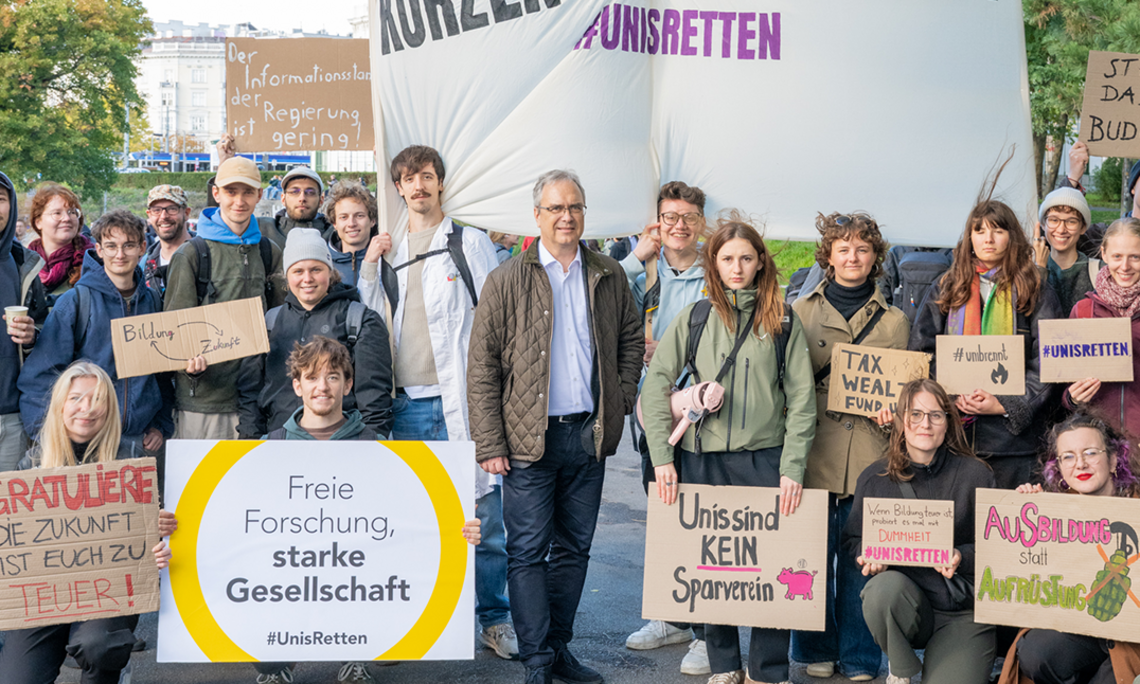

created by Gudrun Pichler

Related news

A fresh start, a calling, holidays: what draws people from other career paths to teaching

They used to develop software; now they teach maths in the classroom. Career changers are expected to help address the shortage of qualified teachers in Austria’s schools. In their doctoral theses at the Institute for Educational Research and Teacher Training at the University of Graz, Melanie Gürentz and Claudia Mair examined how these new teachers perceive their new professional roles.

Talent Talks bridge the gap in career guidance

The Styrian Chamber of Commerce (WKO Steiermark), the Styrian Chamber of Labour (AK Steiermark) and the AMS are joining forces when it comes to training young people and, through the “Talent Talks”, are creating a seamless pathway to career guidance. This takes preparation and follow-up support – just in time for the start of the term and the scheme’s tenth anniversary – to a whole new level. A new survey conducted by the Talent Centre among 2,687 former participants to mark the anniversary shows just how important this development is. Of the young people who received follow-up support from the Talent Report, 74.6 per cent stated that they had a good understanding of their own strengths and talents following the Talent Check. Without follow-up support, the figure was 66.5 per cent – a significant difference of 8.1 percentage points.

ERC Starting Grants: three million euros for two researchers at the University of Graz

Two researchers from the University of Graz have secured prestigious and generously funded grants from the EU. Starting Grants from the European Research Council (ERC), each worth 1.5 million euros, have been awarded to the human geographer Heide Bruckner and the social scientist Silvana Weiss.

Austria’s emissions rose in 2025: University of Graz researchers analyse the causes

The Environment Agency Austria has today published the figures for the country’s greenhouse gas emissions in 2025. While emissions fell sharply year on year from 2022 to 2024, they rose again by just under 0.7 per cent in 2025. Researchers at the University of Graz have analysed how much of this increase was due to structural changes in the economy and how much was attributable to external factors over which there is little control. “In 2025, the colder winter compared with 2024 increased emissions by 0.81 per cent, while the weak economy reduced them by 0.38 per cent. If we factor out these influences, we find an underlying increase of 0.26 per cent compared with the previous year,” reports economist Karl Steininger. “This clearly means that Austria is not on track to meet its climate targets, which require a substantial reduction in emissions by 2030.”

Begin of page section:
Additional information:

University of Graz
Universitaetsplatz 3
8010 Graz
Austria
  • Contact
  • Web Editors
  • Moodle
  • UNIGRAZonline
  • Imprint
  • Data Protection Declaration
  • Accessibility Declaration
Weatherstation
Uni Graz

End of this page section. Go to overview of page sections

End of this page section. Go to overview of page sections

Begin of page section:

End of this page section. Go to overview of page sections