Begin of page section:
Page sections:

  • Go to contents (Accesskey 1)
  • Go to position marker (Accesskey 2)
  • Go to main navigation (Accesskey 3)
  • Go to sub navigation (Accesskey 4)
  • Go to additional information (Accesskey 5)
  • Go to page settings (user/language) (Accesskey 8)
  • Go to search (Accesskey 9)

End of this page section. Go to overview of page sections

Begin of page section:
Page settings:

English en
Deutsch de
Search
Login

End of this page section. Go to overview of page sections

Begin of page section:
Search:

Search for details about Uni Graz
Close

End of this page section. Go to overview of page sections


Search

Begin of page section:
Main navigation:

Page navigation:

  • University

    University
    • About the University
    • Organisation
    • Faculties
    • Library
    • Working at University of Graz
    • Campus
    Developing solutions for the world of tomorrow - that is our mission. Our students and our researchers take on the great challenges of society and carry the knowledge out.
  • Research Profile

    Research Profile
    • Our Expertise
    • Research Questions
    • Research Portal
    • Promoting Research
    • Research Transfer
    • Ethics in Research
    • Commission for Scientific Integrity
    Scientific excellence and the courage to break new ground. Research at the University of Graz creates the foundations for making the future worth living.
  • Studies

    Studies
    • Prospective Students
    • Students
  • Community

    Community
    • International
    • Location
    • Research and Business
    • Alumni
    The University of Graz is a hub for international research and brings together scientists and business experts. Moreover, it fosters the exchange and cooperation in study and teaching.
Topics
  • Sustainable University
  • Researchers answer
  • Work for us
Close menu

End of this page section. Go to overview of page sections

Begin of page section:
You are here:

University of Graz News Preserving natural heritage: International student group learns in open-air laboratory

End of this page section. Go to overview of page sections

Tuesday, 30 September 2025

Preserving natural heritage: International student group learns in open-air laboratory

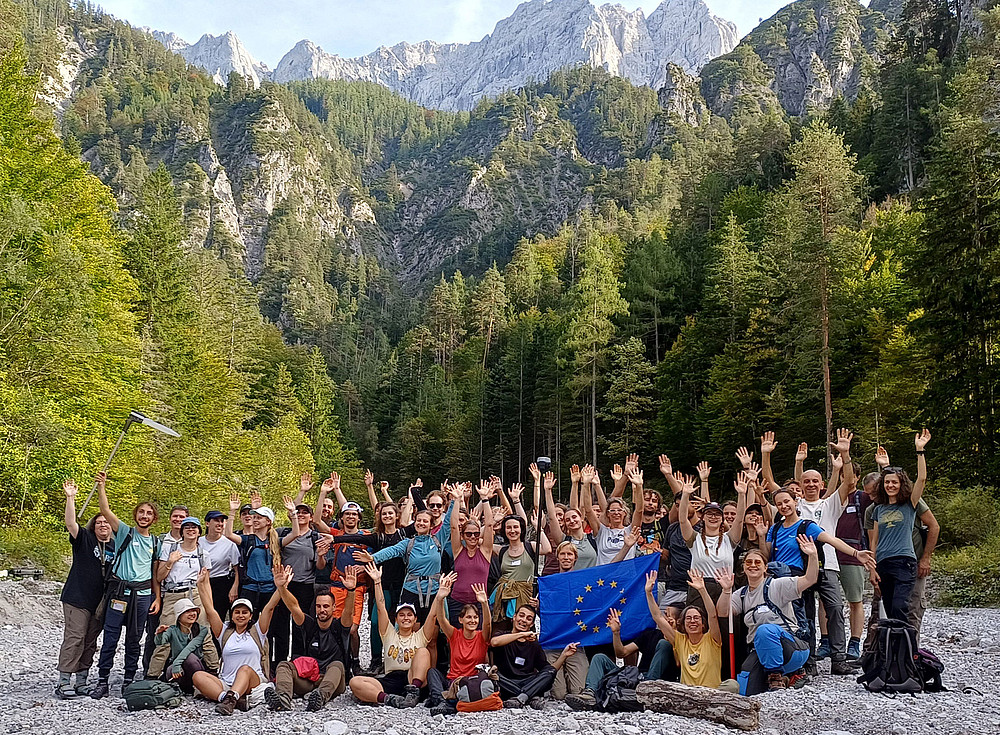
Group of students – around 50 people – in a valley, with a mountain backdrop, in the Gesäuse National Park ©Gesäuse National Park

Around 50 students from Austria, Germany and Italy took part in BestNature Field Week 2025. Photo: Gesäuse National Park

How can the age of trees be determined? Which plants grow where, and how do satellites and remote sensing sensors help with mapping? How are birdsong and forest structure related? How can I collect environmental DNA to learn about biodiversity? Students from Austria, Germany and Italy explored these and other questions last week in the Gesäuse and Kalkalpen National Parks. They collected data, evaluated it and documented the results in reports. Experts from the participating universities and national parks accompanied them.


From climate change and environmental toxins to land development, nature is exposed to many changes and threats. This makes protected areas, where humans give nature free rein, all the more important. These areas are also of interest to researchers because they allow them to observe relationships, such as those between climate change and the biodiversity of flora and fauna, ‘undisturbed’. For this reason, the University of Graz entered into a partnership with the Gesäuse National Park in Styria a little over a year ago. An international group of students has now also benefited from this collaboration. Out in the wilderness, they learned what is needed for the sustainable management of natural heritage and how management and monitoring work in protected areas.

One destination during the week-long excursion was the Johnsbach Valley, which has been the focus of intensive research for years. A dense network of measuring stations – part of the WegenerNet of the University of Graz – documents temperature, precipitation, snow and water levels there. The measurements provide an important data basis for climate research. At the same time, long-term monitoring of the biodiversity of forests, alpine pastures and water bodies is taking place in the Johnsbach Valley and the Gesäuse, supported by state-of-the-art remote sensing, for example via satellites. In addition, research is being conducted on groundwater structures and sediments, as well as studies on natural hazards such as avalanches and torrents. Furthermore, historical and current land use in the Eisenwurzen region and its influence on the population are being investigated.

BestNature educational project
The excursion took place as part of the “BestNature” educational project, funded by the ERASMUS+ programme. “We want to give young people a better understanding of the complexity of socio-ecological relationships directly on site. That's why it's so important for experts from different research areas to work together,” explains project and excursion leader Manuela Hirschmugl, remote sensing specialist at the Department of Geography and Regional Science at the University of Graz.

The BestNature Field Week 2025 was very well received by the students: “It was definitely a highlight of our studies,” says Moritz Thomaser. “We were able to try out many different methods of geography and biology. In addition to the technical content, it was above all the personal conversations and the cultural, international exchange that made the fieldwork week an unforgettable experience.” In addition to the excursion leader, scientific input from the University of Graz was provided by geographer Harald Zandler, biodiversity expert Christian Sturmbauer and hydrologists Martin Masten and Jasper Lammers.

The visit by the international study group also underlines the importance of protected areas as a space for research and learning. “I am particularly pleased that the cooperation between the University of Graz and the Gesäuse National Park has also led to an international exchange,” emphasises Alexander Maringer, head of research at the Gesäuse National Park.
 

Anyone interested in nature, our environment and the interrelationships in ecosystems has a choice of several exciting studies at the University of Graz – from Biology to Earth Sciences and Environmental Systems Sciences to Geography.

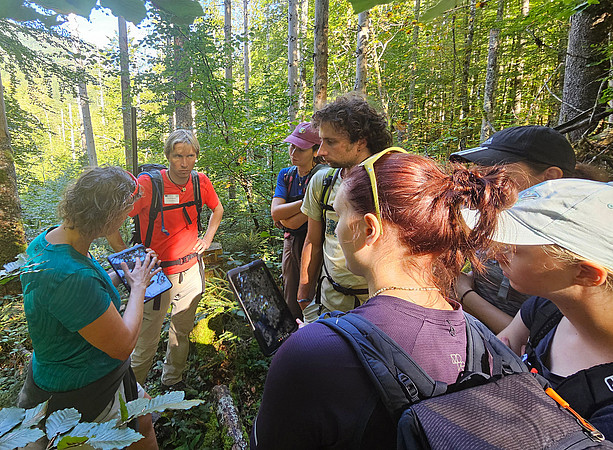
Group of students in the forest, one person showing the others something on a tablet ©Marco Kirchmair
©Marco Kirchmair
The tablet shows what various remote sensing sensors are displaying at this location. This information is then compared with the reality on site.
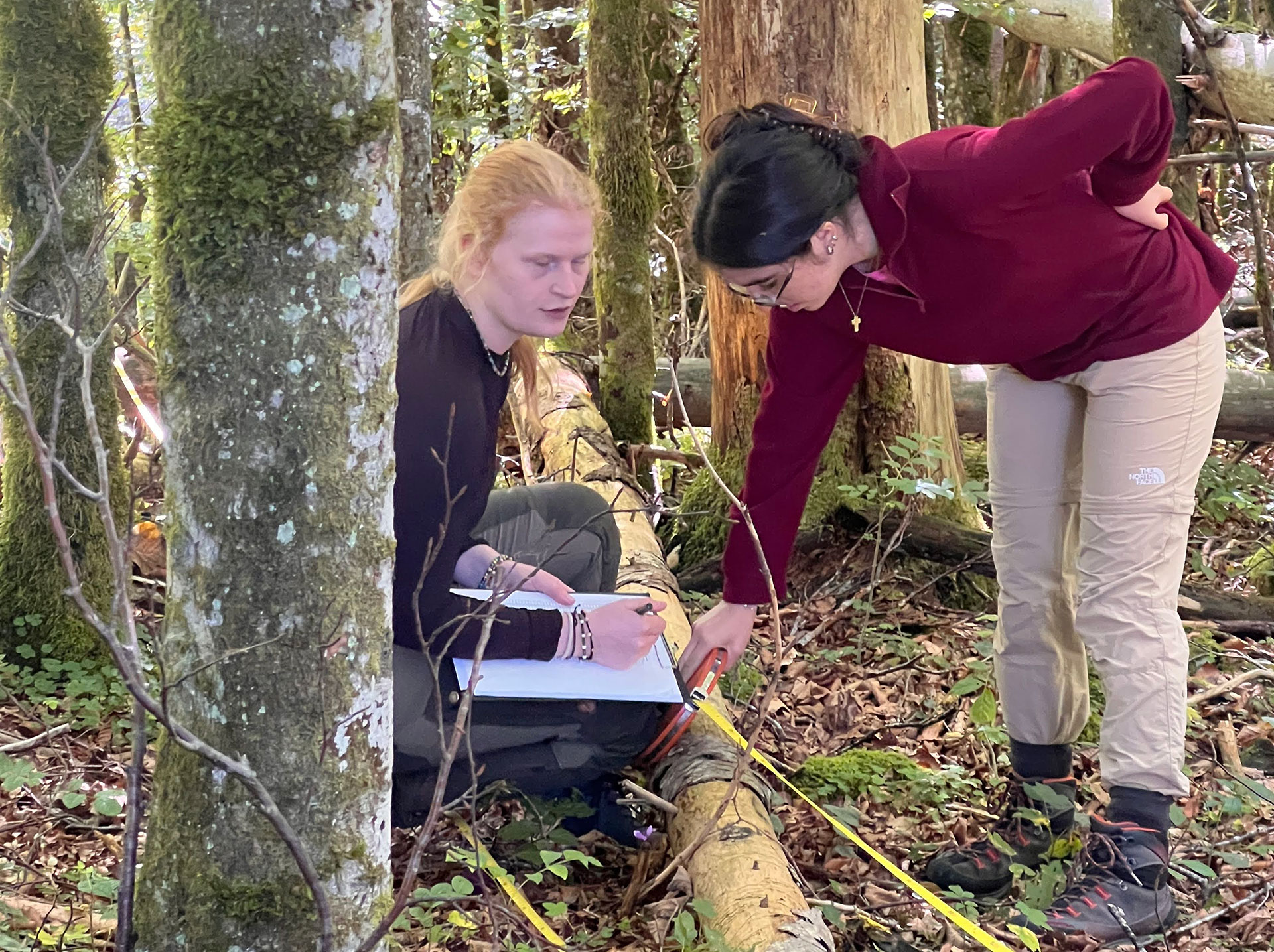
Two young women in the forest next to a tree trunk lying on the ground, one student measures with a tape measure, the other notes the result on a piece of paper. ©Daniela Torres
©Daniela Torres
Every tree in the forest is measured and recorded. Deadwood is important for biodiversity and therefore receives special attention.
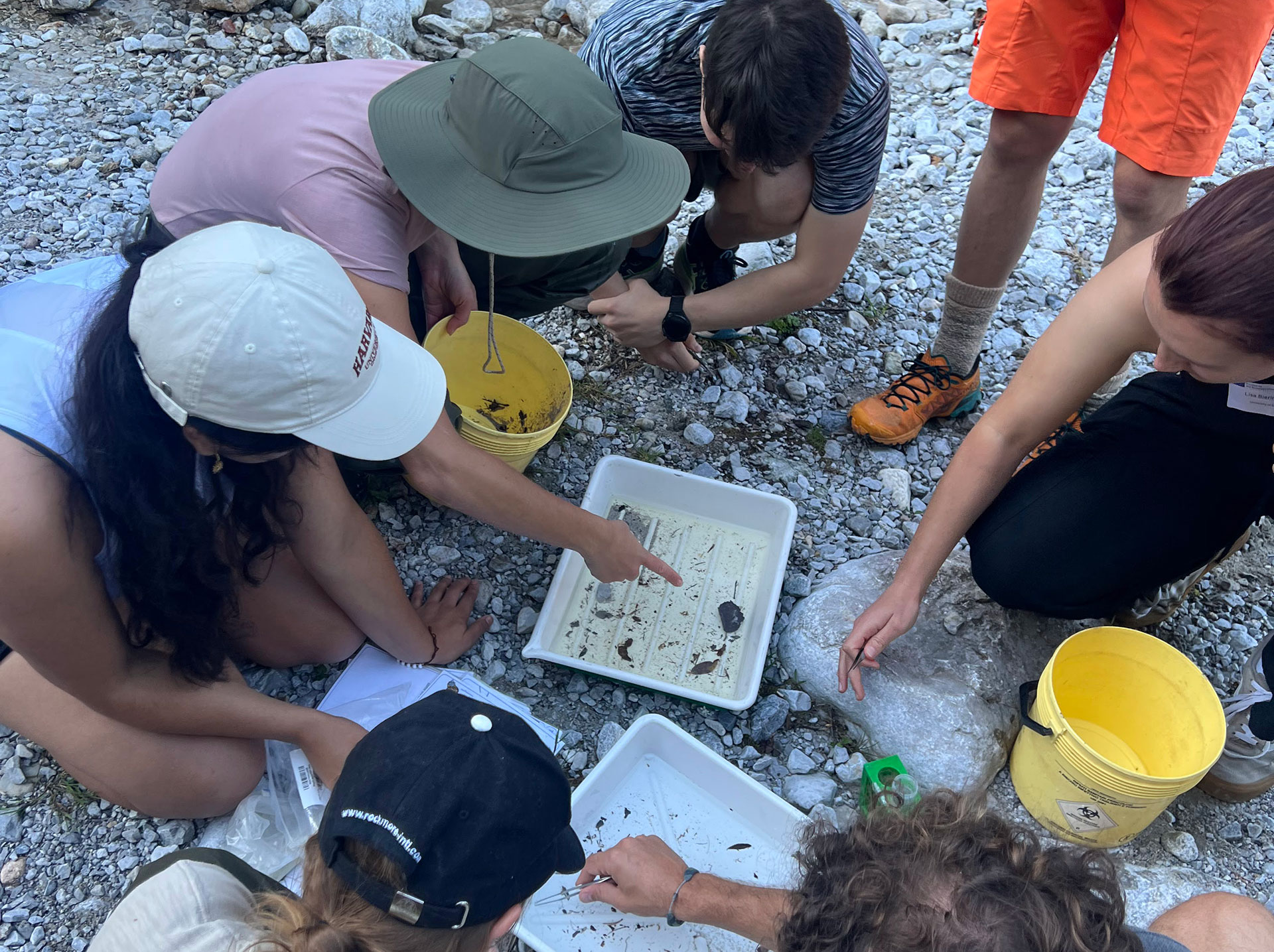
Students squat on the gravel ground, bent over two plastic bowls containing a little water that they have scooped from the river with buckets. Using tweezers, they examine the water samples to see what small creatures or other things they contain. ©Elisabeth Book
©Elisabeth Book
Small aquatic organisms are identified and categorised in order to determine the biodiversity of the Johnsbach stream.
created by Gudrun Pichler

Related news

Superti-Furga will becomefounding director of the CORI Institute in Graz

The Austrian Academy of Sciences (ÖAW) is establishing a new flagship centre for research into metabolic diseases in collaboration with the three universities in Graz. This innovative research approach combines mathematics and experimental biology with artificial intelligence

A match for life

Stem cell donations save lives. However, the only way to determine who is ultimately compatible with whom is through a testing process. Pharmacist Marion Mußbacher explains the mechanisms behind this. On 6 May 2026, the ÖH and the charity “Geben für Leben” are calling for people to come forward for typing at the University of Graz.

Mild Research Night: Around 750 visitors travelled around the world at the university

Lovely weather and a wide range of research topics drew visitors to the University of Graz last Friday. Highlights included a journey around the globe in eight stops, a ‘speed-dating’ session with books, insights into Alfred Wegener’s Greenland expedition, and guided tours of the democracy exhibition at the UniGraz@Museum.

Career Booster: How the Research Careers Campus supports researchers

They are innovative, creative and productive – researchers who have not yet been appointed to a professorship make a massive contribution to a university’s research output. To provide them with even better support on their career path, the University of Graz has established the Research Careers Campus. The official launch took place on 22 April 2026 with a ‘festival’.

Begin of page section:
Additional information:

University of Graz
Universitaetsplatz 3
8010 Graz
Austria
  • Contact
  • Web Editors
  • Moodle
  • UNIGRAZonline
  • Imprint
  • Data Protection Declaration
  • Accessibility Declaration
Weatherstation
Uni Graz

End of this page section. Go to overview of page sections

End of this page section. Go to overview of page sections

Begin of page section:

End of this page section. Go to overview of page sections