Begin of page section:
Page sections:

  • Go to contents (Accesskey 1)
  • Go to position marker (Accesskey 2)
  • Go to main navigation (Accesskey 3)
  • Go to sub navigation (Accesskey 4)
  • Go to additional information (Accesskey 5)
  • Go to page settings (user/language) (Accesskey 8)
  • Go to search (Accesskey 9)

End of this page section. Go to overview of page sections

Begin of page section:
Page settings:

English en
Deutsch de
Search
Login

End of this page section. Go to overview of page sections

Begin of page section:
Search:

Search for details about Uni Graz
Close

End of this page section. Go to overview of page sections


Search

Begin of page section:
Main navigation:

Page navigation:

  • University

    University
    • About the University
    • Organisation
    • Faculties
    • Library
    • Working at University of Graz
    • Campus
    Developing solutions for the world of tomorrow - that is our mission. Our students and our researchers take on the great challenges of society and carry the knowledge out.
  • Research Profile

    Research Profile
    • Our Expertise
    • Research Questions
    • Research Portal
    • Promoting Research
    • Research Transfer
    • Ethics in Research
    Scientific excellence and the courage to break new ground. Research at the University of Graz creates the foundations for making the future worth living.
  • Studies

    Studies
    • Prospective Students
    • Students
  • Community

    Community
    • International
    • Location
    • Research and Business
    • Alumni
    The University of Graz is a hub for international research and brings together scientists and business experts. Moreover, it fosters the exchange and cooperation in study and teaching.
  • Spotlight
Topics
  • Our digital Advent calendar
  • Sustainable University
  • Researchers answer
  • Work for us
Close menu

End of this page section. Go to overview of page sections

Begin of page section:
You are here:

University of Graz News Philosoph von Weltrang

End of this page section. Go to overview of page sections

Wednesday, 25 May 2016

Philosoph von Weltrang

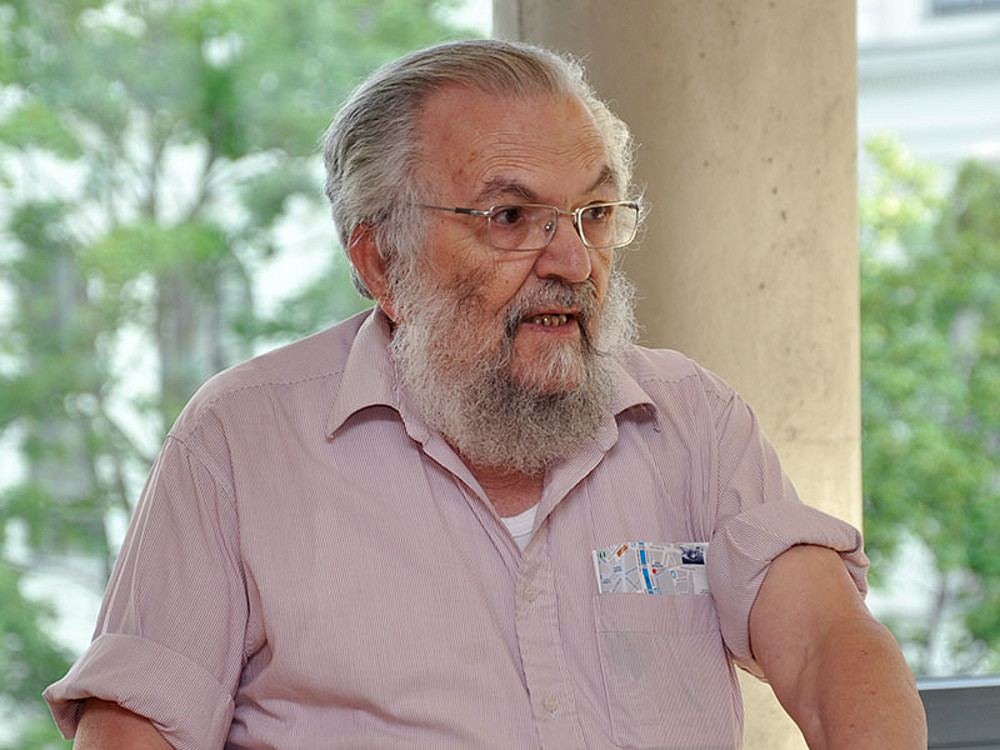
Joseph Raz ist einer der einflussreichsten Philosophen der Gegenwart. Fotos: Uni Graz/Pichler

Joseph Raz ist einer der einflussreichsten Philosophen der Gegenwart. Fotos: Uni Graz/Pichler

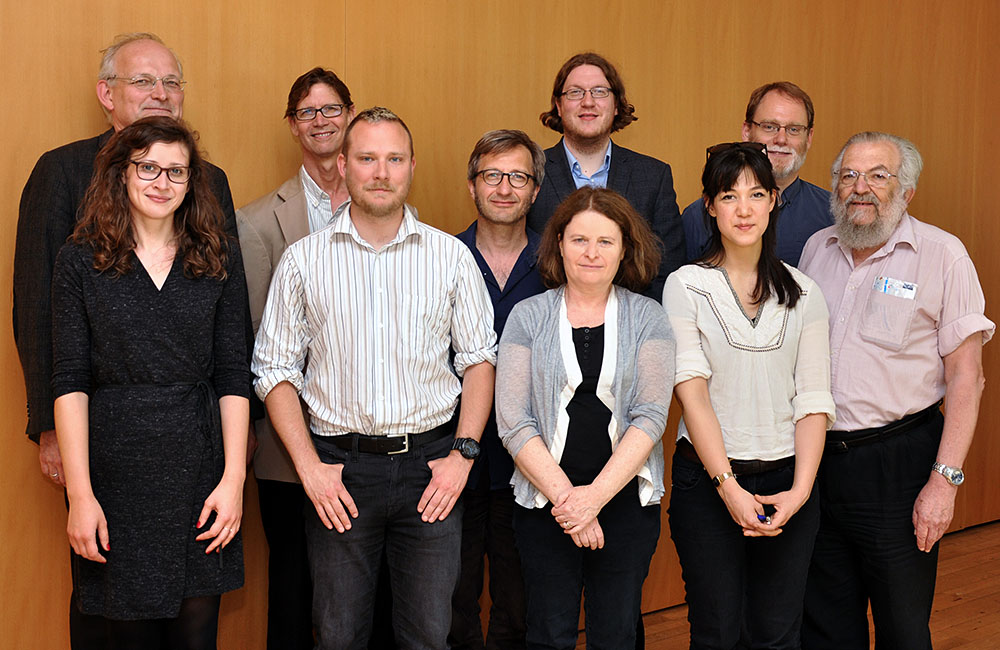
Die OrganisatorInnen und Vortragenden der Tagung

Die OrganisatorInnen und Vortragenden der Tagung – hinten v.l.: Lukas Meyer (Uni Graz), John Christman (Pennsylvania), Michael Schefczyk (Karlsruhe), Chris Mills (London), Joel Anderson (Utrecht); vorne v.l.: Agnieszka Kochanowicz (Uni Graz), Ben Colbourn (Glasgow), Natalie Stoljar (Montreal), Maud Gauthier-Chung (London), Joseph Raz (London/New York)

Gastvortrag von Joseph Raz über die Zukunft staatlicher Souveränität

Einen ganz besonderen Gast konnte am 24. Mai 2016 der Arbeitsbereich Praktische Philosophie an der Uni Graz begrüßen: Prof. Joseph Raz, einer der renommiertesten und einflussreichsten Philosophen der Gegenwart, hielt im Rahmen der Tagung „Autonomy & The Morality of Freedom“ einen Vortrag zum Thema „The Future of State Sovereignty“.
Univ.-Prof. Dr. Lukas Meyer, Dekan der Geisteswissenschaftlichen Fakultät und einst Dissertant bei Joseph Raz an der Oxford University in England, begrüßte seinen ehemaligen Doktorvater an der Karl-Franzens-Universität. 2011 war der große Philosoph erstmals zu Besuch an der Uni Graz gewesen.

Joseph Raz, 1939 in Palästina geboren, war bis zu seiner Emeritierung 2006 Professor in Oxford. Gegenwärtig lehrt er an der Columbia University in New York City sowie als Gastprofessor am King’s College London. Seine Forschungsinteressen konzentrieren sich auf politische, ethische und rechtsphilosophische Fragen.

1986 erschien Joseph Raz‘ The Morality of Freedom, eines der bemerkenswertesten philosophischen Werke des ausgehenden 20. Jahrhunderts. Das 30-jährige Jubiläum der Erstveröffentlichung nahm der Arbeitsbereich Praktische Philosophie an der Uni Graz zum Anlass, im Rahmen einer zweitägigen Konferenz einige der Kerngedanken der bahnbrechenden Publikation sowie deren Einfluss auf aktuelle Debatten gemeinsam mit seinem Verfasser zu diskutieren.

The Morality of Freedom ist das Hauptwerk von Raz‘ politischer Philosophie. Lukas Meyer erklärt: „Er untersucht darin die Grundlagen eines liberalen Staats: Die Legitimität staatlicher Autoritäten ist von den Handlungsgründen abhängig, die wir unabhängig davon, was uns zu tun befohlen wird, haben. Liberale Staaten sind auf das Ideal der politischen Freiheit verpflichtet. Individuelle Freiheit setzt einen Pluralismus der Werte voraus und drückt sich in personaler Autonomie aus. Der Staat hat die Aufgabe, die Bedingungen personaler Autonomie zu schützen und zu fördern.“

created by Gudrun Pichler

Related news

Setback: Austria's greenhouse gas emissions rise in 2025

Climate protection is currently facing an uphill battle. The United Nations have recently been unable to agree on a roadmap for phasing out fossil fuels, even though global warming continues to accelerate. Also Austria still does not have a national climate law with a clear target path for reducing emissions. This is evidently taking its toll: Austria’s greenhouse gas emissions rose again in 2025 for the first time in years, by around two and a half percent, according to calculations by researchers at the University of Graz. In addition to overly cautious climate action measures, this is due to somewhat colder winter months compared to 2024, which are driving up natural gas consumption.

Profound: Geoscientist Marko Bermanec deciphers processes of the Earth's plates

What happens deep down is very important to us above ground. Especially when hidden chemical processes between tectonic plates have serious consequences. Earth scientist Marko Bermanec investigates these processes in depth.

Kink in the curve: Eleonore Faber researches the "fuzzy" parts of algebra

How can the movements of robotic arms be described using maths? And what does a computer need to understand in order to function? The magic word to answer these questions is algebra. Eleonore Faber has been a professor of this branch of mathematics at the University of Graz for two years. She is particularly interested in complex phenomena that cannot be fully understood using conventional rules or laws - where algebra becomes "fuzzy".

Jurist Jürgen Pirker erhält den Wissenschaftspreises der Margaretha Lupac-Stiftung

Wie kann der Staat nationale Minderheiten schützen? Wie kann er darauf achten, dass Mitglieder einer bestimmten ethnischen oder religiösen Gruppe nicht gezwungen werden, ihre persönlichen Freiheiten aufgrund dieser Zugehörigkeit aufzugeben? Und wie ging Österreich in den vergangenen 180 Jahren mit dieser Frage um?

Begin of page section:
Additional information:

University of Graz
Universitaetsplatz 3
8010 Graz
Austria
  • Contact
  • Web Editors
  • Moodle
  • UNIGRAZonline
  • Imprint
  • Data Protection Declaration
  • Accessibility Declaration
Weatherstation
Uni Graz

End of this page section. Go to overview of page sections

End of this page section. Go to overview of page sections

Begin of page section:

End of this page section. Go to overview of page sections