Begin of page section:
Page sections:

  • Go to contents (Accesskey 1)
  • Go to position marker (Accesskey 2)
  • Go to main navigation (Accesskey 3)
  • Go to sub navigation (Accesskey 4)
  • Go to additional information (Accesskey 5)
  • Go to page settings (user/language) (Accesskey 8)
  • Go to search (Accesskey 9)

End of this page section. Go to overview of page sections

Begin of page section:
Page settings:

English en
Deutsch de
Search
Login

End of this page section. Go to overview of page sections

Begin of page section:
Search:

Search for details about Uni Graz
Close

End of this page section. Go to overview of page sections


Search

Begin of page section:
Main navigation:

Page navigation:

  • University

    University
    • About the University
    • Organisation
    • Faculties
    • Library
    • Working at University of Graz
    • Campus
    Developing solutions for the world of tomorrow - that is our mission. Our students and our researchers take on the great challenges of society and carry the knowledge out.
  • Research Profile

    Research Profile
    • Our Expertise
    • Research Questions
    • Research Portal
    • Promoting Research
    • Research Transfer
    • Ethics in Research
    Scientific excellence and the courage to break new ground. Research at the University of Graz creates the foundations for making the future worth living.
  • Studies

    Studies
    • Prospective Students
    • Students
  • Community

    Community
    • International
    • Location
    • Research and Business
    • Alumni
    The University of Graz is a hub for international research and brings together scientists and business experts. Moreover, it fosters the exchange and cooperation in study and teaching.
  • Spotlight
Topics
  • Our digital Advent calendar
  • Sustainable University
  • Researchers answer
  • Work for us
Close menu

End of this page section. Go to overview of page sections

Begin of page section:
You are here:

University of Graz News Neue Südosteuropa-Kooperation

End of this page section. Go to overview of page sections

Thursday, 02 February 2017

Neue Südosteuropa-Kooperation

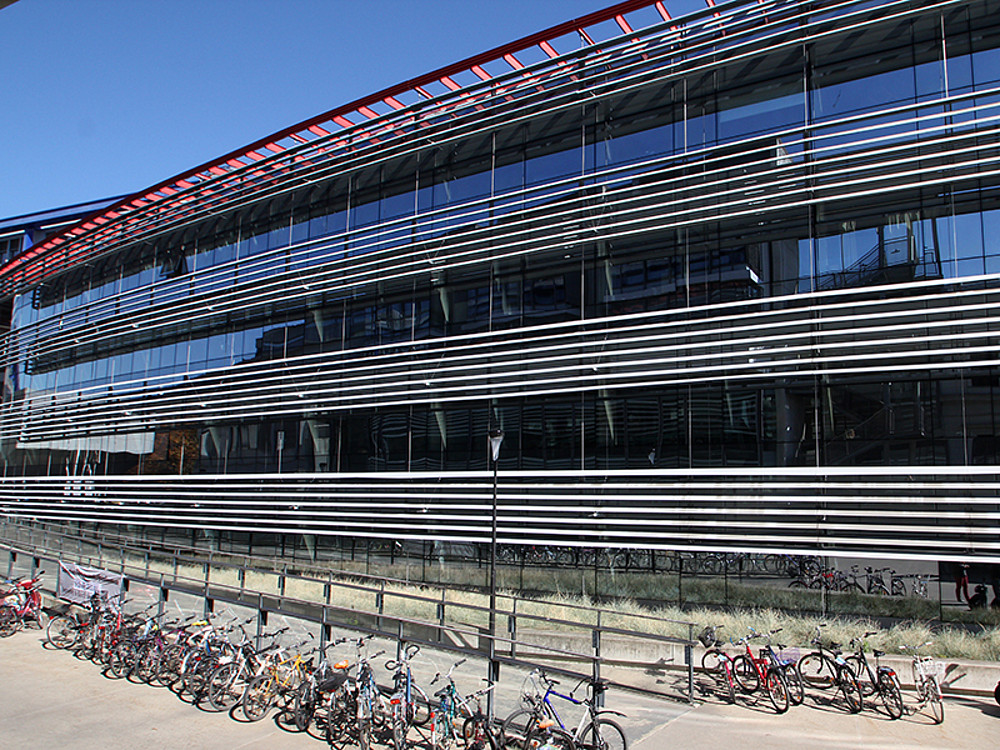
Das CESEENet soll den Austausch von Doktoratsstudierenden sowie Forschungskooperationen zwischen wirtschaftswissenschaftlichen Fakultäten in Zentral- und Südosteuropa fördern. Foto: Uni Graz

Das CESEENet soll den Austausch von Doktoratsstudierenden sowie Forschungskooperationen zwischen wirtschaftswissenschaftlichen Fakultäten in Zentral- und Südosteuropa fördern. Foto: Uni Graz

Die Sozial- und Wirtschaftswissenschaftliche Fakultät der Uni Graz ist Partner im Doktoratsnetzwerk CESEENet

Der Austausch von Doktoratsstudierenden und die Förderung von Forschungskooperationen sind Ziel des CESEENet – Central- and South-East European PhD Network, in das die Sozial- und Wirtschaftswissenschaftliche (SOWI) Fakultät der Uni Graz mit Wintersemester 2016/17 aufgenommen wurde. Das Netzwerk ist ein Zusammenschluss von wirtschaftswissenschaftlichen Fakultäten in Zentral- und Südosteuropa.

„DissertantInnen haben nun die Möglichkeit, Kurse an den Partnerinstitutionen zu besuchen. Darüber hinaus soll durch die Veranstaltung gemeinsamer Konferenzen und Seminare die wissenschaftliche Zusammenarbeit in Zentral- und Südosteuropa gefördert werden“, erklärt Univ.-Prof. DDr. Georg Schneider, Leiter des Instituts für Unternehmensrechnung und Reporting. Gemeinsam mit Ao.Univ.-Prof. Dr. Christian Gehrke vom Institut für Volkswirtschaftslehre vertritt er die SOWI-Fakultät der Uni Graz im Executive Committee des CESEENet. „Im Rahmen des Hearings zur Aufnahme in das Netzwerk war das Interesse am FWF-Doktoratskolleg DART –  Doctoral Program in Accounting, Reporting, and Taxation – der Uni Graz sehr groß“, freut sich Schneider.

„Mit der Teilnahme am CESEENet leistet die Sozial- und Wirtschaftswissenschaftliche Fakultät einen Beitrag zum gesamtuniversitären strategischen Schwerpunkt Südosteuropa der Karl-Franzens-Universität“, unterstreicht Dekan Thomas Foscht, der Mitglied im Steering Committee ist. Nach der Universität Wien und der Universität Klagenfurt ist die Uni Graz die dritte österreichische Universität, die in CESEENet aufgenommen wurde. Mitglieder sind unter anderem auch die Universität Zagreb, die Corvinus Universität Budapest, die Ca' Foscari Universität Venedig, die Universität Krakau, die Universität Belgrad und die Universität Laibach. Insgesamt umfasst CESEENet derzeit 24 Universitäten aus 14 Ländern in Zentral- und Südosteuropa.

created by Gudrun Pichler

Related news

Rector Peter Riedler: Starting the year with confidence

In 2026, we will continue to work consistently on positioning the University of Graz as a relevant player in Europe, while at the same time focusing on a modern, sustainable and climate-friendly university campus. When new digital applications are rolled out in January, we will not only create a stable and secure IT environment, but also modern working and studying conditions for future generations. Peter Rielder, Rector of the University of Graz

Uni Vibes 2026: the campus festival that transcends borders again

On 29 May 2026, it's that time again: the University of Graz celebrates, dances and vibrates. The campus will become a stage for art, science and music.

Setback: Austria's greenhouse gas emissions rise in 2025

Climate protection is currently facing an uphill battle. The United Nations have recently been unable to agree on a roadmap for phasing out fossil fuels, even though global warming continues to accelerate. Also Austria still does not have a national climate law with a clear target path for reducing emissions. This is evidently taking its toll: Austria’s greenhouse gas emissions rose again in 2025 for the first time in years, by around two and a half percent, according to calculations by researchers at the University of Graz. In addition to overly cautious climate action measures, this is due to somewhat colder winter months compared to 2024, which are driving up natural gas consumption.

Profound: Geoscientist Marko Bermanec deciphers processes of the Earth's plates

What happens deep down is very important to us above ground. Especially when hidden chemical processes between tectonic plates have serious consequences. Earth scientist Marko Bermanec investigates these processes in depth.

Begin of page section:
Additional information:

University of Graz
Universitaetsplatz 3
8010 Graz
Austria
  • Contact
  • Web Editors
  • Moodle
  • UNIGRAZonline
  • Imprint
  • Data Protection Declaration
  • Accessibility Declaration
Weatherstation
Uni Graz

End of this page section. Go to overview of page sections

End of this page section. Go to overview of page sections

Begin of page section:

End of this page section. Go to overview of page sections