Begin of page section:
Page sections:

  • Go to contents (Accesskey 1)
  • Go to position marker (Accesskey 2)
  • Go to main navigation (Accesskey 3)
  • Go to sub navigation (Accesskey 4)
  • Go to additional information (Accesskey 5)
  • Go to page settings (user/language) (Accesskey 8)
  • Go to search (Accesskey 9)

End of this page section. Go to overview of page sections

Begin of page section:
Page settings:

English en
Deutsch de
Search
Login

End of this page section. Go to overview of page sections

Begin of page section:
Search:

Search for details about Uni Graz
Close

End of this page section. Go to overview of page sections


Search

Begin of page section:
Main navigation:

Page navigation:

  • University

    University
    • About the University
    • Organisation
    • Faculties
    • Library
    • Working at University of Graz
    • Campus
    Developing solutions for the world of tomorrow - that is our mission. Our students and our researchers take on the great challenges of society and carry the knowledge out.
  • Research Profile

    Research Profile
    • Our Expertise
    • Research Questions
    • Research Portal
    • Promoting Research
    • Research Transfer
    • Ethics in Research
    Scientific excellence and the courage to break new ground. Research at the University of Graz creates the foundations for making the future worth living.
  • Studies

    Studies
    • Prospective Students
    • Students
  • Community

    Community
    • International
    • Location
    • Research and Business
    • Alumni
    The University of Graz is a hub for international research and brings together scientists and business experts. Moreover, it fosters the exchange and cooperation in study and teaching.
  • Spotlight
Topics
  • Our digital Advent calendar
  • Sustainable University
  • Researchers answer
  • Work for us
Close menu

End of this page section. Go to overview of page sections

Begin of page section:
You are here:

University of Graz News New perspectives: Diversity in the team has positive effects, knows HR expert Renate Ortlieb.

End of this page section. Go to overview of page sections

Monday, 28 August 2023

New perspectives: Diversity in the team has positive effects, knows HR expert Renate Ortlieb.

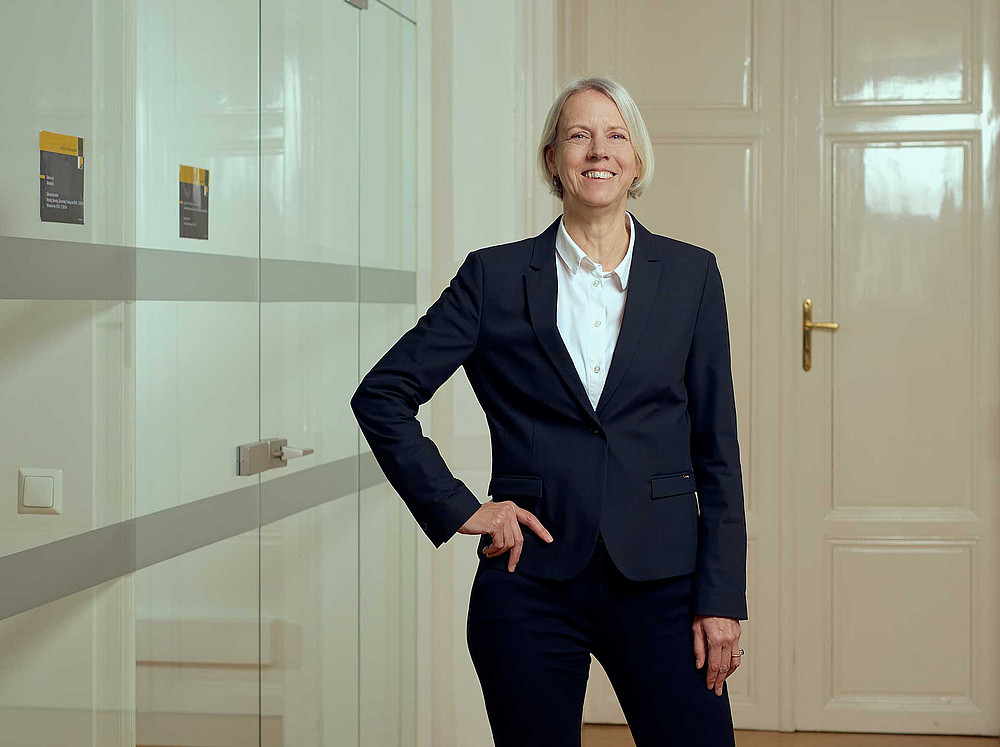
Renate Ortlieb

Renate Ortlieb is professor for Human Resources Management at the University of Graz. Photo: Uni Graz/wildundwunderbar

Hand on heart: What is the composition of the team in which you work? All the same age? With the same social background, the same gender? All from Styria? So your colleagues are quite heterogeneous after all?

"Organisations are well advised to allow and promote diversity," says Renate Ortlieb, Professor of Human Resources Policy. Diversity has positive effects - demonstrably so. Mixed teams increase productivity and inventiveness. And they create friction. Conflict and creativity are therefore very close to each other.

Recognising conflicts

"Diversity creates inequalities - from cultural disadvantages to the gender pay gap. This causes wasted talent, unproductivity and discrimination," says the scientist, calling for more awareness of disadvantages.
Diversity alone is not enough. "It has to be well managed," Ortlieb demands. "Top management must recognise and moderate conflicts." Awareness training and anti-bias training can bring about change. Even though, as Ortlieb admits, the measures often do not reach those who need it most. In addition, there is the danger that minorities are not only ignored but also considered incompetent, Ortlieb cites the results of a study. "Opinion is quickly dismissed, potential is underestimated."

Overall, the entrepreneurial mindset is crucial, that is, the attitude of all employees - from managers to cleaners. According to human resources expert Ortlieb, it is not enough to present oneself on the website as a company that promotes diversity, to only fulfil legal quotas and prohibitions of discrimination. And because these attitudes change only slowly, progress is slow. The expert reasons: "Power relations are rigid and difficult to break."

Internationalisation

On the other hand, cultural diversity in working life is increasing very rapidly. Both internationalisation and the lack of personnel are forcing a change of perspective - without any agenda. Ortlieb confirms this: "Business fields have been operating interculturally for a long time. This is already noticeable in the different manners used in meetings." The positive side effect: "Once you get used to dealing with differences, it's easier to deal with other differences.

created by Andreas Schweiger

Related news

Setback: Austria's greenhouse gas emissions rise in 2025

Climate protection is currently facing an uphill battle. The United Nations have recently been unable to agree on a roadmap for phasing out fossil fuels, even though global warming continues to accelerate. Also Austria still does not have a national climate law with a clear target path for reducing emissions. This is evidently taking its toll: Austria’s greenhouse gas emissions rose again in 2025 for the first time in years, by around two and a half percent, according to calculations by researchers at the University of Graz. In addition to overly cautious climate action measures, this is due to somewhat colder winter months compared to 2024, which are driving up natural gas consumption.

Profound: Geoscientist Marko Bermanec deciphers processes of the Earth's plates

What happens deep down is very important to us above ground. Especially when hidden chemical processes between tectonic plates have serious consequences. Earth scientist Marko Bermanec investigates these processes in depth.

Kink in the curve: Eleonore Faber researches the "fuzzy" parts of algebra

How can the movements of robotic arms be described using maths? And what does a computer need to understand in order to function? The magic word to answer these questions is algebra. Eleonore Faber has been a professor of this branch of mathematics at the University of Graz for two years. She is particularly interested in complex phenomena that cannot be fully understood using conventional rules or laws - where algebra becomes "fuzzy".

Jurist Jürgen Pirker erhält den Wissenschaftspreises der Margaretha Lupac-Stiftung

Wie kann der Staat nationale Minderheiten schützen? Wie kann er darauf achten, dass Mitglieder einer bestimmten ethnischen oder religiösen Gruppe nicht gezwungen werden, ihre persönlichen Freiheiten aufgrund dieser Zugehörigkeit aufzugeben? Und wie ging Österreich in den vergangenen 180 Jahren mit dieser Frage um?

Begin of page section:
Additional information:

University of Graz
Universitaetsplatz 3
8010 Graz
Austria
  • Contact
  • Web Editors
  • Moodle
  • UNIGRAZonline
  • Imprint
  • Data Protection Declaration
  • Accessibility Declaration
Weatherstation
Uni Graz

End of this page section. Go to overview of page sections

End of this page section. Go to overview of page sections

Begin of page section:

End of this page section. Go to overview of page sections