Begin of page section:
Page sections:

  • Go to contents (Accesskey 1)
  • Go to position marker (Accesskey 2)
  • Go to main navigation (Accesskey 3)
  • Go to sub navigation (Accesskey 4)
  • Go to additional information (Accesskey 5)
  • Go to page settings (user/language) (Accesskey 8)
  • Go to search (Accesskey 9)

End of this page section. Go to overview of page sections

Begin of page section:
Page settings:

English en
Deutsch de
Search
Login

End of this page section. Go to overview of page sections

Begin of page section:
Search:

Search for details about Uni Graz
Close

End of this page section. Go to overview of page sections


Search

Begin of page section:
Main navigation:

Page navigation:

  • University

    University
    • About the University
    • Organisation
    • Faculties
    • Library
    • Working at University of Graz
    • Campus
    Developing solutions for the world of tomorrow - that is our mission. Our students and our researchers take on the great challenges of society and carry the knowledge out.
  • Research Profile

    Research Profile
    • Our Expertise
    • Research Questions
    • Research Portal
    • Promoting Research
    • Research Transfer
    • Ethics in Research
    • Commission for Scientific Integrity
    Scientific excellence and the courage to break new ground. Research at the University of Graz creates the foundations for making the future worth living.
  • Studies

    Studies
    • Prospective Students
    • Students
    • Welcome Weeks for First Year Students
  • Community

    Community
    • International
    • Location
    • Research and Business
    • Alumni
    The University of Graz is a hub for international research and brings together scientists and business experts. Moreover, it fosters the exchange and cooperation in study and teaching.
Topics
  • Sustainable University
  • Researchers answer
  • Work for us
Close menu

End of this page section. Go to overview of page sections

Begin of page section:
You are here:

University of Graz News Mit Widersprüchen umgehen lernen

End of this page section. Go to overview of page sections

Friday, 19 October 2012

Mit Widersprüchen umgehen lernen

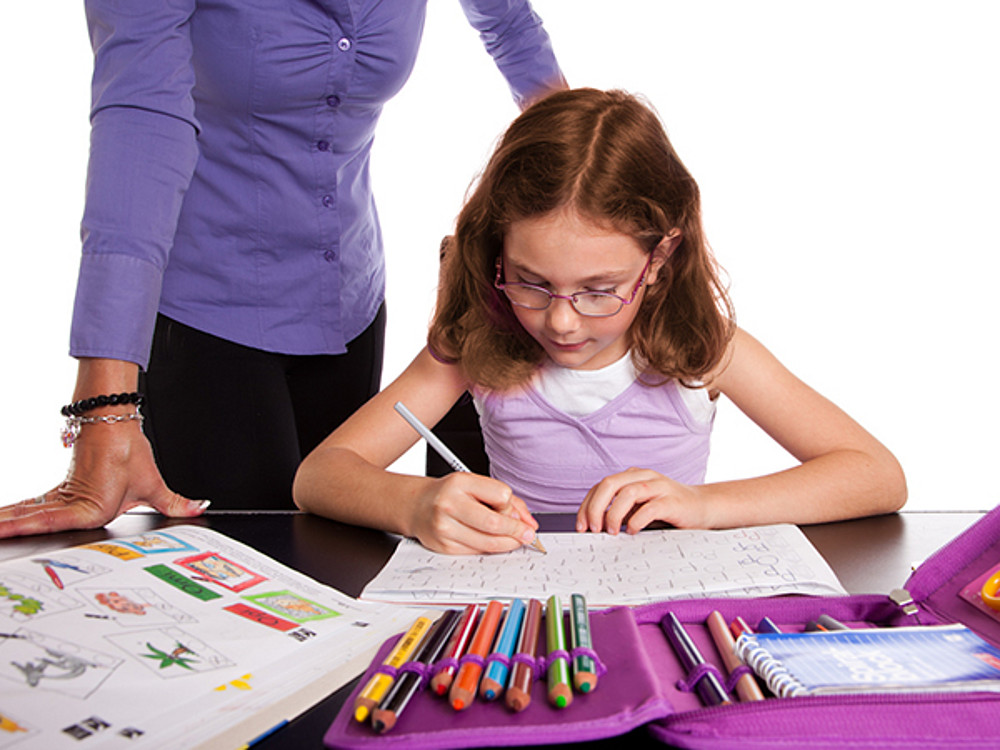
Selbstreflexion von PädagogInnen, die im Kindergarten und in Klassenzimmern unterrichten, steht im Mittelpunkt von Facing the differences. Foto: Benjamin Thorn/pixelio.de

Selbstreflexion von PädagogInnen, die im Kindergarten und in Klassenzimmern unterrichten, steht im Mittelpunkt von Facing the differences. Foto: Benjamin Thorn/pixelio.de

Uni Graz präsentiert neue Ergebnisse zur pädagogischen Professionalisierung im Kindergarten und Klassenzimmer

Für die einen sind sie unerfahrene PraktikantInnen. Für die anderen sind sie Autoritäten, von denen ein Verantwortungsgefühl über die Maßen abverlangt wird. Junge PädagogInnen im Kindergarten und im Klassenzimmer ringen um Anerkennung und kämpfen nicht selten mit ihren Rollenzuschreibungen. Univ.-Prof. Dr. Agnieszka Czejkowska, Leiterin des Instituts für Pädagogische Professionalisierung an der Karl-Franzens-Universität Graz, zeigt im Projekt „Facing the differences“ Widersprüche und Konfliktpotenziale des pädagogisch-professionellen Selbstverständnisses auf. Nach zwei Jahren gemeinsamen Forschens von angehenden und erfahrenen PädagogInnen im „sparkling science“-Projekt liegen die Ergebnisse vor und werden am 22. Oktober 2012 in Wien präsentiert.


Das Forschungsmaterial haben SchülerInnen und LehrerInnen der Bildungsanstalt für Kindergartenpädagogik Kenyongasse / Mater Salvatoris in Wien sowie Studierende und Lehrende des Instituts für das künstlerische Lehramt an der Akademie der bildenden Künste Wien aus ihren Erfahrungen in Kindergarten, Schule und Universität gewonnen und gemeinsam bearbeitet.


„Sehr eindrücklich haben wir gesehen, dass für pädagogisch-professionelles Selbstverständnis nicht nur die häufig genannten Unterschiede der Kinder – vom sogenannten Migrationshintergrund bis zu unterschiedlichen Lerntempi – relevant werden“, resümiert Projektleiterin Agnieszka Czejkowska. Man habe es mit einer Vielfalt von Differenzen zu tun, die im Unterricht gleichzeitig wirken. Der Umgang damit sollte sich nicht nur auf die Kinder beziehen, sondern auch auf die PädagogInnen, denn sie  tragen selbst zur Entstehung von Unterschieden bei, die erhebliche Auswirkungen auf den pädagogischen Alltag haben.  Czejkowska: „Sich dessen bewusst zu werden, führt auch zur Entlastung der PädagogInnen.“


Das Ergebnis sind vier Lehr-Lern-Arrangements – abgestimmt auf die spezifischen beruflichen Anforderungen: angehende PädagogInnen, gemischte Gruppen von BerufseinsteigerInnen und erfahrene Lehrende sowie Kunst- und KulturvermittlerInnen. Diese Konzepte setzen auf kollegiale Zusammenarbeit – auch über Institutionen oder Ausbildungsstufen hinweg – und leiten zur Reflexion über Selbstverständnisse und pädagogische Praxis an.


Das Forschungsmaterial macht deutlich sichtbar, dass der Bedarf an kollegialem Austausch, an gegenseitiger Beratung und Zusammenarbeit groß ist. Zugleich findet dieser Dialog oft unter hierarchischen Bedingungen statt. Dabei handelt es sich um formelle Hierarchien, wie etwa zwischen hauptverantwortlicher KindergartenpädagogIn, „SpringerIn“ und -helferIn oder zwischen SchulleiterIn und LehrerIn. Informelle Rangordnungen, etwa aufgrund des unterschiedlichen Dienstalters, nehmen ebenso Einfluss.


Die Herausforderung besteht in einem bewussten Umgang mit Hierarchien, der diese weder leugnet noch unreflektiert reproduziert oder benützt." Agnieszka Czejkowska


Mit diesem Kooperationsprojekt leistet die Uni Graz einen Beitrag zur vom bm:wf und bm:ukk forcierten PädagogInnenbildung NEU.


Projektpräsentation „Facing the Differences“
WANN: 22. Oktober 2012, 15 Uhr
WO: Bildungsanstalt für Kindergartenpädagogik / Mater Salvatoris,
Kenyongasse 4–12, 1070 Wien


Kontakt:
Univ.-Prof. Dr. Agnieszka Czejkowska
Institut für Pädagogische Professionalisierung
Tel. 0316/380-3833
E-Mail: agnieszka.czejkowska(at)uni-graz.at
created by Andreas Schweiger

Related news

A fresh start, a calling, holidays: what draws people from other career paths to teaching

They used to develop software; now they teach maths in the classroom. Career changers are expected to help address the shortage of qualified teachers in Austria’s schools. In their doctoral theses at the Institute for Educational Research and Teacher Training at the University of Graz, Melanie Gürentz and Claudia Mair examined how these new teachers perceive their new professional roles.

Talent Talks bridge the gap in career guidance

The Styrian Chamber of Commerce (WKO Steiermark), the Styrian Chamber of Labour (AK Steiermark) and the AMS are joining forces when it comes to training young people and, through the “Talent Talks”, are creating a seamless pathway to career guidance. This takes preparation and follow-up support – just in time for the start of the term and the scheme’s tenth anniversary – to a whole new level. A new survey conducted by the Talent Centre among 2,687 former participants to mark the anniversary shows just how important this development is. Of the young people who received follow-up support from the Talent Report, 74.6 per cent stated that they had a good understanding of their own strengths and talents following the Talent Check. Without follow-up support, the figure was 66.5 per cent – a significant difference of 8.1 percentage points.

ERC Starting Grants: three million euros for two researchers at the University of Graz

Two researchers from the University of Graz have secured prestigious and generously funded grants from the EU. Starting Grants from the European Research Council (ERC), each worth 1.5 million euros, have been awarded to the human geographer Heide Bruckner and the social scientist Silvana Weiss.

Austria’s emissions rose in 2025: University of Graz researchers analyse the causes

The Environment Agency Austria has today published the figures for the country’s greenhouse gas emissions in 2025. While emissions fell sharply year on year from 2022 to 2024, they rose again by just under 0.7 per cent in 2025. Researchers at the University of Graz have analysed how much of this increase was due to structural changes in the economy and how much was attributable to external factors over which there is little control. “In 2025, the colder winter compared with 2024 increased emissions by 0.81 per cent, while the weak economy reduced them by 0.38 per cent. If we factor out these influences, we find an underlying increase of 0.26 per cent compared with the previous year,” reports economist Karl Steininger. “This clearly means that Austria is not on track to meet its climate targets, which require a substantial reduction in emissions by 2030.”

Begin of page section:
Additional information:

University of Graz
Universitaetsplatz 3
8010 Graz
Austria
  • Contact
  • Web Editors
  • Moodle
  • UNIGRAZonline
  • Imprint
  • Data Protection Declaration
  • Accessibility Declaration
Weatherstation
Uni Graz

End of this page section. Go to overview of page sections

End of this page section. Go to overview of page sections

Begin of page section:

End of this page section. Go to overview of page sections