Begin of page section:
Page sections:

  • Go to contents (Accesskey 1)
  • Go to position marker (Accesskey 2)
  • Go to main navigation (Accesskey 3)
  • Go to sub navigation (Accesskey 4)
  • Go to additional information (Accesskey 5)
  • Go to page settings (user/language) (Accesskey 8)
  • Go to search (Accesskey 9)

End of this page section. Go to overview of page sections

Begin of page section:
Page settings:

English en
Deutsch de
Search
Login

End of this page section. Go to overview of page sections

Begin of page section:
Search:

Search for details about Uni Graz
Close

End of this page section. Go to overview of page sections


Search

Begin of page section:
Main navigation:

Page navigation:

  • University

    University
    • About the University
    • Organisation
    • Faculties
    • Library
    • Working at University of Graz
    • Campus
    Developing solutions for the world of tomorrow - that is our mission. Our students and our researchers take on the great challenges of society and carry the knowledge out.
  • Research Profile

    Research Profile
    • Our Expertise
    • Research Questions
    • Research Portal
    • Promoting Research
    • Research Transfer
    • Ethics in Research
    • Commission for Scientific Integrity
    Scientific excellence and the courage to break new ground. Research at the University of Graz creates the foundations for making the future worth living.
  • Studies

    Studies
    • Prospective Students
    • Students
    • Registration for Study Programme (Winter semester 2026/27)
    • Study Days 22-26 June 2026
  • Community

    Community
    • International
    • Location
    • Research and Business
    • Alumni
    The University of Graz is a hub for international research and brings together scientists and business experts. Moreover, it fosters the exchange and cooperation in study and teaching.
Topics
  • Sustainable University
  • Researchers answer
  • Work for us
Close menu

End of this page section. Go to overview of page sections

Begin of page section:
You are here:

University of Graz News Menschenströme

End of this page section. Go to overview of page sections

Tuesday, 24 November 2020

Menschenströme

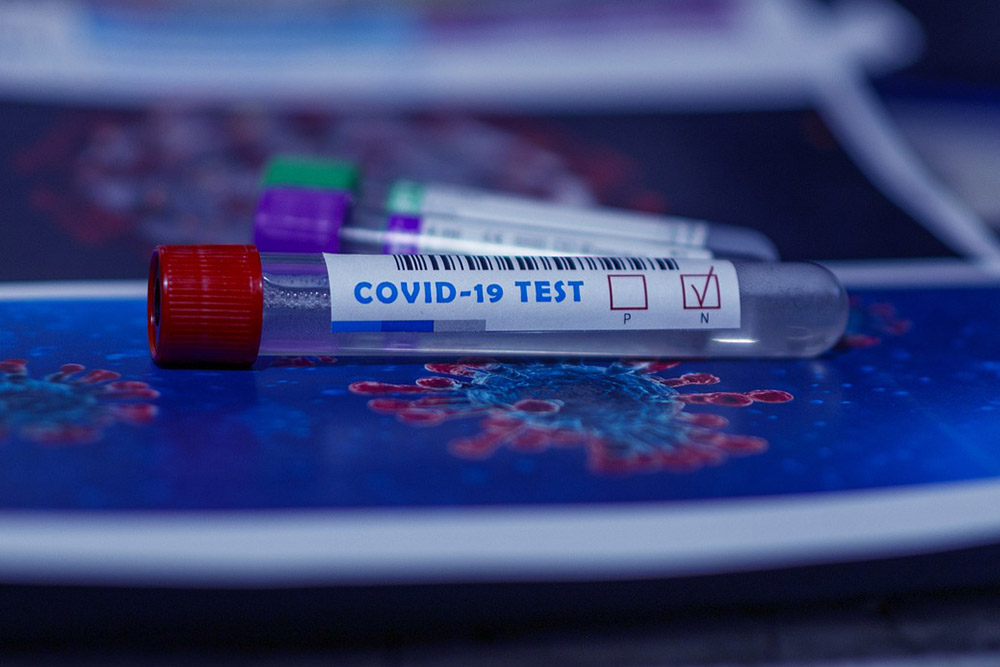
Wie die geplanten Corona-Massentests funktionieren könnten, erläutert Logistik-Experte Marc Reimann. Foto: Fernando Zhiminaicela - Pixabay

Wie die geplanten Corona-Massentests funktionieren könnten, erläutert Logistik-Experte Marc Reimann. Foto: Fernando Zhiminaicela - Pixabay

Massentest wie eine Wahl: Logistik-Experte Marc Reimann erläutert, wie ein Großprojekt gelingen kann

Die angekündigten Covid-19-Massentests in Österreich sorgen für heftige Debatten. Nach dem Bekanntwerden von Informationen zur Testung spezifischer Berufsgruppen und Ausweitung der Ressourcen hat nun Marc Reimann, Logistik-Forscher an der Universität Graz, das Szenario erneut berechnet. Eine logistische Herausforderung ist das Unterfangen allemal.

Marc Reimann hat für seine Berechnungen wiederum Annahmen getroffen: Der Wissenschafter geht aufgrund derzeit vorhandener Daten davon aus, dass alle drei Minuten eine Probe genommen wird – ohne Warte- oder Stehzeiten – sowie, dass an allen Stationen jeweils 15 Stunden pro Tag getestet wird.
Entscheidende Faktoren sind, unterstreicht Reimann, Professor am Institut für Operations und Information Systems, die Anzahl der Stationen sowie der Teststraßen pro Station. Dass die Slowakei 3,6 Millionen BürgerInnen an zwei Wochenenden testen konnte, wurde durch eine massive Aufstockung auf 5000 Stationen möglich. In Südtirol wiederum strömten rund 340.000 Menschen zu 184 Stationen innerhalb von drei Tagen. „Eine unbekannte Größe ist allerdings, wie viele Teststraßen jeweils an den Prüfstellen zur Verfügung standen“, so der Forscher.

Teststraßen
Wird in Österreich in allen Gemeinden und damit an etwa 2000 Stationen (mit je einer Teststraße pro Station) getestet, so könnten neun Millionen ÖsterreicherInnen in etwa 17 Tagen einem Check unterzogen werden. „Beschränkt man sich auf die Altersgruppe der zehn- bis 65-Jährigen ließe sich das Vorhaben in knapp zwölf Tagen durchführen“, stellt Marc Reimann fest. Um die geplante Testung von etwa 200.000 PädagogInnen Anfang Dezember in nur zwei Tagen abzuwickeln, bräuchte es, so Reimanns Berechnung, 360 Straßen. Der Wissenschafter: „Somit müsste man an den 100 geplanten Stationen in den Bezirken jeweils knapp vier parallele Testmöglichkeiten schaffen.“

Lenkung der Menschenströme
Zur effizienten Organisation empfiehlt der Logistik-Experte analog zu Südtirol eine elektronische Voranmeldung: „Dadurch konnten die Menschenströme teilweise gesteuert und zu lange Warteschlangen samt dem damit verbundenen Gesundheitsrisiko verhindert werden.“ Zusätzlich könnte man Anleihen bei einer Nationalratswahl nehmen. „Die Teststationen entsprächen den Wahllokalen, jede/r ÖsterreicherIn bekommt eine Zuteilung, damit könnten auch die benötigten Kapazitäten an den Standorten recht gut prognostiziert werden“, erklärt Reimann.


created by Andreas Schweiger

Related news

Staying fit during the holidays: summer sports on the University of Graz campus

The Kleeblattlauf is not the end of the fitness term. Following last year’s successful launch, the University of Graz is once again offering summer sports on campus this year. From 30 June to 16 July 2026, there will be a free exercise programme in the open air. On the shady Südwiese (between the main building and Universitätsplatz 2), anyone interested can get in shape in the afternoons with body workouts, fascia training and yoga.

Getting even hotter: Researchers predict global warming of 1.7 degrees by 2027

While Europe is currently sweltering in the heat, global temperatures are also rising towards concerning record levels. In 2026, Earth’s surface air temperature is expected to reach 1.62 degrees, and in 2027 even 1.71 degrees Celsius above pre-industrial levels. The long-term temperature rise – an average over a 20-year period – is predicted to exceed the 1.5-degree threshold of the Paris Agreement as of 2026 already. For the first time, researchers at the University of Graz have been able to make such a forecast so far in advance. The intensifying El Niño climate event favors forecast skill and thereby facilitates a reliable computation.

Forest fire at Rosenhain: Volunteer fire brigade carried out an evacuation drill at the Jesuit refectory

Thick smoke in the stairwell, flames at the edge of the forest, people missing in the Jesuit refectory at the University of Graz: at Rosenhain, the Graz Volunteer Fire Brigade carried out a drill simulating a scenario that is becoming increasingly realistic given the heat and drought

Probe(n)lauf

Massentests für neun Millionen: Uni-Graz-Logistiker Marc Reimann errechnet monatelange Dauer

Begin of page section:
Additional information:

University of Graz
Universitaetsplatz 3
8010 Graz
Austria
  • Contact
  • Web Editors
  • Moodle
  • UNIGRAZonline
  • Imprint
  • Data Protection Declaration
  • Accessibility Declaration
Weatherstation
Uni Graz

End of this page section. Go to overview of page sections

End of this page section. Go to overview of page sections

Begin of page section:

End of this page section. Go to overview of page sections