Begin of page section:
Page sections:

  • Go to contents (Accesskey 1)
  • Go to position marker (Accesskey 2)
  • Go to main navigation (Accesskey 3)
  • Go to sub navigation (Accesskey 4)
  • Go to additional information (Accesskey 5)
  • Go to page settings (user/language) (Accesskey 8)
  • Go to search (Accesskey 9)

End of this page section. Go to overview of page sections

Begin of page section:
Page settings:

English en
Deutsch de
Search
Login

End of this page section. Go to overview of page sections

Begin of page section:
Search:

Search for details about Uni Graz
Close

End of this page section. Go to overview of page sections


Search

Begin of page section:
Main navigation:

Page navigation:

  • University

    University
    • About the University
    • Organisation
    • Faculties
    • Library
    • Working at University of Graz
    • Campus
    Developing solutions for the world of tomorrow - that is our mission. Our students and our researchers take on the great challenges of society and carry the knowledge out.
  • Research Profile

    Research Profile
    • Our Expertise
    • Research Questions
    • Research Portal
    • Promoting Research
    • Research Transfer
    • Ethics in Research
    • Commission for Scientific Integrity
    Scientific excellence and the courage to break new ground. Research at the University of Graz creates the foundations for making the future worth living.
  • Studies

    Studies
    • Prospective Students
    • Students
    • Welcome Weeks for First Year Students
  • Community

    Community
    • International
    • Location
    • Research and Business
    • Alumni
    The University of Graz is a hub for international research and brings together scientists and business experts. Moreover, it fosters the exchange and cooperation in study and teaching.
Topics
  • Sustainable University
  • Researchers answer
  • Work for us
Close menu

End of this page section. Go to overview of page sections

Begin of page section:
You are here:

University of Graz News Lehren lernen

End of this page section. Go to overview of page sections

Monday, 07 January 2013

Lehren lernen

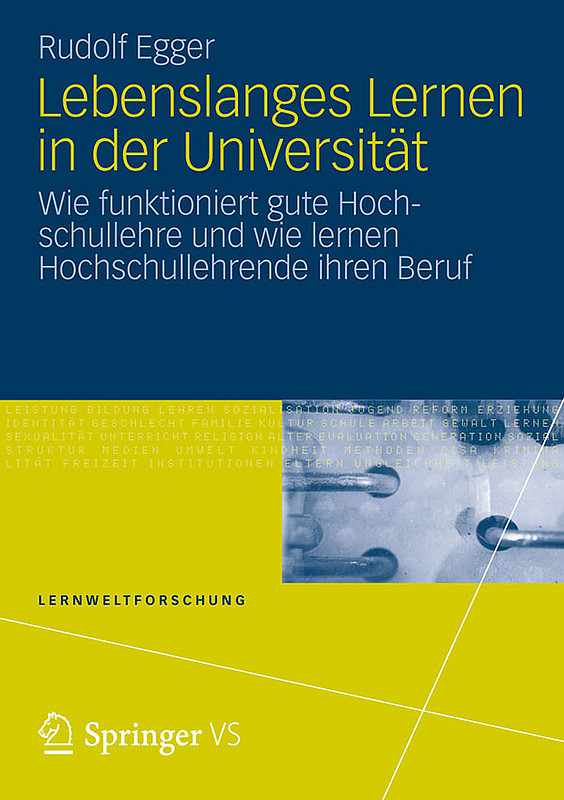
Rudolf Egger, Lebenslanges Lernen in der Universität. Wie funktioniert gute Hochschullehre und wie lernen Hochschullehrende ihren Beruf, Lernweltforschung, Springer 2012

Rudolf Egger, Lebenslanges Lernen in der Universität. Wie funktioniert gute Hochschullehre und wie lernen Hochschullehrende ihren Beruf, Lernweltforschung, Springer 2012

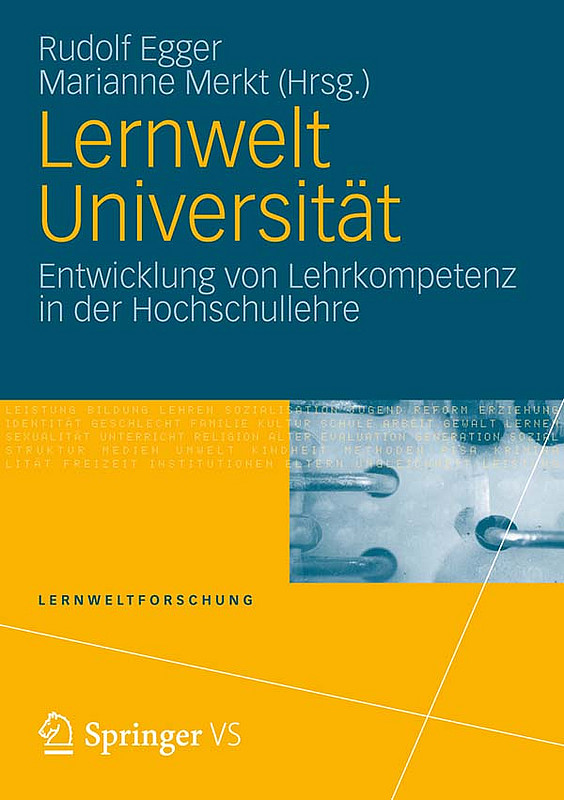
Rudolf Egger, Marianne Merkt (Hrsg.), Lernwelt Universität. Entwicklung von Lehrkompetenz in der Hochschullehre, Lernweltforschung, Springer 2012

Rudolf Egger, Marianne Merkt (Hrsg.), Lernwelt Universität. Entwicklung von Lehrkompetenz in der Hochschullehre, Lernweltforschung, Springer 2012

Zwei neue Publikationen analysieren die Voraussetzungen für Kompetenzentwicklung in der Hochschullehre

Was WissenschafterInnen an Universitäten brauchen, um ihre Lehrkompetenz zu erhöhen, und wie groß der Handlungsbedarf auf diesem Gebiet ist, hat Univ.-Prof. Dr. Rudolf Egger vom Institut für Erziehungs- und Bildungswissenschaft der Karl-Franzens-Universität Graz untersucht. Die Ergebnisse der Studien wurden kürzlich in zwei Publikationen veröffentlicht.


Die Verbindung von Forschung und Lehre ist eine zentrale Forderung an den Universitäten und das Anforderungsprofil an die Hochschullehrenden wird zunehmend komplexer. „Dabei steht die Lehre in einem Konkurrenzkampf mit der Forschung um Zeit, Ressourcen und Raum und führt in der systematischen Förderung und Weiterentwicklung einer ,Lehrpersönlichkeit‘ in universitären Karrieren meist ein Schattendasein“, stellt Rudolf Egger fest. In seiner Studie „Lebenslanges Lernen in der Universität“ analysiert der Autor, welche institutionellen, fachspezifischen und biografischen Elemente in der Entwicklung von Lehrkompetenz wirken, wie diese entstehen und wie sie für eine neue Kultur der Lehre genützt werden können.

Eine zweite von Rudolf Egger gemeinsam mit Dr. Marianne Merkt von der Universität Hamburg herausgegebene Publikation befasst sich unter dem Titel „Lernwelt Universität“ ebenfalls mit dem Zusammenhang zwischen der Entwicklung von Kompetenz in der Hochschullehre und den Bedingungen, unter denen diese Kompetenzen umgesetzt werden.


Als besonders sinnvolle und effektive Unterstützungsangebote nennt der Autor unter anderem Mentorings, Coachings und Peer-Hospitationen. Dabei könnten Fallbeispiele aus der Alltagspraxis diskutiert und gemeinsam interpretiert werden. Wesentlich sei die Schaffung von innovativen Anreizsystemen, um Lehrende zur Weiterbildung im Bereich der Hochschuldidaktik zu motivieren.
Auch die Entwicklung von Verfahren zur Qualitätssicherung beziehungsweise zum Qualitätsmanagement in der Feststellung von Lehrkompetenz sei unabdingbar. „Darüber hinaus muss Lehrkompetenz ein Berufungskriterium sein“, fordert Egger. „Das Lernen des Lehrens darf nicht länger hinter dem Lernen des Forschens verschwinden.“

Und nicht zuletzt verweist der Autor auf den von den Befragten immer wieder genannten Zusammenhang zwischen den konkreten Arbeitsbedingungen und hochschuldidaktischen Bemühungen: „Der Aufbau von Lehrautorität benötigt längerfristige Perspektiven. WissenschafterInnen in prekären Situationen haben innerhalb zeitknapper, aber arbeitsintensiver Verträge kaum Planungssicherheit für ihre weitere Entwicklung.“

Um die Qualität der Hochschullehre zu erhöhen, brauche es die Zusammenarbeit auf den Ebenen der Universitätsleitung, Fakultäten, Institute und Fachbereiche. Nur so könne längerfristig die Exzellenz der Lehre sichergestellt werden, ist Egger überzeugt. Ziel sei, EntscheidungsträgerInnen und Universitätslehrende dabei zu unterstützen, ein strategisches Konzept zur Förderung des Lehrkompetenz zu implementieren, das WissenschafterInnen hilft, ihr individuelles Lehrprofil zu entfalten.
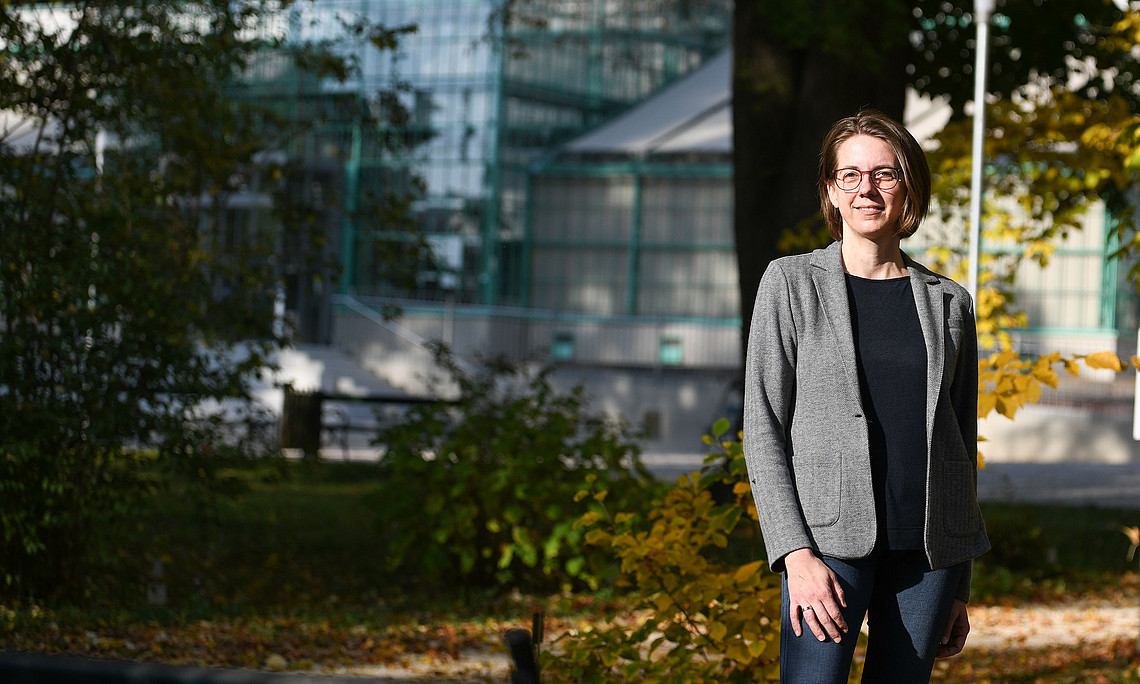
created by Gudrun Pichler

Related news

A fresh start, a calling, holidays: what draws people from other career paths to teaching

They used to develop software; now they teach maths in the classroom. Career changers are expected to help address the shortage of qualified teachers in Austria’s schools. In their doctoral theses at the Institute for Educational Research and Teacher Training at the University of Graz, Melanie Gürentz and Claudia Mair examined how these new teachers perceive their new professional roles.

Talent Talks bridge the gap in career guidance

The Styrian Chamber of Commerce (WKO Steiermark), the Styrian Chamber of Labour (AK Steiermark) and the AMS are joining forces when it comes to training young people and, through the “Talent Talks”, are creating a seamless pathway to career guidance. This takes preparation and follow-up support – just in time for the start of the term and the scheme’s tenth anniversary – to a whole new level. A new survey conducted by the Talent Centre among 2,687 former participants to mark the anniversary shows just how important this development is. Of the young people who received follow-up support from the Talent Report, 74.6 per cent stated that they had a good understanding of their own strengths and talents following the Talent Check. Without follow-up support, the figure was 66.5 per cent – a significant difference of 8.1 percentage points.

ERC Starting Grants: three million euros for two researchers at the University of Graz

Two researchers from the University of Graz have secured prestigious and generously funded grants from the EU. Starting Grants from the European Research Council (ERC), each worth 1.5 million euros, have been awarded to the human geographer Heide Bruckner and the social scientist Silvana Weiss.

Austria’s emissions rose in 2025: University of Graz researchers analyse the causes

The Environment Agency Austria has today published the figures for the country’s greenhouse gas emissions in 2025. While emissions fell sharply year on year from 2022 to 2024, they rose again by just under 0.7 per cent in 2025. Researchers at the University of Graz have analysed how much of this increase was due to structural changes in the economy and how much was attributable to external factors over which there is little control. “In 2025, the colder winter compared with 2024 increased emissions by 0.81 per cent, while the weak economy reduced them by 0.38 per cent. If we factor out these influences, we find an underlying increase of 0.26 per cent compared with the previous year,” reports economist Karl Steininger. “This clearly means that Austria is not on track to meet its climate targets, which require a substantial reduction in emissions by 2030.”

Begin of page section:
Additional information:

University of Graz
Universitaetsplatz 3
8010 Graz
Austria
  • Contact
  • Web Editors
  • Moodle
  • UNIGRAZonline
  • Imprint
  • Data Protection Declaration
  • Accessibility Declaration
Weatherstation
Uni Graz

End of this page section. Go to overview of page sections

End of this page section. Go to overview of page sections

Begin of page section:

End of this page section. Go to overview of page sections