Begin of page section:
Page sections:

  • Go to contents (Accesskey 1)
  • Go to position marker (Accesskey 2)
  • Go to main navigation (Accesskey 3)
  • Go to sub navigation (Accesskey 4)
  • Go to additional information (Accesskey 5)
  • Go to page settings (user/language) (Accesskey 8)
  • Go to search (Accesskey 9)

End of this page section. Go to overview of page sections

Begin of page section:
Page settings:

English en
Deutsch de
Search
Login

End of this page section. Go to overview of page sections

Begin of page section:
Search:

Search for details about Uni Graz
Close

End of this page section. Go to overview of page sections


Search

Begin of page section:
Main navigation:

Page navigation:

  • University

    University
    • About the University
    • Organisation
    • Faculties
    • Library
    • Working at University of Graz
    • Campus
    Developing solutions for the world of tomorrow - that is our mission. Our students and our researchers take on the great challenges of society and carry the knowledge out.
  • Research Profile

    Research Profile
    • Our Expertise
    • Research Questions
    • Research Portal
    • Promoting Research
    • Research Transfer
    • Ethics in Research
    • Commission for Scientific Integrity
    Scientific excellence and the courage to break new ground. Research at the University of Graz creates the foundations for making the future worth living.
  • Studies

    Studies
    • Prospective Students
    • Students
    • Registration for Study Programme (Winter semester 2026/27)
    • Welcome Weeks for First Year Students
  • Community

    Community
    • International
    • Location
    • Research and Business
    • Alumni
    The University of Graz is a hub for international research and brings together scientists and business experts. Moreover, it fosters the exchange and cooperation in study and teaching.
Topics
  • Sustainable University
  • Researchers answer
  • Work for us
Close menu

End of this page section. Go to overview of page sections

Begin of page section:
You are here:

University of Graz News Lebenswertes Europa

End of this page section. Go to overview of page sections

Wednesday, 19 June 2013

Lebenswertes Europa

Hans-Peter Folz

Hans-Peter Folz

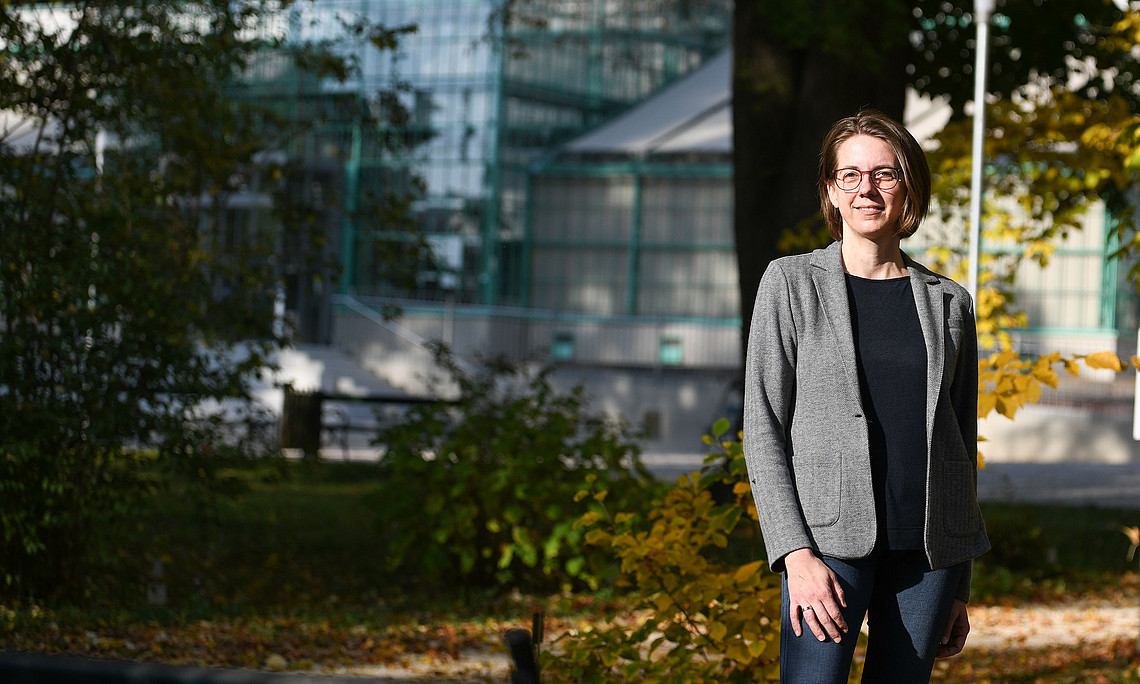
Hans-Peter Folz befasst sich mit dem Schutz der Grundrechte in der EU

Im April 2013 wurde der Beitritt der EU zur Europäischen Menschenrechtskonvention (EMRK) beschlossen. Nun ist es an den JuristInnen auszuarbeiten, wie sich das Abkommen in Einklang mit den gesetzlichen Gegebenheiten der einzelnen EU-Mitgliedsstaaten umsetzen lässt. Dieses umfassende Thema steht aktuell im Mittelpunkt der wissenschaftlichen Arbeit von Univ.-Prof. Dr. Hans-Peter Folz, seit 1. September 2012 Professor für Europarecht an der Karl-Franzens-Universität Graz. Der gebürtige Deutsche, der seine Gymnasialzeit in Wien verbracht hatte, habilitierte sich 2004 an der Uni Augsburg für Staatsrecht, Völkerrecht und Europarecht. Seinen Forschungsschwerpunkt bildet der Grundrechtsschutz in der EU.


„Bevor das neue Abkommen über den Beitritt der Europäischen Union zur EMRK in Kraft treten kann, sind noch viele rechtliche Fragen zu klären“, so Hans-Peter Folz. „Aufgabe der JuristInnen ist es, die Details der Umsetzung zu erarbeiten.“ Vorgegeben sind nur die Grundlagen, die genaue Ausgestaltung ist Sache der EU. „Unter anderem wird zu klären sein, ob ein einfaches Gesetzgebungsverfahren ausreichend ist oder der EU-Vertrag geändert werden muss“, so Folz.

Die Herausforderung ist komplex, da es in der Vergangenheit noch keine vergleichbaren Entscheidungen gab. „Noch nie ist ein Staatenverbund einer Menschenrechtskonvention beigetreten, bisher durften nur einzelne Länder Mitglieder sein“, erklärt der Jurist. Das Thema wird nicht nur die RechtsexpertInnen einige Jahren lang beschäftigen, auch die notwendige innerstaatliche Zustimmung der 27 EU-Staaten wird ihre Zeit brauchen.


Neben dem Beitritt der Europäischen Union zur EMRK widmet sich Hans-Peter Folz auch anderen aktuellen Fragen. Eine davon ist zum Beispiel, ob die Euro-Rettung mit Grundrechten in Konflikt gerät. Sparmaßnahmen führen meist zu Beeinträchtigungen im Sozialsystem oder zu Gehaltskürzungen im öffentlichen Dienst. In Griechenland kam es zu einem Streikverbot für LehrerInnen. „Teile der Sparmaßnahmen Portugals wurden vom portugiesischen Verfassungsgericht für verfassungswidrig erklärt“, erinnert der Jurist. Hinzu kommt die Frage der Verantwortlichkeit für die Grundrechtseingriffe: Liegt sie beim jeweiligen Mitgliedstaat oder bei der EU?


Als Experte für Europarecht lehrte Hans-Peter Folz auch schon in Asien. Von 2011/12 war er Associate Professor an der Seoul National University School of Law. Wie in Südkorea wird er demnächst auch in Graz auf Englisch lehren. Ab dem Wintersemester 2013/14 bietet er die Veranstaltung „The Law of the European Union“ an.
created by Gudrun Pichler

Related news

Commissioned by NATO: University of Graz tests high-tech textiles

As part of an international project, antimicrobial and fire-resistant fabrics with UV protection are being developed in Zagreb. Pharmacists from the University of Graz are ensuring that these fabrics are skin-friendly.

The Arctic up close: ORF special feature on the University of Graz’s research station in S

Students from the University of Graz are spending two weeks conducting research at the Univerisity of Graz research station at the Sermilik Fjord in Greenland, which has been operational for three years. They are measuring glacial runoff, tracking ice melt in real time and installing weather stations. ORF is following the expedition and will be reporting on the special feature ‘Arctic Adventure’ across its various channels from 20 July.

Medicine for ants: Caffeine prolongs the life of infected insects

Black coffee stimulates us and acts against bacteria. So, can caffeine also be good for insects? Yes, confirm biologists of the University of Graz. When ants suffer from a fungal disease, they consume more caffeine and remain active for longer.

How formulas are making medicine more personalised

When Federica Caforio talks about the heart, it doesn’t sound like an operating theatre, but rather like equations, parameters and simulations. Yet this is precisely where the medical promise of her research lies: one day, clinical data will be used to create a digital twin of the heart – a virtual model that will enable a better understanding of diseases and allow for more personalised treatment plans. She will be presenting her research at the ‘ECMTB 2026’ mathematics conference.

Begin of page section:
Additional information:

University of Graz
Universitaetsplatz 3
8010 Graz
Austria
  • Contact
  • Web Editors
  • Moodle
  • UNIGRAZonline
  • Imprint
  • Data Protection Declaration
  • Accessibility Declaration
Weatherstation
Uni Graz

End of this page section. Go to overview of page sections

End of this page section. Go to overview of page sections

Begin of page section:

End of this page section. Go to overview of page sections