Begin of page section:
Page sections:

  • Go to contents (Accesskey 1)
  • Go to position marker (Accesskey 2)
  • Go to main navigation (Accesskey 3)
  • Go to sub navigation (Accesskey 4)
  • Go to additional information (Accesskey 5)
  • Go to page settings (user/language) (Accesskey 8)
  • Go to search (Accesskey 9)

End of this page section. Go to overview of page sections

Begin of page section:
Page settings:

English en
Deutsch de
Search
Login

End of this page section. Go to overview of page sections

Begin of page section:
Search:

Search for details about Uni Graz
Close

End of this page section. Go to overview of page sections


Search

Begin of page section:
Main navigation:

Page navigation:

  • University

    University
    • About the University
    • Organisation
    • Faculties
    • Library
    • Working at University of Graz
    • Campus
    Developing solutions for the world of tomorrow - that is our mission. Our students and our researchers take on the great challenges of society and carry the knowledge out.
  • Research Profile

    Research Profile
    • Our Expertise
    • Research Questions
    • Research Portal
    • Promoting Research
    • Research Transfer
    • Ethics in Research
    • Commission for Scientific Integrity
    Scientific excellence and the courage to break new ground. Research at the University of Graz creates the foundations for making the future worth living.
  • Studies

    Studies
    • Prospective Students
    • Students
  • Community

    Community
    • International
    • Location
    • Research and Business
    • Alumni
    The University of Graz is a hub for international research and brings together scientists and business experts. Moreover, it fosters the exchange and cooperation in study and teaching.
  • Spotlight
Topics
  • Sustainable University
  • Researchers answer
  • Work for us
Close menu

End of this page section. Go to overview of page sections

Begin of page section:
You are here:

University of Graz News Rastlos

End of this page section. Go to overview of page sections

Monday, 16 May 2022

Rastlos

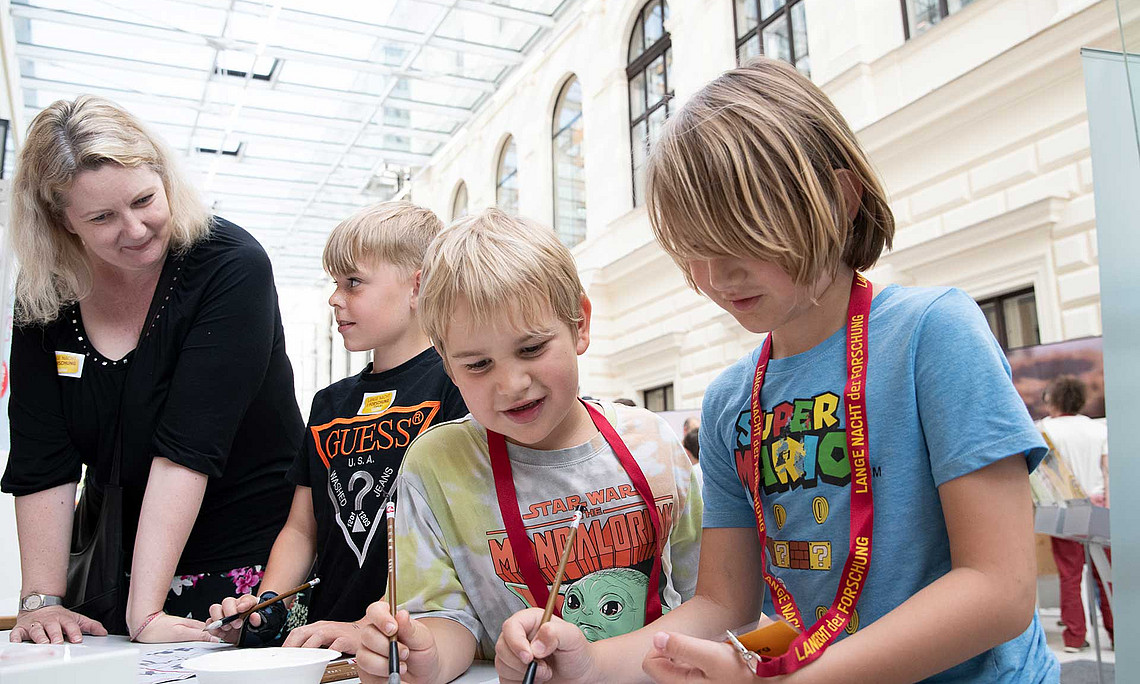
Sujet Lange Nacht der Forschung 2022

Die Lange Nacht der Forschung am 20. Mai steht an der Uni Graz unter dem Motto „We work for tomorrow“. Ein Programmüberblick.

Können Roboter die Bienen retten? Wo trifft Hightech auf Antike? Und was werden wir 2050 essen? Diese und viele weitere Fragen beantworten WissenschafterInnen der Universität Graz in der Langen Nacht der Forschung am 20. Mai 2022, von 17 bis 23 Uhr. In der neuen Universitätsbibliothek und im Hauptgebäude, im Botanischen Garten, am Observatorium Lustbühel und im Pop-up-Store in der Herrengasse 16 erwarten die BesucherInnen Mitmachstationen, Führungen und Vorträge.


STANDORT UNIVERSITÄTSBIBLIOTHEK (Foyer)

Mitmachstationen

  • Wer sind die Chemiker:innen der Natur?
  • Können Roboter die Bienen retten?
  • Wie klein können Rennautos sein?
  • Wie hilft Digitalisierung der Archäologie?
  • Wie blickt Mathematik in dein Herz?
  • Wie können wir Staus vermeiden?
  • speziell für Kinder: Wie tippe ich chinesisch?

Führungen - Achtung, mit Voranmeldung!

  • Was verraten Seidenfäden in alten Handschriften? 18.15, 20 Uhr
  • Was kann die neue Universitätsbibliothek? halbstündlich von 17 bis 22.30 Uhr
  • Wie wird das Mittelalter digital? 17.30, 19, 21.30 Uhr

Vorträge im HS 62.01

17.30 Uhr Wie erzählen Menschen Geschichte?
18 Uhr Warum brauchen wir Universitätsmuseen?
18.30 Uhr Was machen Mordwerkzeuge in einem Museum?
19 Uhr Was werden wir 2050 essen?
19.30 Uhr Wie grün kann Chemie sein?
20 Uhr Wo trifft Hightech auf Antike?
20.30 Uhr Wie retten wir tausendjährige Schriften?
21 Uhr Was waren die Bestseller im 16. Jahrhundert?
21.30 Uhr Dem Fehlerteufel nach über 500 Jahren auf der Spur?


STANDORT UNIGRAZ@MUSEUM (Universitätsplatz 3, UG)

  • Warum war der Schöckl ein heiliger Berg? Führung um 19 Uhr
  • Wer baute den ersten steirischen Laser? Vortrag um 19.30 Uhr
  • Was entdeckte der steirische Nobelpreisträger Victor Franz Hess? Führung um 20 Uhr
  • Wie finden wir Schätze? Workshops für Kinder um 17, 18, 19, 20 Uhr


STANDORT UNIVERSITÄTSARCHIV (Universitätsplatz 3, UG)

  • Wer sammelt die Information von morgen? Mitmachstation


STANDORT ARCHÄOLOGISCHE SAMMLUNGEN (Universitätsplatz 3, 2. OG)

  • Was war in Griechenland vor 4000 Jahren chic? laufende Führungen durch die Ausstellung


STANDORT BOTANISCHER GARTEN (Schubertstraße 59)

  • Wie schnell bewegen sich Pflanzen? Mitmachstation
  • Die Gewächshäuser stehen für Besichtigungen offen.


STANDORT POP-UP-STORE (Herrengasse 16)

  • Wie sprechen Menschen in der Stadt? Mitmachstation >> Mehr dazu im AirCampus


STANDORT OBSERVATORIUM LUSTBÜHEL (Lustbühelstraße 46)

Mitmachstation (im Freien - wetterabhängig!)

  • Wie viele Sterne kannst du sehen?

Führungen - nur mit Anmeldung! - laufend von 17 bis 21.30 Uhr

  • Teil 1: Wie gut kennst du unser Planetensystem?
  • Teil 2: Womit arbeiten AstrophysikerInnen?
  • Teil 3: Wie vermisst man Weltraumschrott? (Vortrag)
  • Teil 4: Können wir mit einem Laser auf Satellitenjagd gehen?


>> das gesamte Programm der Langen Nacht der Forschung an der Uni Graz
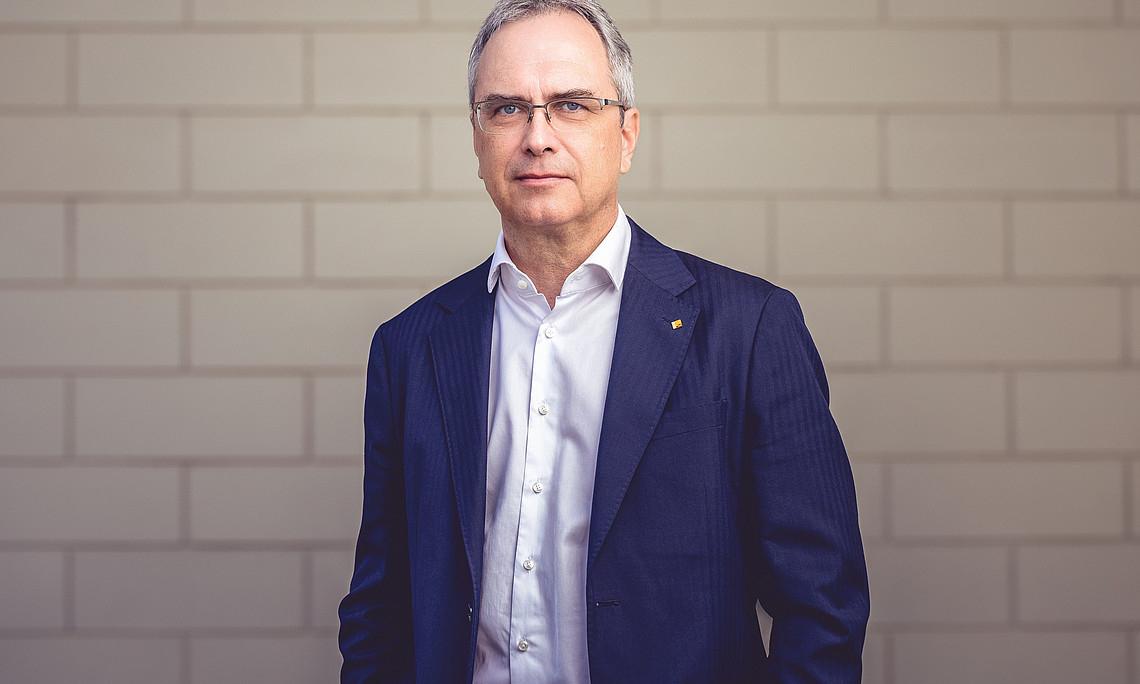
 

created by Gudrun Pichler

Related news

Building biological bridges: Chemist discovers an ecological tool for the pharmaceutical industry

Building a relationship on a solid foundation is also important in chemistry. To produce medicines, disinfectants or plant protection products, stable bonds between carbon atoms must be formed. Conventional chemical methods rely on environmentally harmful reagents and solvents to carry out the desired reaction. This process also produces unusable by-products. Chemist Lilla Gal has discovered an enzyme that enables the same process to take place efficiently and sustainably. The results of her research were recently published in the prestigious journal Angewandte Chemie.

Higher Education Strategy 2040: Austria’s universities on course for the future

Austria has 77 higher education institutions, which is above the EU average – but does this really make sense? The new Higher Education Strategy 2040 focuses on cooperation rather than mergers. As one of the six largest universities in Austria, the University of Graz plays a central role in this.

Climate research in Greenland: Old data provides new insights

The polar explorer and University of Graz professor Alfred Wegener left behind a unique collection of climate data from Greenland. A research team from the University of Graz is now analysing this 100-year-old treasure trove of data and comparing it with current measurements.

Wissen macht munter: Lange Nacht der Forschung im Mai 2024

Was macht uns smart? Das zeigt die Uni Graz am 24. Mai 2024 bei der Langen Nacht der Forschung im Foyer der Universitätsbibliothek. Bei zahlreichen Mitmach-Stationen erhalten die Besucher:innen Einblick in verschiedenste Wissenschaftsbereiche und erfahren etwa, wie wir die Natur als Vorbild nutzen können, was man beim Computerspielen lernt oder wie Comics die Welt erklären. Den Termin bereits jetzt im Kalender vormerken, das genaue Programm folgt…

Begin of page section:
Additional information:

University of Graz
Universitaetsplatz 3
8010 Graz
Austria
  • Contact
  • Web Editors
  • Moodle
  • UNIGRAZonline
  • Imprint
  • Data Protection Declaration
  • Accessibility Declaration
Weatherstation
Uni Graz

End of this page section. Go to overview of page sections

End of this page section. Go to overview of page sections

Begin of page section:

End of this page section. Go to overview of page sections