



Begin of page section:
Page sections:

  • Go to contents (Accesskey 1)
  • Go to position marker (Accesskey 2)
  • Go to main navigation (Accesskey 3)
  • Go to sub navigation (Accesskey 4)
  • Go to additional information (Accesskey 5)
  • Go to page settings (user/language) (Accesskey 8)
  • Go to search (Accesskey 9)

End of this page section. Go to overview of page sections

Begin of page section:
Page settings:

English en
Deutsch de
Search
Login

End of this page section. Go to overview of page sections

Begin of page section:
Search:

Search for details about Uni Graz
Close

End of this page section. Go to overview of page sections


Search

Begin of page section:
Main navigation:

Page navigation:

  • University

    University
    • About the University
    • Organisation
    • Faculties
    • Library
    • Working at University of Graz
    • Campus
    Developing solutions for the world of tomorrow - that is our mission. Our students and our researchers take on the great challenges of society and carry the knowledge out.
  • Research Profile

    Research Profile
    • Our Expertise
    • Research Questions
    • Research Portal
    • Promoting Research
    • Research Transfer
    • Ethics in Research
    • Commission for Scientific Integrity
    Scientific excellence and the courage to break new ground. Research at the University of Graz creates the foundations for making the future worth living.
  • Studies

    Studies
    • Prospective Students
    • Students
  • Community

    Community
    • International
    • Location
    • Research and Business
    • Alumni
    The University of Graz is a hub for international research and brings together scientists and business experts. Moreover, it fosters the exchange and cooperation in study and teaching.
  • Spotlight
Topics
  • Sustainable University
  • Researchers answer
  • Work for us
Close menu

End of this page section. Go to overview of page sections

Begin of page section:
You are here:

University of Graz News Kurs auf Zukunft

End of this page section. Go to overview of page sections

Wednesday, 27 October 2021

Kurs auf Zukunft

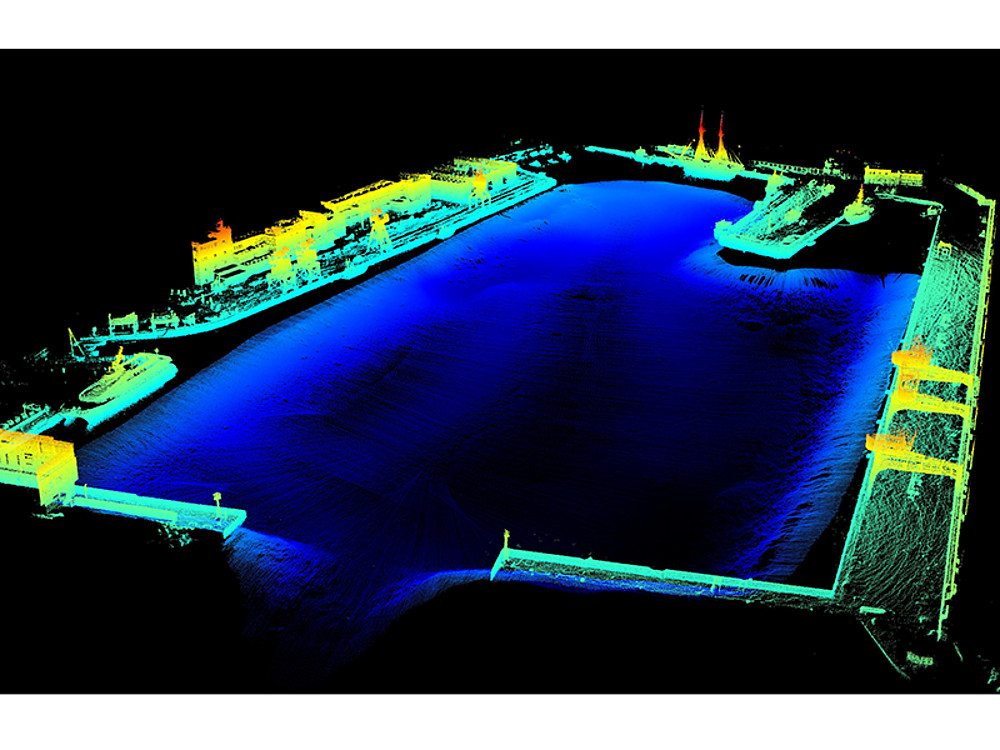
Modell Hafenbecken Porto Baros, Rijeka. Grafik: CCHS - Croatian Coast and Harbor Survey

Ein aus Unter- und Überwasseraufnahmen zusammengesetztes Modell von Porto Baros, einem Teil des Hafens von Rijeka. Grafik: CCHS - Croatian Coast and Harbor Survey

Know-how der Universität Graz fließt in die Digitalisierung von Kroatiens Küste

Der Autonomen Schifffahrt gehört die Zukunft auf See. Ein innovatives High-Tech-Projekt mit maßgeblicher Beteiligung des Instituts für Geographie und Raumforschung der Universität Graz schafft in Kroatien wesentliche Voraussetzungen dafür: mit der digitalen Vermessung und Kartierung der Küste und Häfen. Aus Unter- und Überwasseraufnahmen werden hochpräzise, standardisierte 3D-Modelle der Küstenlinie erstellt, die der kroatischen Regierung als Grundlage für die Automatisierung in der kommerziellen und privaten Schifffahrt dienen sollen. Die digitale Landkarte wird laut Plan bis 2030 fertiggestellt sein und dann die von Hindernissen freien Bereiche für Schiffswege und Landestellen ausweisen. Dadurch lassen sich zusätzlich bislang ungenutzte, eventuell sogar schnellere Routen finden, für den Fall von starkem Schiffsverkehr. Darüber hinaus ermöglicht das Modell auch bei schlechter Sicht eine sichere Navigation.

Es ist ein echtes Pionierprojekt: Im „Croatian Coast and Harbor Survey“ (CCHS) kombinieren österreichische und deutsche Unternehmen und Forschungseinrichtungen innovative Technologien, um erstmals die gesamte Küstenlinie Kroatiens bis zu einer Tiefe von 150 Meter unter dem Meeresspiegel digital zu erfassen. Bei der Landvermessung über dem Wasser kommt unter anderem eine neuartige Sensorbox zum Einsatz, die vom Institut für Geographie und Raumforschung der Universität Graz gemeinsam mit der Virtual Vehicle Research GmbH entwickelt wurde. „Wir scannen damit von einem Boot aus die Oberfläche, um ein Bild der Ufer, Piers, Häfen, Marinas und aller anderen Teile der Küste zu erstellen“, erklärt Robert Galovic, Projektleiter an der Universität Graz. „Unsere Sensorbox liefert äußert genaue Daten für hochaufgelöste 3D-Modelle, die NutzerInnen über Cloud-Services bzw. eine App zur Verfügung gestellt werden können.“

Am 15. Oktober 2021 wurde das System in Rijeka vor kroatischen Medien, involvierten TechnologiepartnerInnen und zukünftigen NutzerInnen präsentiert. „Die ersten Ergebnisse der Digitalisierung zeigen, dass diese Technologie die Herausforderungen im marinen Bereich meistern kann“, so Galovic. Den Anfang machte ein aus Unter- und Überwasseraufnahmen zusammengesetztes Modell von Porto Baros, einem Teil des Hafens von Rijeka.

Initiiert wurde CCHS von den Projektpartnern Virtual Vehicle Research GmbH, Seefahrt-Experte Milo Miklauši?, Institut für Geographie und Raumforschung der Universität Graz, FURUNO Germany & WASSP, ACI, Lürssen und VouGee GmbH.
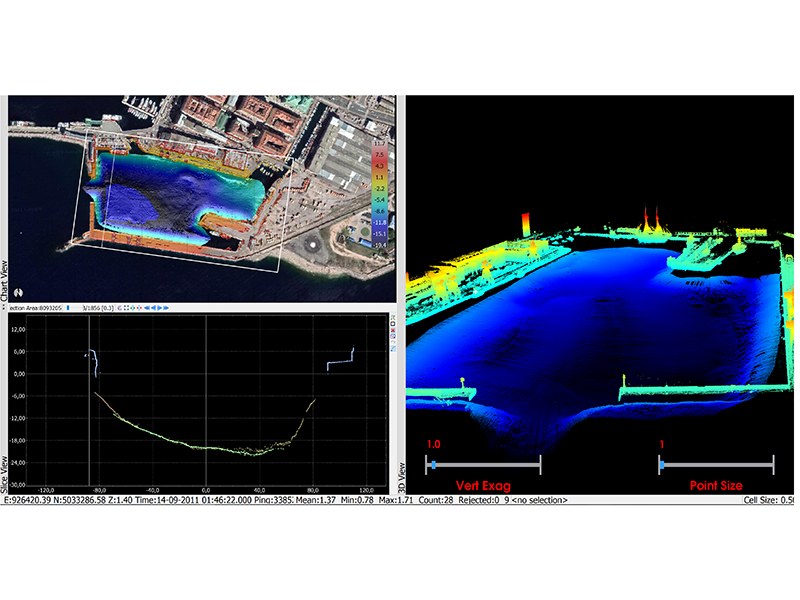
Modell von Porto Baros, Rijeka. Grafik: CCHS - Croatian Coast and Harbor Survey
Hochpräzise, standardisierte 3D-Modelle der Küste, inklusive Hafenanlagen, sollen als Grundlage für die Automatisierung in der Schifffahrt dienen. Grafik: CCHS - Croatian Coast and Harbor Survey
created by Gudrun Pichler

Related news

Career Booster: How the Research Careers Campus supports researchers

They are innovative, creative and productive – researchers who have not yet been appointed to a professorship make a massive contribution to a university’s research output. To provide them with even better support on their career path, the University of Graz has established the Research Careers Campus. The official launch took place on 22 April 2026 with a ‘festival’.

Greenery on the rise: over 500 new flowers, perennials and shrubs on campus

Bright blooms and fresh greenery make our hearts beat faster in spring. But it is not just us humans who delight in this colourful growth. For many animals, this splendour provides, above all, food and habitat. There has recently been an increase in this on the University of Graz campus. More than 500 native flowers, perennials and shrubs have been planted on strips of fallow land around Universitätsplatz 2.

Around the world in eight stops: the Long Night of Research at the University of Graz

On 24 April from 5 pm, you can take a short trip around the globe at the University of Graz, discovering pecularities of foreign countries or new local features in the entrance hall of the University Library. The itinerary takes you through introduced animal species, political attitudes and the omnipotence of algorithms. There will also be a programme in the historic reading hall, as well as at the UniGraz@Museum and the University Archive.

Building biological bridges: Chemist discovers an ecological tool for the pharmaceutical industry

Building a relationship on a solid foundation is also important in chemistry. To produce medicines, disinfectants or plant protection products, stable bonds between carbon atoms must be formed. Conventional chemical methods rely on environmentally harmful reagents and solvents to carry out the desired reaction. This process also produces unusable by-products. Chemist Lilla Gal has discovered an enzyme that enables the same process to take place efficiently and sustainably. The results of her research were recently published in the prestigious journal Angewandte Chemie.

Begin of page section:
Additional information:

University of Graz
Universitaetsplatz 3
8010 Graz
Austria
  • Contact
  • Web Editors
  • Moodle
  • UNIGRAZonline
  • Imprint
  • Data Protection Declaration
  • Accessibility Declaration
Weatherstation
Uni Graz

End of this page section. Go to overview of page sections

End of this page section. Go to overview of page sections

Begin of page section:

End of this page section. Go to overview of page sections


