Begin of page section:
Page sections:

  • Go to contents (Accesskey 1)
  • Go to position marker (Accesskey 2)
  • Go to main navigation (Accesskey 3)
  • Go to sub navigation (Accesskey 4)
  • Go to additional information (Accesskey 5)
  • Go to page settings (user/language) (Accesskey 8)
  • Go to search (Accesskey 9)

End of this page section. Go to overview of page sections

Begin of page section:
Page settings:

English en
Deutsch de
Search
Login

End of this page section. Go to overview of page sections

Begin of page section:
Search:

Search for details about Uni Graz
Close

End of this page section. Go to overview of page sections


Search

Begin of page section:
Main navigation:

Page navigation:

  • University

    University
    • About the University
    • Organisation
    • Faculties
    • Library
    • Working at University of Graz
    • Campus
    Developing solutions for the world of tomorrow - that is our mission. Our students and our researchers take on the great challenges of society and carry the knowledge out.
  • Research Profile

    Research Profile
    • Our Expertise
    • Research Questions
    • Research Portal
    • Promoting Research
    • Research Transfer
    • Ethics in Research
    Scientific excellence and the courage to break new ground. Research at the University of Graz creates the foundations for making the future worth living.
  • Studies

    Studies
    • Prospective Students
    • Students
  • Community

    Community
    • International
    • Location
    • Research and Business
    • Alumni
    The University of Graz is a hub for international research and brings together scientists and business experts. Moreover, it fosters the exchange and cooperation in study and teaching.
  • Spotlight
Topics
  • Sustainable University
  • Researchers answer
  • Work for us
Close menu

End of this page section. Go to overview of page sections

Begin of page section:
You are here:

University of Graz News Können sich Tiere und Roboter verständigen?

End of this page section. Go to overview of page sections

Thursday, 30 August 2018

Können sich Tiere und Roboter verständigen?

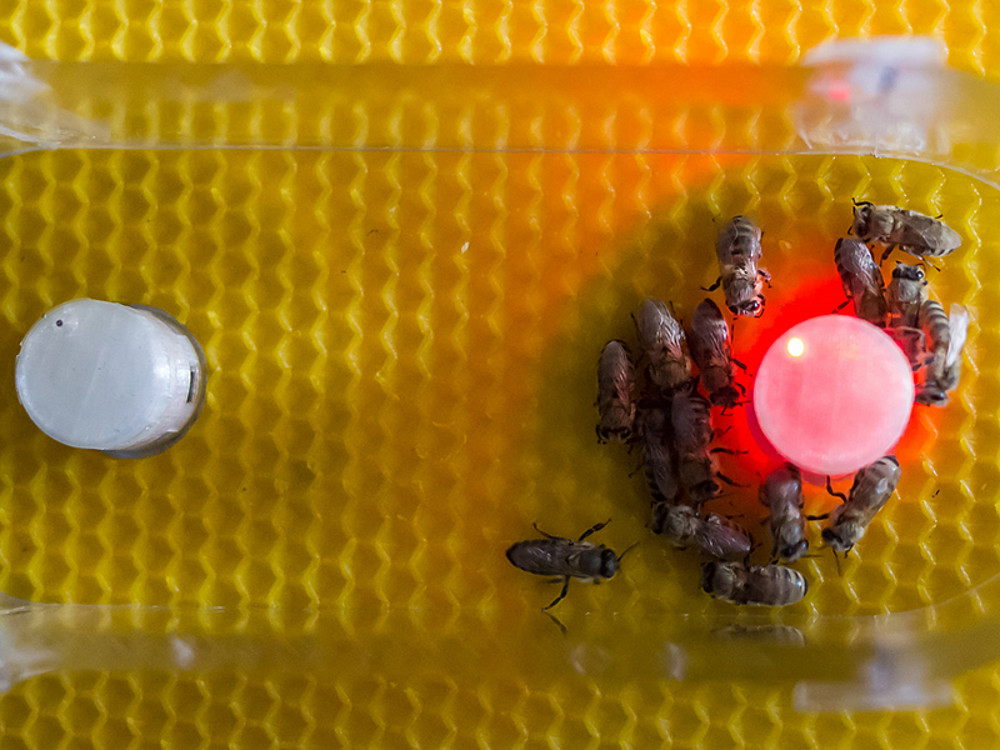
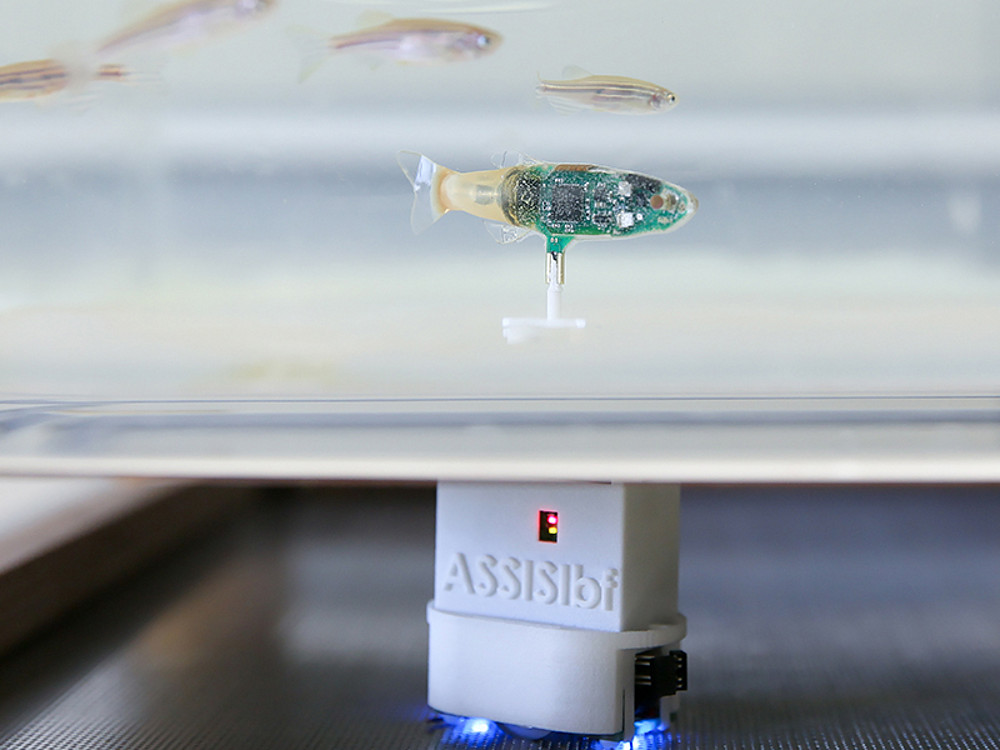
Beim Zukunftsfestival Ars Electronica 2018 sind die gemischten Tier-Roboterschwärme live zu sehen. Fotos: ASSISIbf

Beim Zukunftsfestival Ars Electronica 2018 sind die gemischten Tier-Roboterschwärme live zu sehen. Fotos: ASSISIbf

Das ForscherInnenteam hat Roboter so programmiert, dass sie sich von Bienen und Fischen abschauen, wie sie zusammen das Beste für die Gemeinschaft erreichen.

Das ForscherInnenteam hat Roboter so programmiert, dass sie sich von Bienen und Fischen abschauen, wie sie zusammen das Beste für die Gemeinschaft erreichen.

Kooperations-Projekt, koordiniert von der Universität Graz, beim Ars Electronica-Festival

Bienen, Fische und Roboter lösen gemeinsam Probleme – was nach Science Fiction klingt, ist im Artificial Life Lab der Universität Graz Realität. Gelungen ist dies im Rahmen des internationalen, mit sechs Millionen Euro geförderten EU-Forschungsprojektes „Animal and robot Societies Self-organise and Integrate by Social Interaction – bees and fish“ – kurz ASSISIbf. Unter der Koordination der Universität Graz haben ForscherInnen aus der Schweiz, Deutschland, Frankreich, Portugal und Kroatien erfolgreich eine Verbindung zwischen Tier- und der Maschinengesellschaft hergestellt. Beim Zukunftsfestival Ars Electronica, das am 6. September 2018 in Linz eröffnet wird, sind die gemischten Tier-Roboterschwärme live zu sehen.

„Wir haben Roboter in bestehende Gemeinschaften von Bienen und Fischen eingefügt“, erklärt Projektkoordinator Thomas Schmickl, Leiter des Artificial Life Lab. Diese neuartigen bio-hybriden „Rechensymbiosen“, so Schmickl, suchen effizient nach optimalen oder nahezu optimalen Netzwerkkonfigurationen. „Roboter haben wir so programmiert, dass sie sich von Bienen und Fischen abschauen, wie sie zusammen das Beste für die Gemeinschaft erreichen“, beschreibt der Biologe.
Und die WissenschafterInnen sind zuversichtlich, was die Einsatzmöglichkeiten anlangt: „Durch den Einsatz einer großen Anzahl von Lebewesen könnten zukünftige bio-hybride Anwendungen Netzwerkprobleme von globalen Ausmaßen schneller als heutige Computeralgorithmen lösen, indem sie sich die Parallelität der Informationsverarbeitung von Tierschwärmen zunutze machen.“

>> Mehr über die Präsentation bei der Ars Electronica erfahren

>> Mehr über das Projekt ASSISI erfahren

created by Andreas Schweiger

Related news

AI in schools: Maria Bertel drafts legal guidelines for teachers

The legal expert and her team analysed the legal situation regarding the use of artificial intelligence in education as part of an EU project and answered open questions from practice.

Cosmetics in the environment: University of Graz proves danger to ants

Titanium dioxide, which is found in cosmetics, for example, is increasingly entering the environment in the form of nanoparticles. This could also put insects at risk. If ants ingest the substance in combination with the pesticide glyphosate, it disturbs the development of their offspring. Scientists at the University of Graz are drawing attention to the negative consequences of this toxic cocktail.

Varied and healthy: studies move

Exercise is the ideal way to balance out everyday stress, prevent illness and keep fit. Why this is the case, how to do it properly and what role human bodily functions and psychology play can be studied at the University of Graz.

Religious scholar Theresia Heimerl: Fasting as a spiritual boost

Fasting is not just a strategy for losing weight – it is a ritual dating back thousands of years with spiritual and evolutionary roots that has positive effects on the body. At the University of Graz, religious scholar Theresia Heimerl is investigating why fasting is a "spiritual boost".

Begin of page section:
Additional information:

University of Graz
Universitaetsplatz 3
8010 Graz
Austria
  • Contact
  • Web Editors
  • Moodle
  • UNIGRAZonline
  • Imprint
  • Data Protection Declaration
  • Accessibility Declaration
Weatherstation
Uni Graz

End of this page section. Go to overview of page sections

End of this page section. Go to overview of page sections

Begin of page section:

End of this page section. Go to overview of page sections