Begin of page section:
Page sections:

  • Go to contents (Accesskey 1)
  • Go to position marker (Accesskey 2)
  • Go to main navigation (Accesskey 3)
  • Go to sub navigation (Accesskey 4)
  • Go to additional information (Accesskey 5)
  • Go to page settings (user/language) (Accesskey 8)
  • Go to search (Accesskey 9)

End of this page section. Go to overview of page sections

Begin of page section:
Page settings:

English en
Deutsch de
Search
Login

End of this page section. Go to overview of page sections

Begin of page section:
Search:

Search for details about Uni Graz
Close

End of this page section. Go to overview of page sections


Search

Begin of page section:
Main navigation:

Page navigation:

  • University

    University
    • About the University
    • Organisation
    • Faculties
    • Library
    • Working at University of Graz
    • Campus
    Developing solutions for the world of tomorrow - that is our mission. Our students and our researchers take on the great challenges of society and carry the knowledge out.
  • Research Profile

    Research Profile
    • Our Expertise
    • Research Questions
    • Research Portal
    • Promoting Research
    • Research Transfer
    • Ethics in Research
    • Commission for Scientific Integrity
    Scientific excellence and the courage to break new ground. Research at the University of Graz creates the foundations for making the future worth living.
  • Studies

    Studies
    • Prospective Students
    • Students
  • Community

    Community
    • International
    • Location
    • Research and Business
    • Alumni
    The University of Graz is a hub for international research and brings together scientists and business experts. Moreover, it fosters the exchange and cooperation in study and teaching.
  • Spotlight
Topics
  • Sustainable University
  • Researchers answer
  • Work for us
Close menu

End of this page section. Go to overview of page sections

Begin of page section:
You are here:

University of Graz News Kleider machen Leute

End of this page section. Go to overview of page sections

Thursday, 10 November 2016

Kleider machen Leute
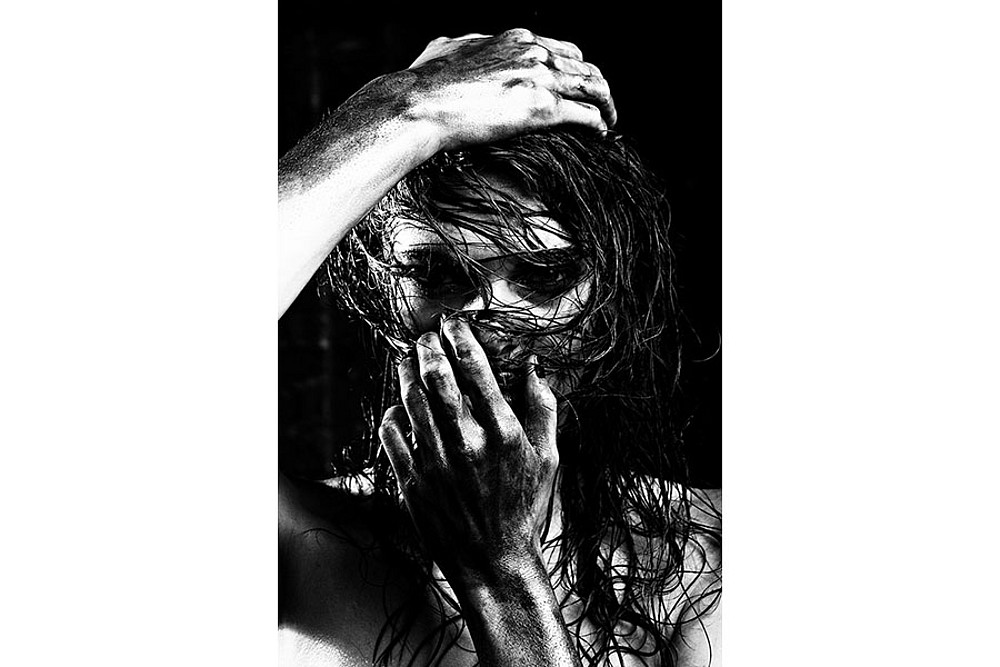
Fotos von Haley Ballard werden 2017 in der Fakultätsbibliothek der Theologisch-Katholischen Fakultät zu sehen sein. Die international tätige Fotografin begleitet das Projekt „Kleider machen Leute“. Foto: Haley Ballard

Fotos von Haley Ballard werden 2017 in der Fakultätsbibliothek der Theologisch-Katholischen Fakultät zu sehen sein. Die international tätige Fotografin begleitet das Projekt „Kleider machen Leute“. Foto: Haley Ballard

Uni Graz startet internationales Forschungsprojekt über Mode und Kunst in ihrer sozialen Dimension

Kleider machen Leute – das gleichnamige Forschungsprojekt am Institut für Kunstgeschichte der Karl-Franzens-Universität Graz untersucht die Verbindung von Kunst, Mode, Identität und Integration. Unter der Leitung von Univ.-Prof. Dr. Sabine Flach erforschen KunsthistorikerInnen, SoziologInnen und TheologInnen der Uni Graz in Kooperation mit der Kunstinitiative „Kleiderwerk der Werkstadt Graz“ die Beziehung von Menschen in Transit, KünstlerInnen, WissenschafterInnen und KonsumentInnen.

Wissenschaft zieht an
Das Projekt „Kleider machen Leute“ besteht aus künstlerischen Komponenten und der wissenschaftlichen Perspektive. Alle Aspekte sind eng mit der Schneiderei Kleiderwerk der Werkstadt Graz verknüpft. Im „Kleiderwerk“ fertigen Asylwerberinnen Mode an, die den Frauen eine Absicherung und Perspektive bieten sollen. „Das Kleiderwerk will im Grazer Stadtraum eine kreative Möglichkeit der wertschätzenden Integration von Menschen in Transit aufzeigen“, so Flach, Professorin für Moderne und Gegenwartskunst.
Drei Ausstellungen begleiten die Forschungen. Die noch bis 19. November 2016 in der Werkstadt Graz in der Sporgasse 20 gezeigte Ausstellung „Leaving is the best point of view“ der US-Amerikanerin Alexandra Hammond tritt in einen Dialog mit dem Kleiderwerk und seinen Protagonistinnen. Die New Yorker Fotografin Haley Ballard konnte ebenfalls gewonnen werden. Ergebnisse ihrer künstlerischen Auseinandersetzung werden im Frühjahr 2017 im Uni-Zentrum Theologie in der Heinrichstraße 78 sowie im Juni 2017 in der Werkstadt Graz zu sehen sein. Auch diese künstlerischen Darbietungen werden mit kunsthistorischer und soziologischer Forschung begleitet.
Ein erstes Vernetzungstreffen mit KooperationspartnerInnen und MitarbeiterInnen der Universität Graz findet am 2. Dezember 2016 im Rahmen des interdisziplinären Veranstaltungsformats der Geisteswissenschaftlichen Fakultät „Meet & Eat“ statt.

Relational Aesthetics in der Steiermark
Einen weiteren Aspekt von „Kleider machen Leute“ bildet die Erforschung der internationalen Bedeutung der Steiermark für die Relational Aesthetics. Diese Kunstrichtung ist vor allem an der Schaffung einer Beziehung zwischen KünstlerInnen und RezipientInnen als am statischen Kunstwerk selbst interessiert. „Diese Verknüpfung des Grazer Kunstschaffens mit internationalen Strömungen ist in der steirischen Kulturlandschaft kein Novum“, hält Sabine Flach fest. Schon seit den 1960er-Jahren finden relevante Positionen der sogenannten Relational Aesthetics statt.
Neben einer internationalen, im Frühjahr 2018 geplanten Konferenz ist Sabine Flach auch die Einbindung des wissenschaftlichen Nachwuchses ein zentrales Anliegen: „Unter anderem übernimmt Sabine Hirzer im Rahmen ihrer Dissertation zum Thema Mode und Revolution die kunsttheoretische Begleitung des Projekts.“ Zudem ist das Vorhaben im Uni-Graz-Forschungsschwerpunkt Heterogenität und Kohäsion verankert und Teil der Initiative Flüchtlingshilfe und Integration der Universität Graz.

„Kleider machen Leute oder: Gegenwartskunst zwischen ars und techne. Zur herausragenden Bedeutung der Kunstproduktion der Steiermark für Relational Aesthetics im internationalen Kunstkontext. Ein Projekt zur Erschließung eines Desiderats für gegenwärtige Kunstgeschichtsschreibung“ wird vom Land Steiermark gefördert. >> Mehr Info

created by Andreas Schweiger

Related news

Studying at the University of Graz: How to enrol

Ready for a new chapter in your life with the start of your studies at the University of Graz in the winter semester 2026/27? Here you will find information on deadlines, admission procedures, registration, and everything else you need to successfully start your studies in the fall.

Interpreting data: Why studies sometimes get it wrong

Hilmar Brohmer and Ziva Korda from the Institute of Psychology, together with 500 international colleagues, have re-evaluated a hundred scientific publications and have often come to different conclusions.

Crystal-clear: AI method revolutionises solar observation

The Sun makes life on Earth possible. However, its magnetic fields can also cause massive disruption. This makes it all the more important to gain a better understanding of the processes taking place on our nearest star. A research team from the University of Graz and the High Altitude Observatory in Boulder (USA) has succeeded in doing just that. The astrophysicists have developed an AI-supported method that makes even the smallest structures on the Sun visible. The scientists are convinced that this will bring about a lasting change in solar observation and that the new method can be used for the planned European Solar Telescope.

Long Night of Research: How many languages are there in the world?

From a linguistic perspective, there are worlds of difference between Bern, Berlin and Vienna. A dialect impersonator will demonstrate live just how varied German can sound. How many languages are there in the world? What are their distinctive features? Which of these are spoken in Austria? These and other questions will be answered during the Long Night of Research at the University of Graz: on Friday, 24 April 2025, from 5 pm to 11 pm, in the University Library. Visitors can immerse themselves in the diversity of languages without travelling far by taking part in a quiz at the station.

Begin of page section:
Additional information:

University of Graz
Universitaetsplatz 3
8010 Graz
Austria
  • Contact
  • Web Editors
  • Moodle
  • UNIGRAZonline
  • Imprint
  • Data Protection Declaration
  • Accessibility Declaration
Weatherstation
Uni Graz

End of this page section. Go to overview of page sections

End of this page section. Go to overview of page sections

Begin of page section:

End of this page section. Go to overview of page sections