Begin of page section:
Page sections:

  • Go to contents (Accesskey 1)
  • Go to position marker (Accesskey 2)
  • Go to main navigation (Accesskey 3)
  • Go to sub navigation (Accesskey 4)
  • Go to additional information (Accesskey 5)
  • Go to page settings (user/language) (Accesskey 8)
  • Go to search (Accesskey 9)

End of this page section. Go to overview of page sections

Begin of page section:
Page settings:

English en
Deutsch de
Search
Login

End of this page section. Go to overview of page sections

Begin of page section:
Search:

Search for details about Uni Graz
Close

End of this page section. Go to overview of page sections


Search

Begin of page section:
Main navigation:

Page navigation:

  • University

    University
    • About the University
    • Organisation
    • Faculties
    • Library
    • Working at University of Graz
    • Campus
    Developing solutions for the world of tomorrow - that is our mission. Our students and our researchers take on the great challenges of society and carry the knowledge out.
  • Research Profile

    Research Profile
    • Our Expertise
    • Research Questions
    • Research Portal
    • Promoting Research
    • Research Transfer
    • Ethics in Research
    Scientific excellence and the courage to break new ground. Research at the University of Graz creates the foundations for making the future worth living.
  • Studies

    Studies
    • Prospective Students
    • Students
  • Community

    Community
    • International
    • Location
    • Research and Business
    • Alumni
    The University of Graz is a hub for international research and brings together scientists and business experts. Moreover, it fosters the exchange and cooperation in study and teaching.
  • Spotlight
Topics
  • Sustainable University
  • Researchers answer
  • Work for us
Close menu

End of this page section. Go to overview of page sections

Begin of page section:
You are here:

University of Graz News Keimkiller

End of this page section. Go to overview of page sections

Monday, 15 January 2018

Keimkiller

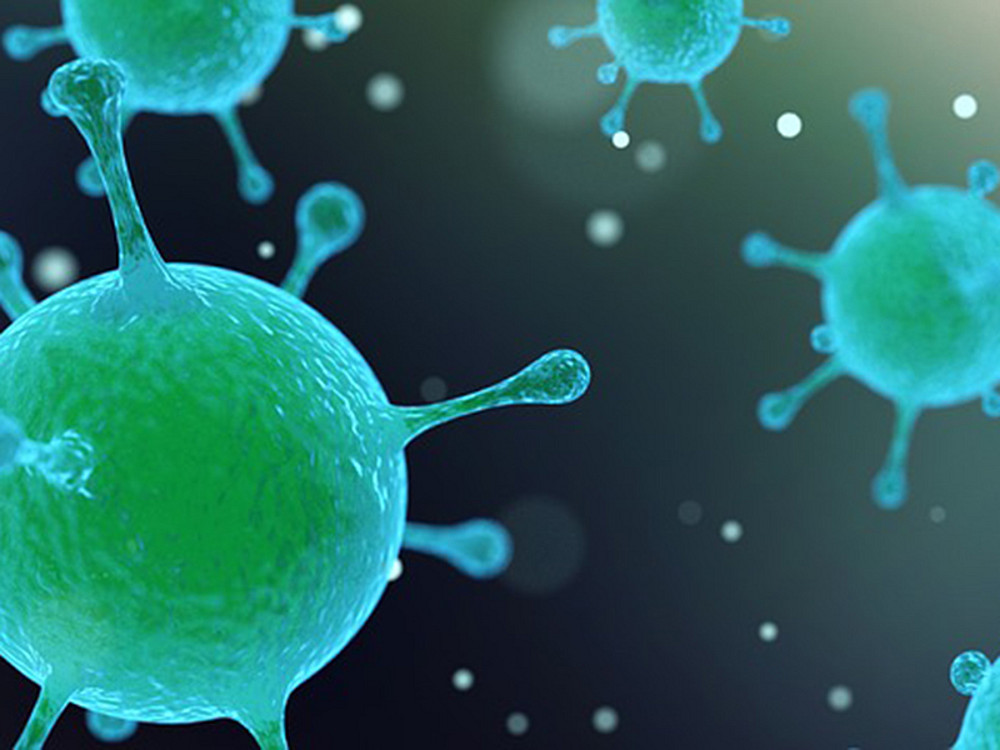
Kampf gegen Keime: ForscherInnen der Uni Graz haben einen Wirkstoff gegen resistente Bakterien entdeckt. Foto: pixabay.com

Kampf gegen Keime: ForscherInnen der Uni Graz haben einen Wirkstoff gegen resistente Bakterien entdeckt. Foto: pixabay.com

ForscherInnen der Uni Graz finden in Körpersubstanz Wirkstoff gegen resistente Bakterien

Jährlich sterben laut WHO ca. 25 000 Menschen in der EU an Infektionen durch resistente Bakterien, die sie sich in einer Gesundheitseinrichtung zugezogen haben. Im Kampf gegen Antibiotika-Resistenzen ist es WissenschafterInnen der Uni Graz in Kooperation mit internationalen KollegInnen gelungen, einen antibakteriellen Wirkstoff aus menschlichen Substanzen zu erforschen und für die medizinische Anwendung vorzubereiten. Die Ergebnisse wurden kürzlich im renommierten Fachjournal Science Translational Medicine veröffentlicht.

Es ist gleichsam reflexartig, dass man eine kleine Wunde an der Hand zum Mund führt und mit Speichel benetzt. Dr. Nermina Malanovic und Assoz.-Prof. Dr. Karl Lohner, Institut für Molekulare Biowissenschaften der Karl-Franzens-Universität Graz, können das Verhalten erklären: „In der Köperflüssigkeit sind bestimmte Stoffe enthalten, die Keime abtöten.“ Es ist ein bestimmtes Peptid, eine Kette an Aminosäuren, das antibakteriell wirkt. Solche Verbindungen sind im menschlichen Körper nicht nur im Speichel, sondern auch in Tränenflüssigkeiten und in weißen Blutkörperchen oder auf der Haut vorhanden. Den dahinterliegenden Abwehr-Mechanismus haben die beiden ForscherInnen der Uni Graz im Rahmen eines EU-Projekts gemeinsam mit den niederländischen Universitäten Leiden und Amsterdam geklärt. „Das positiv geladene Peptid mit der Bezeichnung SAAP-148 löst gleichsam die bakteriellen Zellmembranen auf, die aus negativ geladenen Phospholipiden bestehen, und zerstört in Folge die Bakterien“, weiß Nermina Malanovic.

Die Wirkung des Peptids, die mit Hilfe von Zellkulturen und im Tierversuch untersucht wurde, konnte in Form von Cremen auf der Hautoberfläche erfolgreich nachgewiesen werden. Die ForscherInnen sehen vielfältige Anwendungsbereiche, insbesondere angesichts der rapid steigenden Anzahl an Antibiotika-resistenten Keimen. Lohner: „Wir haben festgestellt, dass dieses Peptid auch bei jenen Bakteriengruppen, die unter der Abkürzung ESKAPE besonders geläufig und massiv für die steigenden Antibiotika-Resistenzen verantwortlich sind, eine effiziente Wirkung hat.“
Dazu kommt, dass sich die Peptide leicht und kostengünstig synthetisch herstellen lassen. In Zusammenarbeit mit einem am EU-Projekt beteiligten Pharmaunternehmen sollen nun weitere Untersuchungen vorgenommen werden, um den Wirkungsgrad zu optimieren und das Peptid in Zukunft auch für resistente Biofilme auf Implantaten, wie zum Beispiel in Hüfte und Knie, anwenden zu können.

Publikation:
The antimicrobial peptide SAAP-148 combats drug-resistant bacteria and biofilms
A.A. Cordfunke; R.I. Ravensbergen; M. Franken; T. van der Heijde; A. El Ghalbzouri; J.W. Drijfhout; P.H. Nibbering (Leiden University Medical Center), M. Riool; Le.de Boer; P.H. S. Kwakman; S.A.J. Zaat (University of Amsterdam), N. Malanovic; K. Lohner (University of Graz), B.K. Boekema (Association of Dutch Burn Centres), N. Kamp (University of Amsterdam)
Science Translational Medicine, 10. Jänner 2018
DOI: 10.1126/scitranslmed.aan4044
http://stm.sciencemag.org/content/10/423/eaan4044

created by Andreas Schweiger

Related news

AI in schools: Maria Bertel drafts legal guidelines for teachers

The legal expert and her team analysed the legal situation regarding the use of artificial intelligence in education as part of an EU project and answered open questions from practice.

Cosmetics in the environment: University of Graz proves danger to ants

Titanium dioxide, which is found in cosmetics, for example, is increasingly entering the environment in the form of nanoparticles. This could also put insects at risk. If ants ingest the substance in combination with the pesticide glyphosate, it disturbs the development of their offspring. Scientists at the University of Graz are drawing attention to the negative consequences of this toxic cocktail.

Varied and healthy: studies move

Exercise is the ideal way to balance out everyday stress, prevent illness and keep fit. Why this is the case, how to do it properly and what role human bodily functions and psychology play can be studied at the University of Graz.

Religious scholar Theresia Heimerl: Fasting as a spiritual boost

Fasting is not just a strategy for losing weight – it is a ritual dating back thousands of years with spiritual and evolutionary roots that has positive effects on the body. At the University of Graz, religious scholar Theresia Heimerl is investigating why fasting is a "spiritual boost".

Begin of page section:
Additional information:

University of Graz
Universitaetsplatz 3
8010 Graz
Austria
  • Contact
  • Web Editors
  • Moodle
  • UNIGRAZonline
  • Imprint
  • Data Protection Declaration
  • Accessibility Declaration
Weatherstation
Uni Graz

End of this page section. Go to overview of page sections

End of this page section. Go to overview of page sections

Begin of page section:

End of this page section. Go to overview of page sections