



Begin of page section:
Page sections:

  • Go to contents (Accesskey 1)
  • Go to position marker (Accesskey 2)
  • Go to main navigation (Accesskey 3)
  • Go to sub navigation (Accesskey 4)
  • Go to additional information (Accesskey 5)
  • Go to page settings (user/language) (Accesskey 8)
  • Go to search (Accesskey 9)

End of this page section. Go to overview of page sections

Begin of page section:
Page settings:

English en
Deutsch de
Search
Login

End of this page section. Go to overview of page sections

Begin of page section:
Search:

Search for details about Uni Graz
Close

End of this page section. Go to overview of page sections


Search

Begin of page section:
Main navigation:

Page navigation:

  • University

    University
    • About the University
    • Organisation
    • Faculties
    • Library
    • Working at University of Graz
    • Campus
    Developing solutions for the world of tomorrow - that is our mission. Our students and our researchers take on the great challenges of society and carry the knowledge out.
  • Research Profile

    Research Profile
    • Our Expertise
    • Research Questions
    • Research Portal
    • Promoting Research
    • Research Transfer
    • Ethics in Research
    • Commission for Scientific Integrity
    Scientific excellence and the courage to break new ground. Research at the University of Graz creates the foundations for making the future worth living.
  • Studies

    Studies
    • Prospective Students
    • Students
    • Welcome Weeks for First Year Students
  • Community

    Community
    • International
    • Location
    • Research and Business
    • Alumni
    The University of Graz is a hub for international research and brings together scientists and business experts. Moreover, it fosters the exchange and cooperation in study and teaching.
Topics
  • Sustainable University
  • Researchers answer
  • Work for us
Close menu

End of this page section. Go to overview of page sections

Begin of page section:
You are here:

University of Graz News Karriere, Preise, Ehrungen

End of this page section. Go to overview of page sections

Tuesday, 18 October 2016

Karriere, Preise, Ehrungen
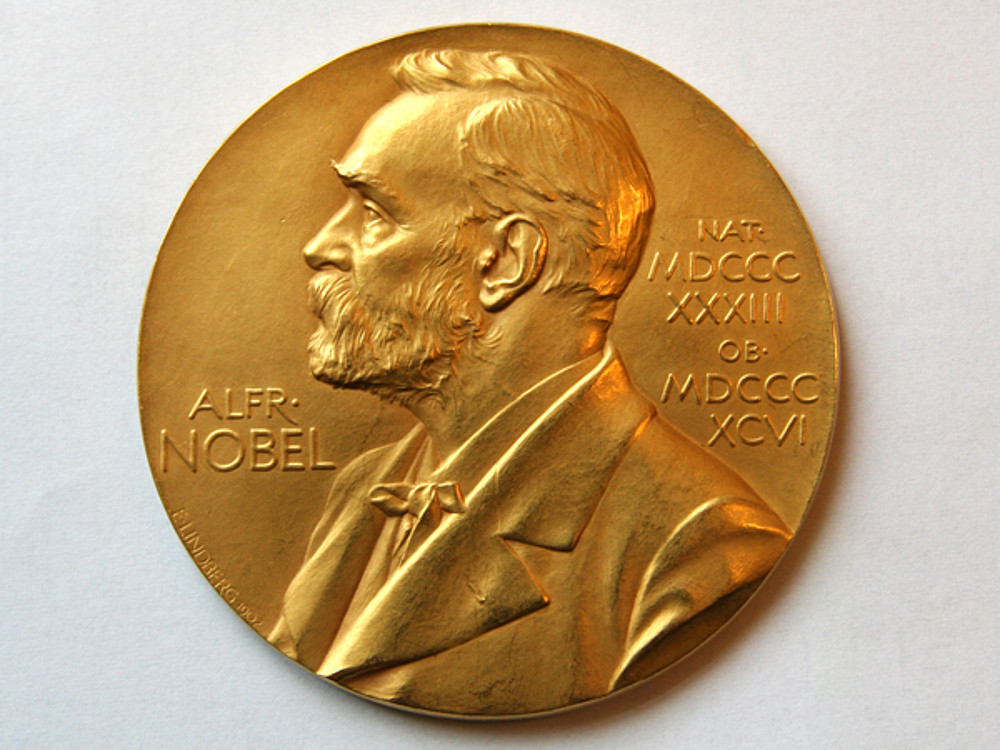
Erwähnungen in der UNIZEIT 3/2016

Univ.-Prof. Dr. Wolfgang Benedek vom Institut für Völkerrecht und Internationale Beziehungen wurde am 21. September 2016 mit dem Humanitätspreis aus der Heinrich-Treichl-Stiftung ausgezeichnet.

Mag. Marlene Brosch vom Institut für Zivilrecht, Ausländisches und Internationales Privatrecht erhielt das Marietta-Blau-Stipendium des Österreichischen Austauschdienstes OeAD.

Univ.-Prof. Dr. Ulrich Ermann vom Institut für Geographie und Raumforschung wurde auf der Mitgliederversammlung der Deutschen Akademie für Landeskunde in Heidelberg zum Mitherausgeber der Fachzeitschrift „Berichte. Geographie und Landeskunde“ ernannt. Weiters wurde er auf der Mitgliederversammlung des Verbands der wissenschaftlichen Geographie Österreichs in Salzburg als Vorstandsmitglied und Kassier wiedergewählt.

O.Univ.-Prof. Dr. Kurt Faber vom Institut für Chemie erhielt am 30. August 2016 auf der Tagung Biocat2016 den Biocat Award 2016 für sein Lebenswerk.

Dr. Fernando Fernandez Mendoza vom Institut für Pflanzenwissenschaften erhielt am 2. August 2016 im Rahmen des 8. Symposiums der International Association of Lichenology in Helsinki für seine Dissertation den Mason Hale Award.

Univ.-Prof. Dr. Elke Gruber vom Institut für Erziehungs- und Bildungswissenschaft wurde für die Funktionsperiode von 1. April 2016 bis zum 31. März 2021 zur Vorsitzenden des Hochschulrates der Pädagogischen Hochschule Kärnten und zum Mitglied des Hochschulrates der Pädagogischen Hochschule Steiermark ernannt.

Ao.Univ.-Prof. i.R. Dr. Josef Hafellner vom Institut für Pflanzenwissenschaften erhielt am 2. August 2016 im Rahmen des 8. Symposiums der International Association of Lichenology in Helsinki die Acharius Medal in Anerkennung seines Lebenswerks.

Univ.-Prof. Dr. Arnold Hanslmeier vom Institut für Physik ist seit 1. Oktober 2016 Mitglied des Observing Programme Committee und des Expert Panel der europäischen Südsternwarte ESO.

Univ.-Prof. Dr. Gabriele Haug-Moritz vom Institut für Geschichte wurde zum Mitglied der Academia Europaea gewählt.

Ao.Univ.-Prof. i.R. Dr. Grigorios Larentzakis vom Institut für Ökumenische Theologie, Ostkirchliche Orthodoxie und Patrologie erhielt am 20. Mai 2016 ein Ehrendoktorat der Aristoteles-Universität in Thessaloniki.

Em.Univ.-Prof. Dr. Maximilian Liebmann vom Institut für Kirchengeschichte und Kirchliche Zeitgeschichte wurde zum Bürger der Stadt Graz ernannt.

Mag. Roland Lobnig vom Institut für Zivilverfahrensrecht und Insolvenzrecht erreichte mit seiner Diplomarbeit am 18. Juni 2016 den zweiten Platz des Insolvenzrecht-Förderpeises der Rechtsanwälte GmbH Graf & Pitkowitz.

Mag. Patrick Mayrhuber vom Institut für Zivilverfahrensrecht und Insolvenzrecht wurde für sein Dissertationsprojekt am 18. Juni 2016 mit dem Insolvenz­recht-Förderpeis der Rechtsanwälte GmbH Graf & Pitkowitz ausgezeichnet.

Univ.-Prof. Dr. Hanna Risku vom Institut für Theoretische und Angewandte Translationswissenschaft wurde zum Mitglied der finnischen Akademie der Wissenschaften bestellt.

Dr. Viktoria Robertson vom Institut für Unternehmensrecht und Internationales Wirtschaftsrecht erhielt ein einjähriges Visiting Fellowship am Centre for Competition Law and Policy der Universität Oxford.

Assoz. Prof. Dr. Susanne Schwab vom Institut für Erziehungs- und Bildungswissenschaft wurde für den Zeitraum von 1. Juni 2016 bis 31. Mai 2019 als Extraordinary Researcher für die Optentia Research Focus Area der North-West University in Südafrika nominiert.

Dr. Toby Spribille vom Institut für Pflanzenwissenschaften erhielt am 2. August 2016 im Rahmen des 8. Symposiums der International Association of Lichenology in Helsinki den Aino Henssen Award für Jungforscher in Anerkennung seiner ausgezeichneten Forschungsleistungen.

Ao.Univ.-Prof. Dr. Karl Steininger vom Institut für Volkswirtschaftslehre und vom Wegener Center für Klima und Globalen Wandel wurde am 3. Juni 2016 zum Vorstandsvorsitzenden des Climate Change Centre Austria gewählt.

Dr. Clemens Wieser vom Institut für Erziehungs- und Bildungswissenschaft wurde von der Europäischen Kommission mit einer Marie-Sklodowska-Curie-Fellowship ausgezeichnet.

Assoz. Prof. Dr. Susanne Zimmermann-Janschitz vom Institut für Geographie und Raumforschung wurde für die Periode 2016 bis 2018 zum Chair der Disability Specialty Group der American Association of Geographers in Washintgon D.C. ernannt.

Related news

University of Graz: Working together to make Styria a sustainable centre of learning

Round table calls for sustainable funding for the 2028–2030 performance agreement period between the five Styrian universities and the federal government.

How can we teach using YouTube and AI? The University of Graz is strengthening media education in schools

A journey through the blood vessels using VR headsets brings biology lessons to life. An interactive quiz brings physics to life. The YouTube video explains the First World War. Whilst mobile phones are increasingly being banned from the classroom, social media platforms, apps and AI are playing an ever-greater role in knowledge transfer at school. But how can teaching with media be made even more effective? What are the challenges in media-based teaching? At the University of Graz, researchers are discussing these issues at a conference being held in Austria for the first time.

Jurassic Sounds: Biologist reconstructs insect songs from 165 million years ago

It was apparently not just the roars of the dinosaurs that made up the soundscape of the animal world during the Jurassic period. Crickets and grasshoppers communicated through a variety of songs and high-pitched sounds, as Thorin Jonsson from the Institute of Biology at the University of Graz discovered together with colleagues from the universities of Lincoln, Bristol (UK), Beijing (China) and Tempe (USA). The findings on what are so far the oldest traces of sound on Earth have just been published in the journal PNAS.

EU funding boosts international exchange between universities

The University of Graz is further expanding its international study opportunities through the European university alliance Arqus and is taking the lead in two key projects. In future, students will benefit from even more joint degree programmes and from simplified recognition of academic achievements through the Joint European Degree Label.

Begin of page section:
Additional information:

University of Graz
Universitaetsplatz 3
8010 Graz
Austria
  • Contact
  • Web Editors
  • Moodle
  • UNIGRAZonline
  • Imprint
  • Data Protection Declaration
  • Accessibility Declaration
Weatherstation
Uni Graz

End of this page section. Go to overview of page sections

End of this page section. Go to overview of page sections

Begin of page section:

End of this page section. Go to overview of page sections