Begin of page section:
Page sections:

  • Go to contents (Accesskey 1)
  • Go to position marker (Accesskey 2)
  • Go to main navigation (Accesskey 3)
  • Go to sub navigation (Accesskey 4)
  • Go to additional information (Accesskey 5)
  • Go to page settings (user/language) (Accesskey 8)
  • Go to search (Accesskey 9)

End of this page section. Go to overview of page sections

Begin of page section:
Page settings:

English en
Deutsch de
Search
Login

End of this page section. Go to overview of page sections

Begin of page section:
Search:

Search for details about Uni Graz
Close

End of this page section. Go to overview of page sections


Search

Begin of page section:
Main navigation:

Page navigation:

  • University

    University
    • About the University
    • Organisation
    • Faculties
    • Library
    • Working at University of Graz
    • Campus
    Developing solutions for the world of tomorrow - that is our mission. Our students and our researchers take on the great challenges of society and carry the knowledge out.
  • Research Profile

    Research Profile
    • Our Expertise
    • Research Questions
    • Research Portal
    • Promoting Research
    • Research Transfer
    • Ethics in Research
    • Commission for Scientific Integrity
    Scientific excellence and the courage to break new ground. Research at the University of Graz creates the foundations for making the future worth living.
  • Studies

    Studies
    • Prospective Students
    • Students
  • Community

    Community
    • International
    • Location
    • Research and Business
    • Alumni
    The University of Graz is a hub for international research and brings together scientists and business experts. Moreover, it fosters the exchange and cooperation in study and teaching.
  • Spotlight
Topics
  • Sustainable University
  • Researchers answer
  • Work for us
Close menu

End of this page section. Go to overview of page sections

Begin of page section:
You are here:

University of Graz News Karriere, Preise, Ehrungen

End of this page section. Go to overview of page sections

Friday, 13 January 2017

Karriere, Preise, Ehrungen
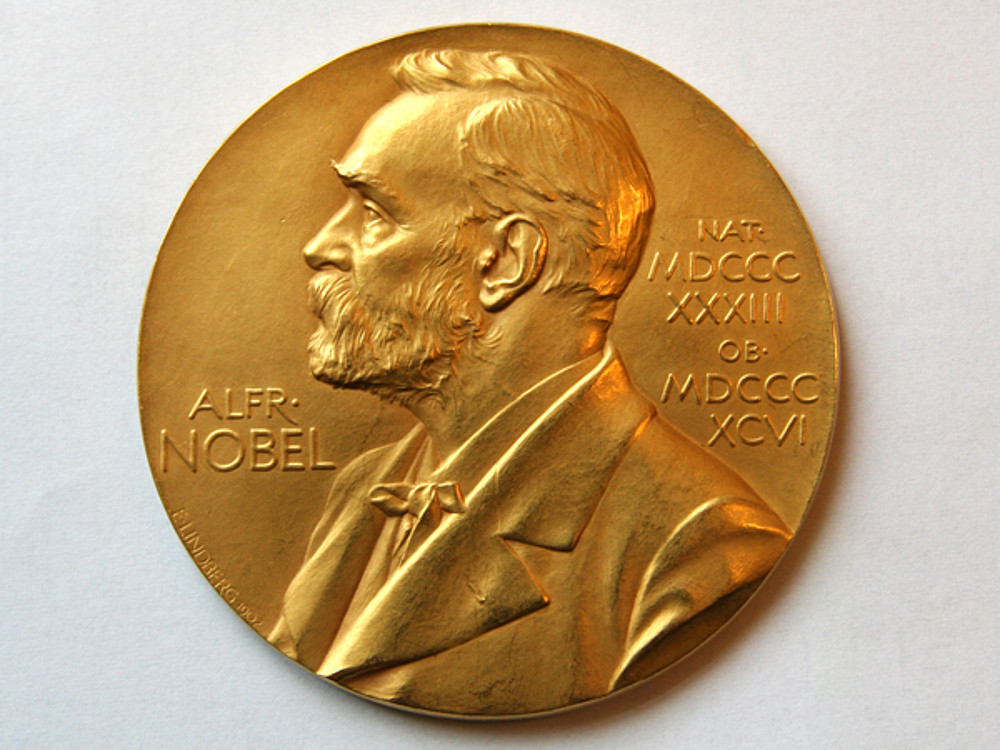
Erwähnungen in der UNIZEIT 4/2016

Mag. Karin Almasy vom Institut für Slawistik erhielt am 22. November 2016 ein Stipendium aus dem JungforscherInnenfonds der Steiermärkischen Sparkasse.

Univ.-Prof. Dr. Christian Aschauer und Univ.-Prof. Dr. Bettina Nunner-Krautgasser vom Institut für Zivilverfahrensrecht und Insolvenzrecht erhielten den Lehrpreis für die Lehrveranstaltung „Willem C. Vis International Commercial Arbitration Moot Court“.

Univ.-Prof. Dr. Wolfgang Benedek vom Institut für Völkerrecht und Internationale Beziehungen wurde am 21. September 2016 vom Österreichischen Roten Kreuz für sein herausragendes humanitäres Engagement der Humanitätspreis aus der Heinrich-Treichl-Stiftung verliehen.

Univ.-Prof. Dr. Kristian Bredies vom Institut für Mathematik und Wissenschaftliches Rechnen wurde am 28. September 2016 mit einem Forschungspreis des Landes Steiermark ausgezeichnet.

Dr. Maria Christidis vom Institut für Archäologie wurde vom Bundesministerium für Bildung und Frauen  im Rahmen der Initiative culture connected für die Kulturkooperation mit der Grazer Ortweinschule geehrt.

Univ.-Prof. Dr. Ulrich Ermann und Mag. Petra Wlasak vom Institut für Geographie und Raumforschung erhielten den Lehrpreis für die Geographische Exkursion „MigrantInnen in Österreich“.

Univ.-Prof. Dr. Irmtraud Fischer vom Institut für Alttestamentliche Bibelwissenschaft wurde als erste habilitierte Theologin in die Pionierinnengalerie der Stadt Graz aufgenommen.

Dr. Melanie Hall vom Institut für Chemie erhielt den Habilitationspreis 2016 der Gesellschaft Österreichischer Chemiker.

Stefan Hofmeister, MSc., vom Institut für Physik wurde am 22. November 2016 mit einem JungforscherInnenstipendium der Steiermärkischen Sparkasse ausgezeichnet.

Assoz. Prof. Dr. Ulla Kriebernegg vom Institut für Amerikanistik erhielt den Lehrpreis für das Literary Studies Proseminar „Ladies, Start Your Engines: Women on the Road in American Film and Fiction“.

Carl Neumayr, MA, vom Institut für Soziologie, erhielt am 22. November 2016 ein JungforscherInnenstipendium des Universitätsrats.

Dr. Sonja Pöllabauer vom Institut für Theoretische und Angewandte Translationswissenschaft erhielt am 30. September 2016 den Elisabeth-Markstein-Preis für außergewöhnliche Leistungen im Bereich Übersetzen und Dolmetschen des Berufsverbands für Dolmetschen und Übersetzen.'

Dr. Veronika Proschek vom Wegener Center für Klima und Globalen Wandel wurde am 4. November 2016 mit dem GRAWE-Award in der Kategorie Wissenschaft ausgezeichnet.

Assoz. Prof. Dr. Susanne Schwab vom Institut für Erziehungs- und Bildungswissenschaft erhielt am 12. November 2016 als hervorragende junge österreichische Wissenschafterin den Kardinal-Innitzer-Förderungspreis.

Ao.Univ.-Prof. Dr. Annette Sprung vom Institut für Erziehungs- und Bildungswissenschaft erhielt den Lehrpreis für die Lehrveranstaltung „Berufsfeld Migration – Flucht – Asyl“ unter Mitwirkung von Mag. Edvina Besic, Dr. Ines Findenig, Mag. Christina Gimplinger, Dr. Brigitte Kukovetz, Mag. Lisa Palaczek, Mag. Christina Pernsteiner, Mag. Simon Reisen­bauer und Dr. Clemens Wieser.

Dr. Julia Thalmann vom Institut für Physik wurde am 14. November 2016 die Alexander-Chizhevsky-Medaille für Space Weather and Space Climate 2016 verliehen, mit der junge WissenschafterInnen für herausragende Leistungen ausgezeichnet werden.

Kathrin Trattner, MA, vom Institut für Religionswissenschaft erhielt am 22. November 2016 ein Stipendium aus dem JungforscherInnenfonds der Steiermärkischen Sparkasse.

Related news

Studying at the University of Graz: How to enrol

Ready for a new chapter in your life with the start of your studies at the University of Graz in the winter semester 2026/27? Here you will find information on deadlines, admission procedures, registration, and everything else you need to successfully start your studies in the fall.

Interpreting data: Why studies sometimes get it wrong

Hilmar Brohmer and Ziva Korda from the Institute of Psychology, together with 500 international colleagues, have re-evaluated a hundred scientific publications and have often come to different conclusions.

Crystal-clear: AI method revolutionises solar observation

The Sun makes life on Earth possible. However, its magnetic fields can also cause massive disruption. This makes it all the more important to gain a better understanding of the processes taking place on our nearest star. A research team from the University of Graz and the High Altitude Observatory in Boulder (USA) has succeeded in doing just that. The astrophysicists have developed an AI-supported method that makes even the smallest structures on the Sun visible. The scientists are convinced that this will bring about a lasting change in solar observation and that the new method can be used for the planned European Solar Telescope.

Long Night of Research: How many languages are there in the world?

From a linguistic perspective, there are worlds of difference between Bern, Berlin and Vienna. A dialect impersonator will demonstrate live just how varied German can sound. How many languages are there in the world? What are their distinctive features? Which of these are spoken in Austria? These and other questions will be answered during the Long Night of Research at the University of Graz: on Friday, 24 April 2025, from 5 pm to 11 pm, in the University Library. Visitors can immerse themselves in the diversity of languages without travelling far by taking part in a quiz at the station.

Begin of page section:
Additional information:

University of Graz
Universitaetsplatz 3
8010 Graz
Austria
  • Contact
  • Web Editors
  • Moodle
  • UNIGRAZonline
  • Imprint
  • Data Protection Declaration
  • Accessibility Declaration
Weatherstation
Uni Graz

End of this page section. Go to overview of page sections

End of this page section. Go to overview of page sections

Begin of page section:

End of this page section. Go to overview of page sections