Begin of page section:
Page sections:

  • Go to contents (Accesskey 1)
  • Go to position marker (Accesskey 2)
  • Go to main navigation (Accesskey 3)
  • Go to sub navigation (Accesskey 4)
  • Go to additional information (Accesskey 5)
  • Go to page settings (user/language) (Accesskey 8)
  • Go to search (Accesskey 9)

End of this page section. Go to overview of page sections

Begin of page section:
Page settings:

English en
Deutsch de
Search
Login

End of this page section. Go to overview of page sections

Begin of page section:
Search:

Search for details about Uni Graz
Close

End of this page section. Go to overview of page sections


Search

Begin of page section:
Main navigation:

Page navigation:

  • University

    University
    • About the University
    • Organisation
    • Faculties
    • Library
    • Working at University of Graz
    • Campus
    Developing solutions for the world of tomorrow - that is our mission. Our students and our researchers take on the great challenges of society and carry the knowledge out.
  • Research Profile

    Research Profile
    • Our Expertise
    • Research Questions
    • Research Portal
    • Promoting Research
    • Research Transfer
    • Ethics in Research
    • Commission for Scientific Integrity
    Scientific excellence and the courage to break new ground. Research at the University of Graz creates the foundations for making the future worth living.
  • Studies

    Studies
    • Prospective Students
    • Students
    • Welcome Weeks for First Year Students
  • Community

    Community
    • International
    • Location
    • Research and Business
    • Alumni
    The University of Graz is a hub for international research and brings together scientists and business experts. Moreover, it fosters the exchange and cooperation in study and teaching.
Topics
  • Sustainable University
  • Researchers answer
  • Work for us
Close menu

End of this page section. Go to overview of page sections

Begin of page section:
You are here:

University of Graz News Interkontinentale Zusammenarbeit

End of this page section. Go to overview of page sections

Wednesday, 13 March 2013

Interkontinentale Zusammenarbeit

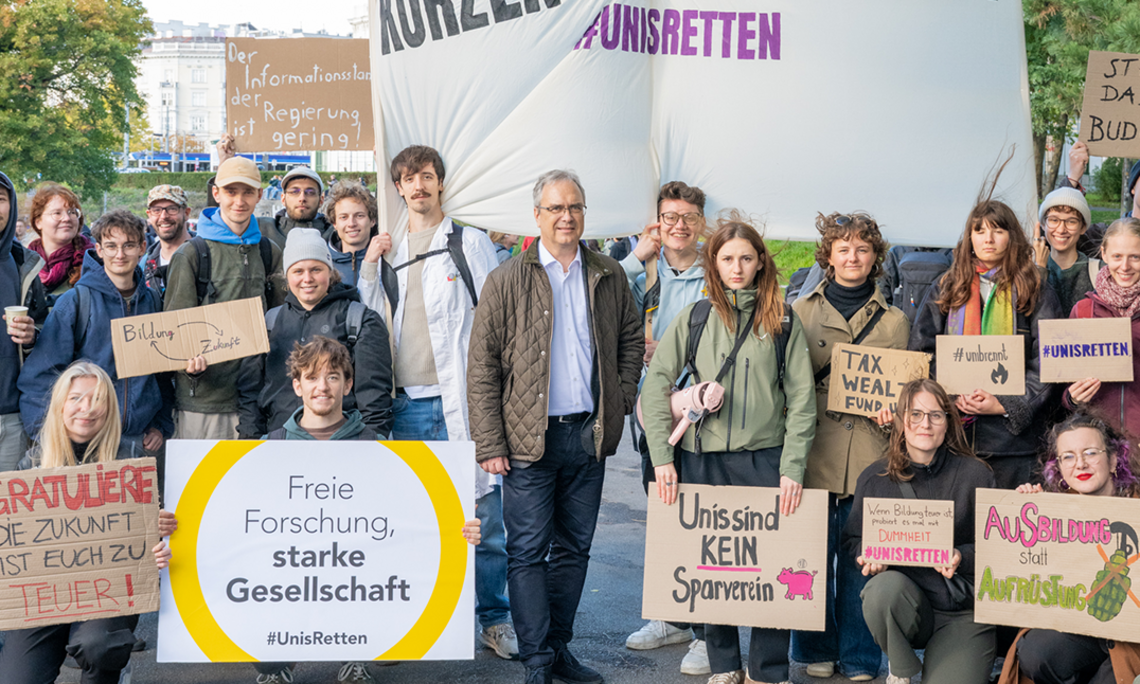
Oliver Kappe und Rodrigo De Souza mit den Stipendiatinnen Luciana dalla Vechia und Raquel de Oliveira Lopes (v.l.)

Oliver Kappe und Rodrigo De Souza mit den Stipendiatinnen Luciana dalla Vechia und Raquel de Oliveira Lopes (v.l.)

Dissertantinnen aus Rio de Janeiro forschen am Institut für Chemie der Uni Graz an der Synthese von Wirkstoffen gegen HIV und Osteoporose

Am 12. März 2013 unterzeichnete Bundesminister Karlheinz Töchterle in Brasilia ein Rahmenabkommen im Bereich Bildung und Wissenschaft zwischen Österreich und Brasilien, das die Zusammenarbeit und den Austausch von Studierenden und Lehrenden beider Länder fördern soll. Die Arbeitsgruppe um Univ.-Prof. Dr. C. Oliver Kappe am Institut für Chemie der Karl-Franzens-Universität Graz kooperiert bereits seit einigen Monaten mit KollegInnen der Federal University of Rio de Janeiro (UFRJ) auf dem Gebiet der Synthese von Pharmawirkstoffen. „In einem gemeinsamen Forschungsprojekt arbeiten wir an der Synthese von zwei für Brasilien strategisch wichtigen Medikamenten, einem Anti-HIV-Wirkstoff und einem Mittel gegen Osteoporose“, berichtet Kappe. Am 13. März 2013 konnte der Chemiker seinen Kollegen Prof. Rodrigo De Souza, Forschungsgruppenleiter an der UFRJ, in Graz begrüßen. In den kommenden Tagen werden sich die Wissenschafter über den Projektfortschritt austauschen, an dem auch zwei Stipendiatinnen aus Rio de Janeiro maßgeblich beteiligt sind. Seit Herbst 2012 arbeiten die Doktorandinnen an der Uni Graz.

Ziel der Kontinente überschreitenden Kooperation ist es, die Herstellung von Medikamenten zu vereinfachen. „Brasilien muss Arzneimittel von ausländischen Pharmaunternehmen kaufen, weil man bislang nicht in der Lage ist, selbst Medikamente günstig herzustellen“, erklärt De Souza die gegenwärtige Situation. Mit Hilfe des Know-hows internationaler Partner, wie der Arbeitsgruppe von Oliver Kappe, soll sich das ändern.


Im aktuellen Projekt ist es insbesondere Kappes Expertise im Bereich der Durchflusssynthese, welche die Entwicklung umweltschonenderer und zugleich günstigerer Produktionsverfahren ermöglichen soll. Bei der Durchflusssynthese wird ein chemisches Gemisch durch einen geeigneten Reaktor, zum Beispiel ein Rohr, gepumpt. Dieses Rohr ist nur wenige Millimeter dünn, weshalb die Durchmischung und der Wärmeaustausch viel effizienter als bei herkömmlichen Produktionsverfahren sind. Eine wichtige Rolle spielt in diesem „Flow-Verfahren“ die ideale Kombination von Temperatur, Zeit und Druck.


Die jüngste Unterzeichnung des österreichisch-brasilianischen Abkommens ist unter anderem ein Resultat der Bemühungen Brasiliens, das Land als Forschungsstandort zu stärken. Zur Steigerung der akademischen Mobilität hat die brasilianische Regierung bereits 2011 das Förderprogramm „Science without Borders“ ins Leben gerufen. Bis 2015 sollen bis zu 100.000 Stipendien für Studierende, Dissertantinnen, Postdocs und GastprofessorInnen vergeben werden.


Auch die beiden Jungforscherinnen aus Rio, die derzeit an der Uni Graz forschen, erhalten ein Stipendium von „Science without Borders“. Und Oliver Kappe, der für seine Expertise im Bereich der Mikrowellenchemie international höchst renommiert ist, lehrte im Rahmen des Programms im Februar vier Wochen lang als „Special Visiting Researcher“ an der UFRJ.
created by Gudrun Pichler

Related news

A fresh start, a calling, holidays: what draws people from other career paths to teaching

They used to develop software; now they teach maths in the classroom. Career changers are expected to help address the shortage of qualified teachers in Austria’s schools. In their doctoral theses at the Institute for Educational Research and Teacher Training at the University of Graz, Melanie Gürentz and Claudia Mair examined how these new teachers perceive their new professional roles.

Talent Talks bridge the gap in career guidance

The Styrian Chamber of Commerce (WKO Steiermark), the Styrian Chamber of Labour (AK Steiermark) and the AMS are joining forces when it comes to training young people and, through the “Talent Talks”, are creating a seamless pathway to career guidance. This takes preparation and follow-up support – just in time for the start of the term and the scheme’s tenth anniversary – to a whole new level. A new survey conducted by the Talent Centre among 2,687 former participants to mark the anniversary shows just how important this development is. Of the young people who received follow-up support from the Talent Report, 74.6 per cent stated that they had a good understanding of their own strengths and talents following the Talent Check. Without follow-up support, the figure was 66.5 per cent – a significant difference of 8.1 percentage points.

ERC Starting Grants: three million euros for two researchers at the University of Graz

Two researchers from the University of Graz have secured prestigious and generously funded grants from the EU. Starting Grants from the European Research Council (ERC), each worth 1.5 million euros, have been awarded to the human geographer Heide Bruckner and the social scientist Silvana Weiss.

Austria’s emissions rose in 2025: University of Graz researchers analyse the causes

The Environment Agency Austria has today published the figures for the country’s greenhouse gas emissions in 2025. While emissions fell sharply year on year from 2022 to 2024, they rose again by just under 0.7 per cent in 2025. Researchers at the University of Graz have analysed how much of this increase was due to structural changes in the economy and how much was attributable to external factors over which there is little control. “In 2025, the colder winter compared with 2024 increased emissions by 0.81 per cent, while the weak economy reduced them by 0.38 per cent. If we factor out these influences, we find an underlying increase of 0.26 per cent compared with the previous year,” reports economist Karl Steininger. “This clearly means that Austria is not on track to meet its climate targets, which require a substantial reduction in emissions by 2030.”

Begin of page section:
Additional information:

University of Graz
Universitaetsplatz 3
8010 Graz
Austria
  • Contact
  • Web Editors
  • Moodle
  • UNIGRAZonline
  • Imprint
  • Data Protection Declaration
  • Accessibility Declaration
Weatherstation
Uni Graz

End of this page section. Go to overview of page sections

End of this page section. Go to overview of page sections

Begin of page section:

End of this page section. Go to overview of page sections