Begin of page section:
Page sections:

  • Go to contents (Accesskey 1)
  • Go to position marker (Accesskey 2)
  • Go to main navigation (Accesskey 3)
  • Go to sub navigation (Accesskey 4)
  • Go to additional information (Accesskey 5)
  • Go to page settings (user/language) (Accesskey 8)
  • Go to search (Accesskey 9)

End of this page section. Go to overview of page sections

Begin of page section:
Page settings:

English en
Deutsch de
Search
Login

End of this page section. Go to overview of page sections

Begin of page section:
Search:

Search for details about Uni Graz
Close

End of this page section. Go to overview of page sections


Search

Begin of page section:
Main navigation:

Page navigation:

  • University

    University
    • About the University
    • Organisation
    • Faculties
    • Library
    • Working at University of Graz
    • Campus
    Developing solutions for the world of tomorrow - that is our mission. Our students and our researchers take on the great challenges of society and carry the knowledge out.
  • Research Profile

    Research Profile
    • Our Expertise
    • Research Questions
    • Research Portal
    • Promoting Research
    • Research Transfer
    • Ethics in Research
    Scientific excellence and the courage to break new ground. Research at the University of Graz creates the foundations for making the future worth living.
  • Studies

    Studies
    • Prospective Students
    • Students
  • Community

    Community
    • International
    • Location
    • Research and Business
    • Alumni
    The University of Graz is a hub for international research and brings together scientists and business experts. Moreover, it fosters the exchange and cooperation in study and teaching.
  • Spotlight
Topics
  • Our digital Advent calendar
  • Sustainable University
  • Researchers answer
  • Work for us
Close menu

End of this page section. Go to overview of page sections

Begin of page section:
You are here:

University of Graz News Im Zeichen Chinas

End of this page section. Go to overview of page sections

Monday, 20 November 2017

Im Zeichen Chinas

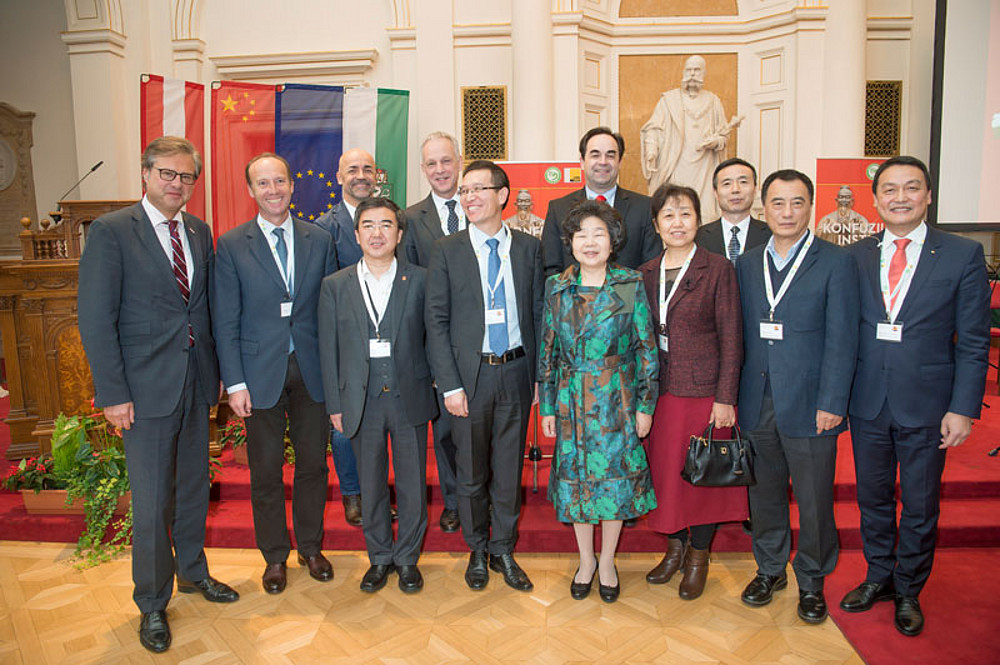
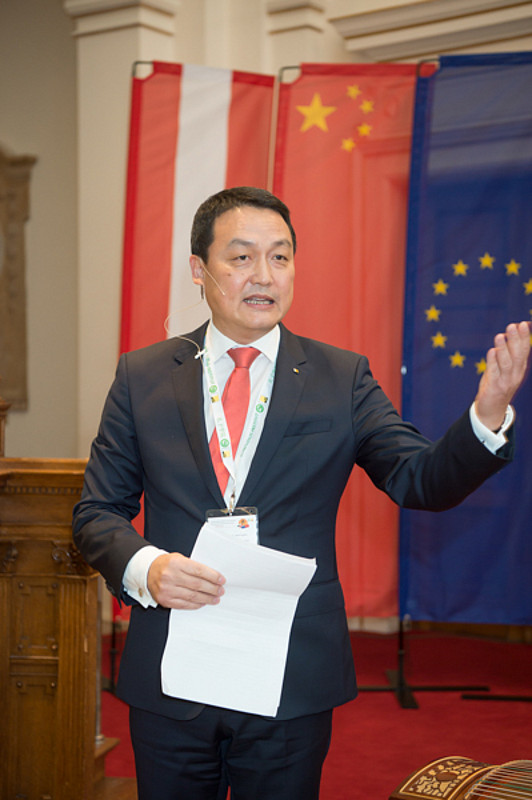
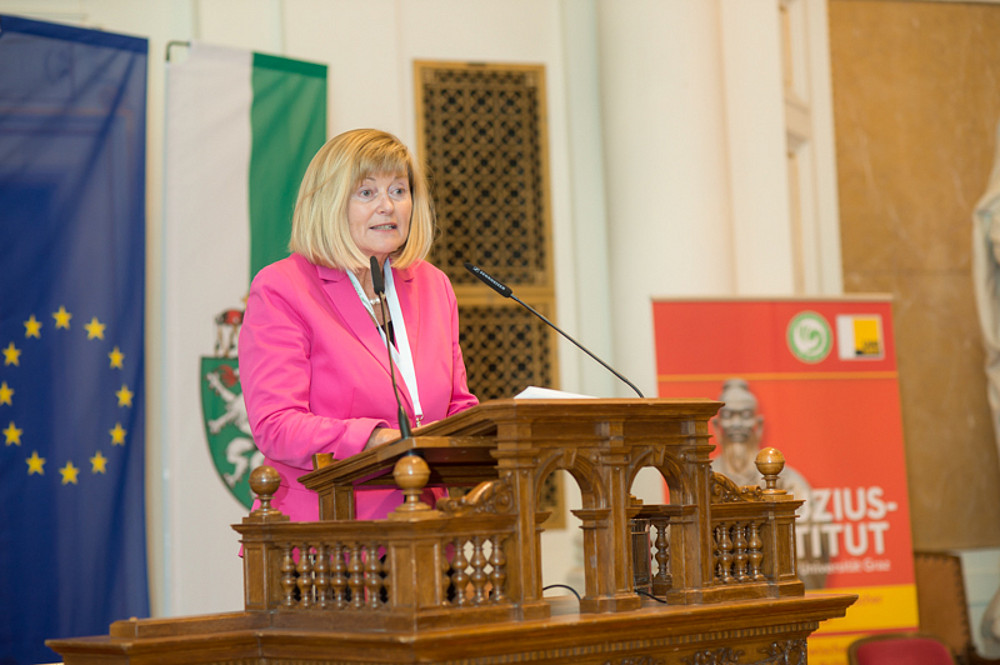
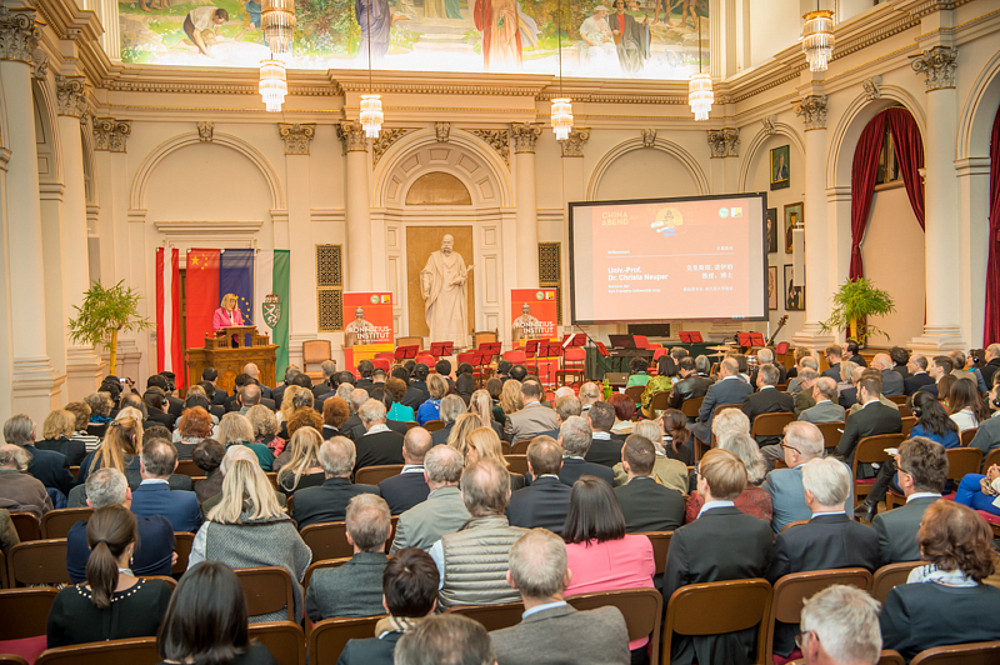
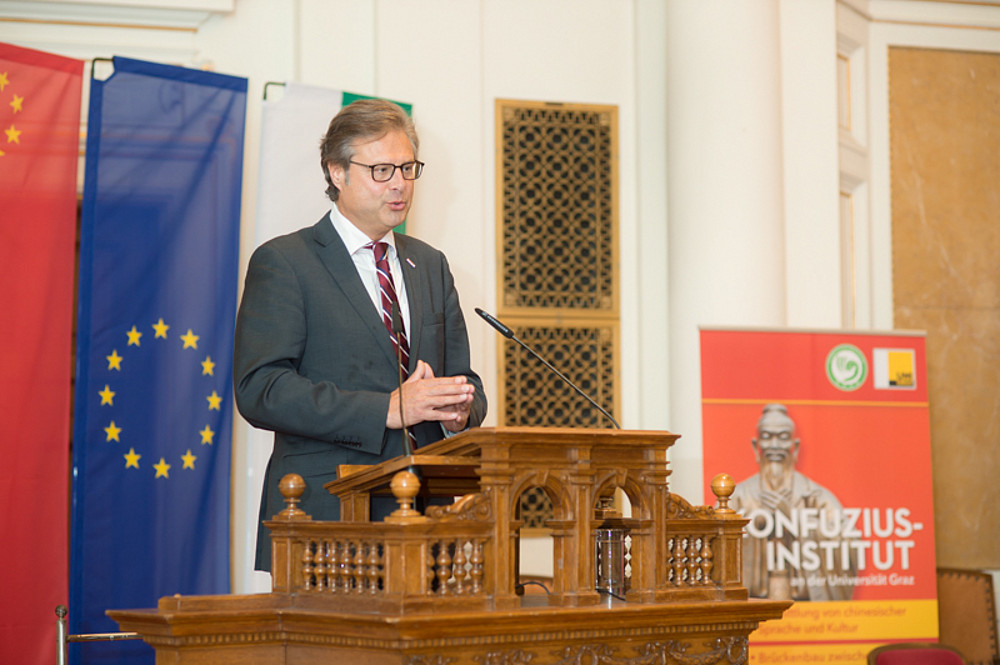
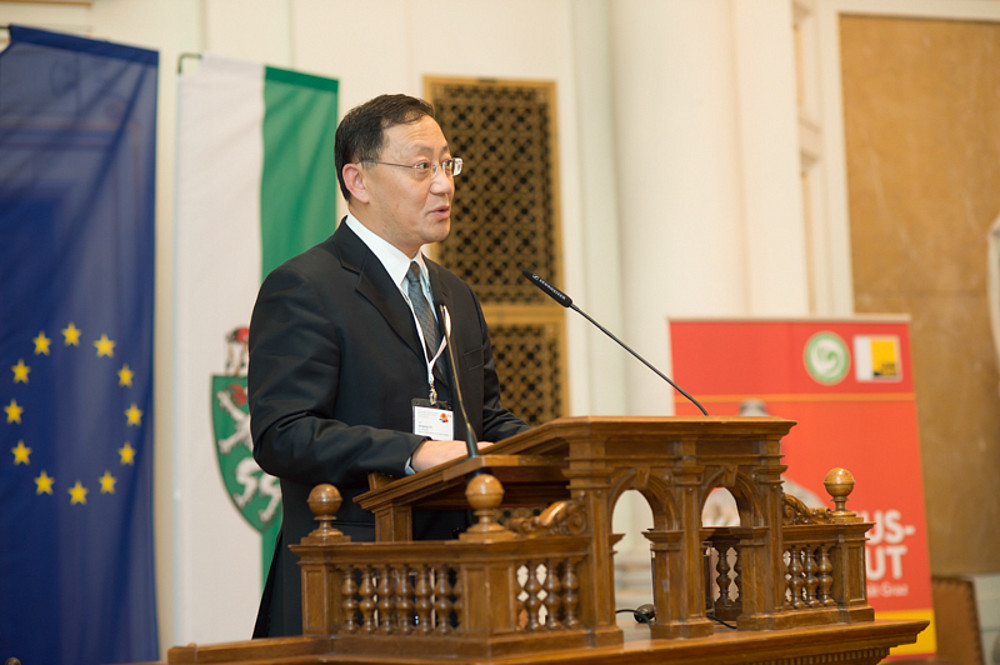
China-Abend an der Universität Graz - spürbare Verbindung zwischen Wissenschaft und Wirtschaft: Unter den Festgästen Karl-Heinz Dernoscheg, Direktor WKO Steiermark, Gemeinderat Michael Schunko sowie zahlreiche Gäste aus China und Österreich. Der Direktor des Konfuzius-Instituts Graz, Wan Jie Chen, lud zum Austausch ein. Fotos: Foto Fischer ©Foto Fischer

China-Abend an der Universität Graz - spürbare Verbindung zwischen Wissenschaft und Wirtschaft: Unter den Festgästen Karl-Heinz Dernoscheg, Direktor WKO Steiermark, Gemeinderat Michael Schunko sowie zahlreiche Gäste aus China und Österreich. Der Direktor des Konfuzius-Instituts Graz, Wan Jie Chen, lud zum Austausch ein. Fotos: Foto Fischer

 ©Foto Fischer
 ©Foto Fischer
 ©Foto Fischer
 ©Foto Fischer
 ©Foto Fischer

Großer China-Abend an der Universität Graz. Spürbarer Austausch zwischen Wissenschaft und Wirtschaft

Die Universität Graz ist strategisch mit der Wirtschaftsmacht China auf mehreren Ebenen sehr eng verbunden. Spannende und vielseitige Beiträge lockten über 300 BesucherInnen am 14. November 2017 zum China-Abend des Konfuzius-Instituts Graz in der Aula der Karl-Franzens-Universität und beleuchteten die Thematik der interdisziplinären Zusammenarbeit zwischen Wissenschaft, Wirtschaft, Kunst und Kultur aus unterschiedlichen Perspektiven im Rahmen der Belt & Road-Initiative. Unter den Gästen Rektorin Christa Neuper, der Direktor der WK Steiermark Karl-Heinz Dernoscheg, der Botschaftsrat der VR China in Österreich GAO Xingle, Professor Rostam J. Neuwirth von der Universität Macao, der Vize-Direktor des Shanghai KMU-Centers - zuständig für mehr als 1,4 Mio. Unternehmen - LIU Weigang, der Geschäftsführer von Ars Electronica Linz Gerfried Stocker sowie die Vizepräsidentin des Ständigen Ausschusses des Parteikongresses der kulturell und wirtschaftlich bedeutenden Provinz Shaanxi.

Das Konfuzius-Institut an der Universität Graz ist eines von 512 Instituten weltweit, seine Kernkompetenz liegt in der Vermittlung der chinesischen Sprache und Kultur. Durch den Direktor Dr. Wan Jie Chen ist es jedoch auch eine lebendige Plattform und Brückenbauer zwischen China und Österreich in den Bereichen Wissenschaft, Wirtschaft, Kultur etc. Drei sino-österreichische Zentren (Sino-Austrian Schumpeter Innovation Centre, Center for Advanced Studies in Chinese-European Legal Governance and Politics, Sino-Austrian Electronic Technology Innovation Center) sowie zahlreiche Projekte und Kooperationen der Grazer Universitäten und Bildungseinrichtungen wurden vom Konfuzius-Institut initiiert. Daher ist Graz Brennpunkt des chinesisch-österreichischen Austausches und ein Ort der chinesisch-österreichischen Begegnung. Veranstaltungen wie der China-Abend und die mehrtägigen China-Foren sollen dazu beitragen, die Zusammenarbeit zwischen Österreich und China weiter auszubauen, neue Projekte anzuregen, bestehende Kooperationen zu stärken und die interkulturelle Kommunikation zu verbessern.

created by Konfuzius Institut & Konstantinos Tzivanopoulos

Related news

Rector Peter Riedler: Starting the year with confidence

In 2026, we will continue to work consistently on positioning the University of Graz as a relevant player in Europe, while at the same time focusing on a modern, sustainable and climate-friendly university campus. When new digital applications are rolled out in January, we will not only create a stable and secure IT environment, but also modern working and studying conditions for future generations. Peter Rielder, Rector of the University of Graz

Uni Vibes 2026: the campus festival that transcends borders again

On 29 May 2026, it's that time again: the University of Graz celebrates, dances and vibrates. The campus will become a stage for art, science and music.

Setback: Austria's greenhouse gas emissions rise in 2025

Climate protection is currently facing an uphill battle. The United Nations have recently been unable to agree on a roadmap for phasing out fossil fuels, even though global warming continues to accelerate. Also Austria still does not have a national climate law with a clear target path for reducing emissions. This is evidently taking its toll: Austria’s greenhouse gas emissions rose again in 2025 for the first time in years, by around two and a half percent, according to calculations by researchers at the University of Graz. In addition to overly cautious climate action measures, this is due to somewhat colder winter months compared to 2024, which are driving up natural gas consumption.

Profound: Geoscientist Marko Bermanec deciphers processes of the Earth's plates

What happens deep down is very important to us above ground. Especially when hidden chemical processes between tectonic plates have serious consequences. Earth scientist Marko Bermanec investigates these processes in depth.

Begin of page section:
Additional information:

University of Graz
Universitaetsplatz 3
8010 Graz
Austria
  • Contact
  • Web Editors
  • Moodle
  • UNIGRAZonline
  • Imprint
  • Data Protection Declaration
  • Accessibility Declaration
Weatherstation
Uni Graz

End of this page section. Go to overview of page sections

End of this page section. Go to overview of page sections

Begin of page section:

End of this page section. Go to overview of page sections