Begin of page section:
Page sections:

  • Go to contents (Accesskey 1)
  • Go to position marker (Accesskey 2)
  • Go to main navigation (Accesskey 3)
  • Go to sub navigation (Accesskey 4)
  • Go to additional information (Accesskey 5)
  • Go to page settings (user/language) (Accesskey 8)
  • Go to search (Accesskey 9)

End of this page section. Go to overview of page sections

Begin of page section:
Page settings:

English en
Deutsch de
Search
Login

End of this page section. Go to overview of page sections

Begin of page section:
Search:

Search for details about Uni Graz
Close

End of this page section. Go to overview of page sections


Search

Begin of page section:
Main navigation:

Page navigation:

  • University

    University
    • About the University
    • Organisation
    • Faculties
    • Library
    • Working at University of Graz
    • Campus
    Developing solutions for the world of tomorrow - that is our mission. Our students and our researchers take on the great challenges of society and carry the knowledge out.
  • Research Profile

    Research Profile
    • Our Expertise
    • Research Questions
    • Research Portal
    • Promoting Research
    • Research Transfer
    • Ethics in Research
    • Commission for Scientific Integrity
    Scientific excellence and the courage to break new ground. Research at the University of Graz creates the foundations for making the future worth living.
  • Studies

    Studies
    • Prospective Students
    • Students
    • Registration for Study Programme (Winter semester 2026/27)
    • Welcome Weeks for First Year Students
  • Community

    Community
    • International
    • Location
    • Research and Business
    • Alumni
    The University of Graz is a hub for international research and brings together scientists and business experts. Moreover, it fosters the exchange and cooperation in study and teaching.
Topics
  • Sustainable University
  • Researchers answer
  • Work for us
Close menu

End of this page section. Go to overview of page sections

Begin of page section:
You are here:

University of Graz News Im Gedenken an 1938

End of this page section. Go to overview of page sections

Sunday, 10 March 2013

Im Gedenken an 1938

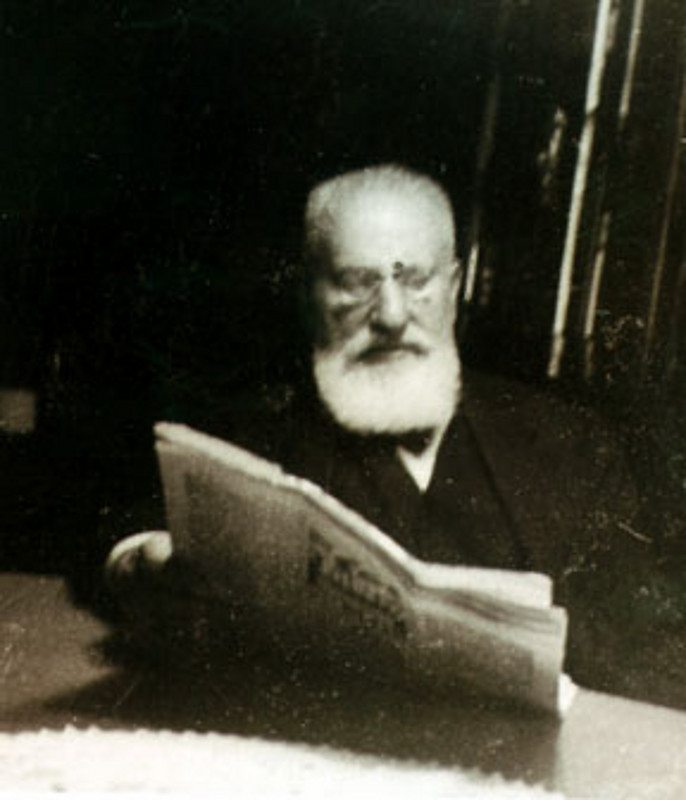
David Herzog (1869-1946)

Landesrabbiner und Universitätslehrer David Herzog (1869-1946)

WissenschafterInnen und Studierende wurden vor 75 Jahren vertrieben, so auch David Herzog

Vor 75 Jahren begann an der Karl-Franzens-Universität Graz das wohl folgenschwerste und schrecklichste Kapitel der Universitätsgeschichte. Mit dem Anschluss am 12. März 1938 und den entsetzlichen Jahren des Nationalsozialitischen Regimes erlitt das florierende wissenschaftliche Leben der Universität einen gravierenden Einschnitt: Zahlreiche Lehrende – darunter die Nobelpreisträger Otto Loewi, Viktor Hess und Erwin Schrödinger – sowie knapp ein Drittel der Studierenden wurden vertrieben.

Einer der vielen Universitätsangehörigen, die ein dramatisches Schicksal erlebten, war David Herzog (1869–1946). Der Landesrabbiner für Steiermark und Kärnten sowie außerordentliche Universitätsprofessor lehrte ab 1909 an der Uni Graz semitische Philologie. Wenige Tage nach der Machtübernahme der Nationalsozialisten wurde der damals 69-Jährige mehrere Tage lang inhaftiert, schwerstens misshandelt und im April aus dem Universitätsdienst entlassen.

Ende 1938 konnte der Landesrabbiner mit seiner Frau Anna nach Großbritannien emigrieren. Herzog beschrieb in seinen Lebenserinnerungen die Ereignisse der Tage im März 1938: „Als ich am Samstag gegen halb zehn Uhr vormittags in den Tempel ging, erkannte ich die Stadt nicht mehr. Von jedem Hause flatterten die Hakenkreuzfahnen, ja jedes Fenster war bespickt mit Hakenkreuzfähnchen […] In den Tagen zwischen 13. und 21. März kamen immer wieder Verordnungen gegen Juden. Bald durften wir nicht einkaufen gehen, und bald wurde verlautbart, den Juden sei es nicht erlaubt am Samstag oder am Sontag von 12 Uhr mittags bis acht Uhr abends sich auf der Straße zu zeigen.“


David-Herzog-Fonds
Im Gedenken an David Herzog und in der Absicht, einen bleibenden Beitrag zur Förderung von Toleranz und Verstehen zu leisten, hat die Karl-Franzens-Universität Graz 1988 den David-Herzog-Fonds eingerichtet. Ziel der David-Herzog-Fonds-Stipendien ist es, das interkulturelle Verstehen und Lernen – speziell in Bezug auf die jüdische Kultur - zu fördern und zu unterstützen. Seit 2005 wird der David-Herzog-Fonds von allen steirischen Universitäten getragen.

Der David-Herzog-Fonds steht Studierenden und Graduierten aller Fakultäten und Studienrichtungen offen.

created by Andreas Schweiger

Related news

Commissioned by NATO: University of Graz tests high-tech textiles

As part of an international project, antimicrobial and fire-resistant fabrics with UV protection are being developed in Zagreb. Pharmacists from the University of Graz are ensuring that these fabrics are skin-friendly.

The Arctic up close: ORF special feature on the University of Graz’s research station in S

Students from the University of Graz are spending two weeks conducting research at the Univerisity of Graz research station at the Sermilik Fjord in Greenland, which has been operational for three years. They are measuring glacial runoff, tracking ice melt in real time and installing weather stations. ORF is following the expedition and will be reporting on the special feature ‘Arctic Adventure’ across its various channels from 20 July.

Medicine for ants: Caffeine prolongs the life of infected insects

Black coffee stimulates us and acts against bacteria. So, can caffeine also be good for insects? Yes, confirm biologists of the University of Graz. When ants suffer from a fungal disease, they consume more caffeine and remain active for longer.

How formulas are making medicine more personalised

When Federica Caforio talks about the heart, it doesn’t sound like an operating theatre, but rather like equations, parameters and simulations. Yet this is precisely where the medical promise of her research lies: one day, clinical data will be used to create a digital twin of the heart – a virtual model that will enable a better understanding of diseases and allow for more personalised treatment plans. She will be presenting her research at the ‘ECMTB 2026’ mathematics conference.

Begin of page section:
Additional information:

University of Graz
Universitaetsplatz 3
8010 Graz
Austria
  • Contact
  • Web Editors
  • Moodle
  • UNIGRAZonline
  • Imprint
  • Data Protection Declaration
  • Accessibility Declaration
Weatherstation
Uni Graz

End of this page section. Go to overview of page sections

End of this page section. Go to overview of page sections

Begin of page section:

End of this page section. Go to overview of page sections