Begin of page section:
Page sections:

  • Go to contents (Accesskey 1)
  • Go to position marker (Accesskey 2)
  • Go to main navigation (Accesskey 3)
  • Go to sub navigation (Accesskey 4)
  • Go to additional information (Accesskey 5)
  • Go to page settings (user/language) (Accesskey 8)
  • Go to search (Accesskey 9)

End of this page section. Go to overview of page sections

Begin of page section:
Page settings:

English en
Deutsch de
Search
Login

End of this page section. Go to overview of page sections

Begin of page section:
Search:

Search for details about Uni Graz
Close

End of this page section. Go to overview of page sections


Search

Begin of page section:
Main navigation:

Page navigation:

  • University

    University
    • About the University
    • Organisation
    • Faculties
    • Library
    • Working at University of Graz
    • Campus
    Developing solutions for the world of tomorrow - that is our mission. Our students and our researchers take on the great challenges of society and carry the knowledge out.
  • Research Profile

    Research Profile
    • Our Expertise
    • Research Questions
    • Research Portal
    • Promoting Research
    • Research Transfer
    • Ethics in Research
    • Commission for Scientific Integrity
    Scientific excellence and the courage to break new ground. Research at the University of Graz creates the foundations for making the future worth living.
  • Studies

    Studies
    • Prospective Students
    • Students
    • Welcome Weeks for First Year Students
  • Community

    Community
    • International
    • Location
    • Research and Business
    • Alumni
    The University of Graz is a hub for international research and brings together scientists and business experts. Moreover, it fosters the exchange and cooperation in study and teaching.
Topics
  • Sustainable University
  • Researchers answer
  • Work for us
Close menu

End of this page section. Go to overview of page sections

Begin of page section:
You are here:

University of Graz News Hot Spots in 3D

End of this page section. Go to overview of page sections

Monday, 19 August 2013

Hot Spots in 3D

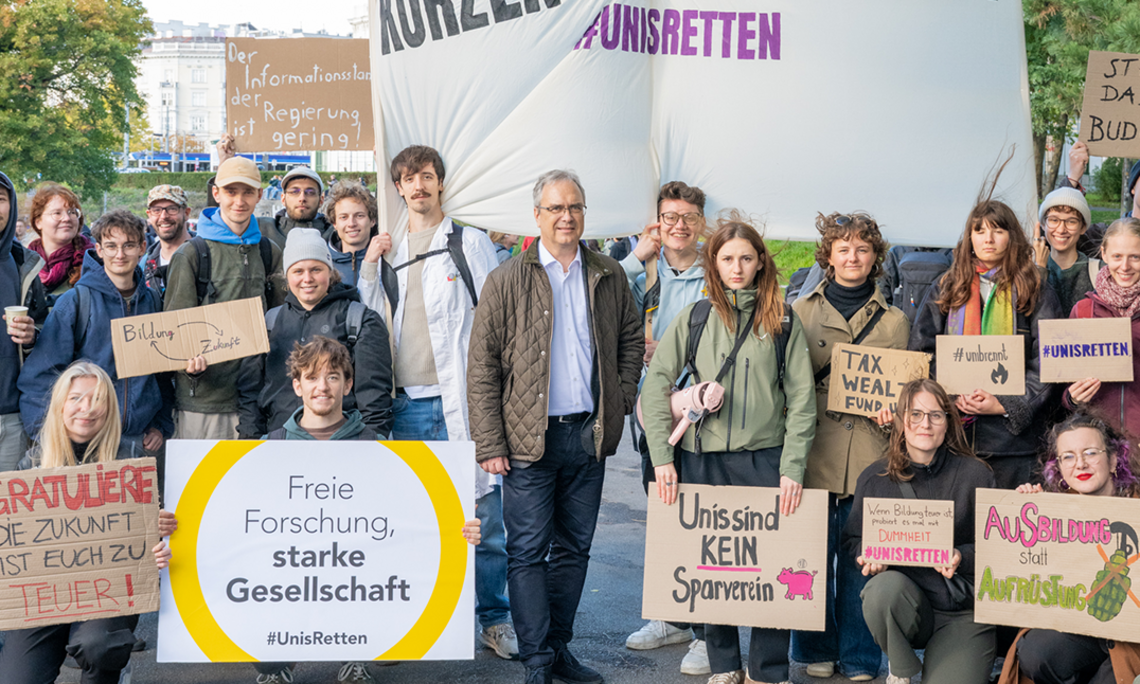
Schematische Darstellung der Tomographie von Nanoteilchen. Ein Elektronenstrahl wird über das stäbchenförmige Nanoteilchen gerastert und erzeugt zweidimensionale Aufnahmen der Plasmon-Felder aus verschiedenen Richtungen. Diese 2D-Bilder ermöglichen da

Schematische Darstellung der Tomographie von Nanoteilchen. Ein Elektronenstrahl wird über das stäbchenförmige Nanoteilchen gerastert und erzeugt zweidimensionale Aufnahmen der Plasmon-Felder aus verschiedenen Richtungen. Diese 2D-Bilder ermöglichen dann mit Hilfe von mathematischen Methoden der Computertomographie eine 3D-Rekonstruktion der elektrischen Felder und Hot Spots.

Physiker der Uni Graz zeigten erstmals, dass sich elektrische Felder im Nanobereich mit Computertomographie räumlich darstellen lassen

Nanopartikel eröffnen modernen Technologien durch ihre außergewöhnlichen physikalischen Eigenschaften eine Fülle neuer Möglichkeiten. Doch längst sind nicht alle Geheimnisse der winzigen Strukturen gelüftet. Ein entscheidender Schritt zur Beschreibung der Elektronenschwingungen an der Oberfläche von metallischen Nanopartikeln ist nun Physikern der Karl-Franzens-Universität Graz gelungen. Sie konnten erstmals zeigen, dass mit den Methoden der Computertomographie (CT) dreidimensionale Bilder von elektrischen Feldern auf Nanoteilchen erstellt werden können. Damit lässt sich exakt erkennen, wo „Hot Spots“ – besonders starke Felder – zu finden sind. Eine wichtige Information für die Entwicklung zukunftsträchtiger Anwendungen, von hochsensiblen Sensoren bis hin zur ultraschnellen Datenübertragung. Die Forschungsergebnisse wurden kürzlich im renommierten Fachjournal „Physical Review Letters“ publiziert.

„An der Oberfläche von metallischen Nanopartikeln kommt es zu Schwingungen der Elektronendichte, die als Plasmonen bezeichnet werden. Diese bilden an bestimmten Stellen der Nanoteilchen besonders starke elektrische Felder, so genannte Hot Spots“, informiert Anton Hörl, MSc, aus der Arbeitsgruppe von Ao.Univ.-Prof. Dr. Ulrich Hohenester am Institut für Physik der Uni Graz. Hot Spots können dazu genutzt werden, Licht im Nanometer-Bereich zu fokussieren. „Das ist zum Beispiel notwendig, wenn Licht in winzigen Strukturen zur Datenübertragung genutzt werden soll, etwa für den optischen Chip“, ergänzt Hörl.

„Zur Erforschung von Plasmonen wird ein Elektronenstrahl auf einen bestimmten Punkt der Probe fokussiert und gemessen, wie viel Energie die Elektronen durch Wechselwirkung mit den Plasmonen verlieren. Je stärker die elektrischen Felder auf den Nanopartikeln sind, desto größer ist die Wahrscheinlichkeit, ein Plasmon anzuregen, wodurch dem Elektronenstrahl Energie entzogen wird“, erklärt Ulrich Hohenester das Verfahren.

Wird der Elektronenstrahl über die Probe bewegt, entsteht ein zweidimensionales Bild der elektrischen Felder. Anton Hörl hat im Rahmen seiner Dissertation in Kooperation mit Dr. Andreas Trügler anhand von Computersimulationen erstmals gezeigt, dass durch Drehung der Probe eine Reihe von 2D-Bildern gewonnen werden kann, aus denen sich dann mit Hilfe der Computertomographie eine exakte 3D-Rekonstruktion der elektrischen Felder erstellen lässt. Hörls Doktorarbeit ist in den vom Österreichischen Wissenschaftsfonds FWF finanzierten Spezialforschungsbereich „NextLite“ eingebettet.

Weiterführende Experimente werden die Theoretischen Physiker der Karl-Franzens-Universität Graz mit der Arbeitsgruppe von Ao.Univ.-Prof. Dr. Ferdinand Hofer an der TU Graz im Rahmen der strategischen Kooperation NAWI Graz durchführen.


Publikation:

Tomography of particle plasmon fields from electron energy loss spectroscopy

Anton Hörl, Andreas Trügler, Ulrich Hohenester

Physical Review Letters, August 2013
http://prl.aps.org/pdf/PRL/v111/i7/e076801

created by Gudrun Pichler

Related news

A fresh start, a calling, holidays: what draws people from other career paths to teaching

They used to develop software; now they teach maths in the classroom. Career changers are expected to help address the shortage of qualified teachers in Austria’s schools. In their doctoral theses at the Institute for Educational Research and Teacher Training at the University of Graz, Melanie Gürentz and Claudia Mair examined how these new teachers perceive their new professional roles.

Talent Talks bridge the gap in career guidance

The Styrian Chamber of Commerce (WKO Steiermark), the Styrian Chamber of Labour (AK Steiermark) and the AMS are joining forces when it comes to training young people and, through the “Talent Talks”, are creating a seamless pathway to career guidance. This takes preparation and follow-up support – just in time for the start of the term and the scheme’s tenth anniversary – to a whole new level. A new survey conducted by the Talent Centre among 2,687 former participants to mark the anniversary shows just how important this development is. Of the young people who received follow-up support from the Talent Report, 74.6 per cent stated that they had a good understanding of their own strengths and talents following the Talent Check. Without follow-up support, the figure was 66.5 per cent – a significant difference of 8.1 percentage points.

ERC Starting Grants: three million euros for two researchers at the University of Graz

Two researchers from the University of Graz have secured prestigious and generously funded grants from the EU. Starting Grants from the European Research Council (ERC), each worth 1.5 million euros, have been awarded to the human geographer Heide Bruckner and the social scientist Silvana Weiss.

Austria’s emissions rose in 2025: University of Graz researchers analyse the causes

The Environment Agency Austria has today published the figures for the country’s greenhouse gas emissions in 2025. While emissions fell sharply year on year from 2022 to 2024, they rose again by just under 0.7 per cent in 2025. Researchers at the University of Graz have analysed how much of this increase was due to structural changes in the economy and how much was attributable to external factors over which there is little control. “In 2025, the colder winter compared with 2024 increased emissions by 0.81 per cent, while the weak economy reduced them by 0.38 per cent. If we factor out these influences, we find an underlying increase of 0.26 per cent compared with the previous year,” reports economist Karl Steininger. “This clearly means that Austria is not on track to meet its climate targets, which require a substantial reduction in emissions by 2030.”

Begin of page section:
Additional information:

University of Graz
Universitaetsplatz 3
8010 Graz
Austria
  • Contact
  • Web Editors
  • Moodle
  • UNIGRAZonline
  • Imprint
  • Data Protection Declaration
  • Accessibility Declaration
Weatherstation
Uni Graz

End of this page section. Go to overview of page sections

End of this page section. Go to overview of page sections

Begin of page section:

End of this page section. Go to overview of page sections