

Begin of page section:
Page sections:

  • Go to contents (Accesskey 1)
  • Go to position marker (Accesskey 2)
  • Go to main navigation (Accesskey 3)
  • Go to sub navigation (Accesskey 4)
  • Go to additional information (Accesskey 5)
  • Go to page settings (user/language) (Accesskey 8)
  • Go to search (Accesskey 9)

End of this page section. Go to overview of page sections

Begin of page section:
Page settings:

English en
Deutsch de
Search
Login

End of this page section. Go to overview of page sections

Begin of page section:
Search:

Search for details about Uni Graz
Close

End of this page section. Go to overview of page sections


Search

Begin of page section:
Main navigation:

Page navigation:

  • University

    University
    • About the University
    • Organisation
    • Faculties
    • Library
    • Working at University of Graz
    • Campus
    Developing solutions for the world of tomorrow - that is our mission. Our students and our researchers take on the great challenges of society and carry the knowledge out.
  • Research Profile

    Research Profile
    • Our Expertise
    • Research Questions
    • Research Portal
    • Promoting Research
    • Research Transfer
    • Ethics in Research
    • Commission for Scientific Integrity
    Scientific excellence and the courage to break new ground. Research at the University of Graz creates the foundations for making the future worth living.
  • Studies

    Studies
    • Prospective Students
    • Students
  • Community

    Community
    • International
    • Location
    • Research and Business
    • Alumni
    The University of Graz is a hub for international research and brings together scientists and business experts. Moreover, it fosters the exchange and cooperation in study and teaching.
  • Spotlight
Topics
  • Sustainable University
  • Researchers answer
  • Work for us
Close menu

End of this page section. Go to overview of page sections

Begin of page section:
You are here:

University of Graz News Hochsaison für die Nase

End of this page section. Go to overview of page sections

Tuesday, 22 March 2016

Hochsaison für die Nase

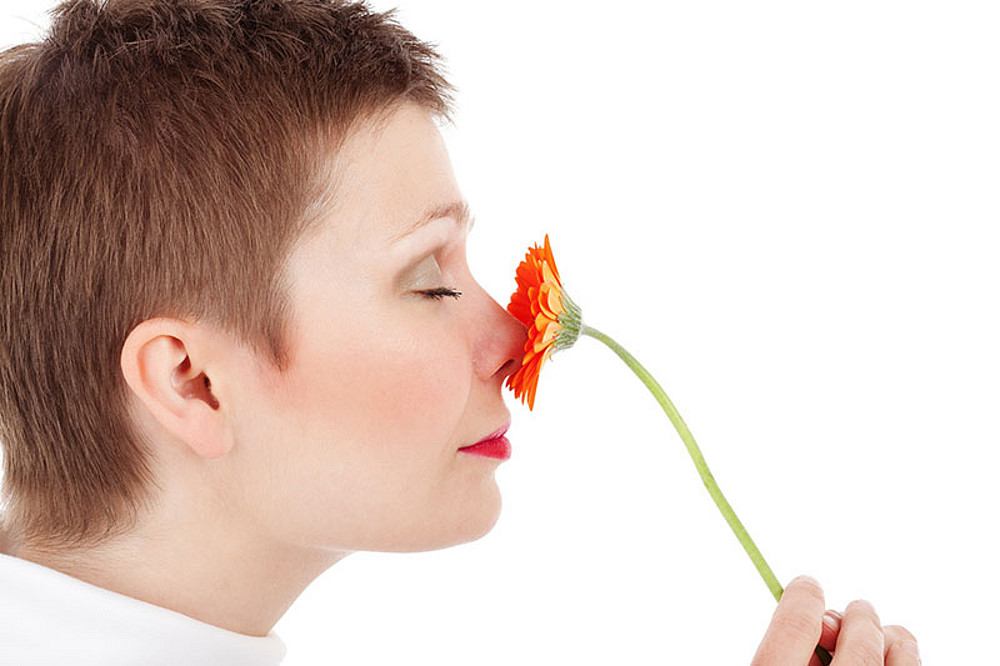
Ein intakter Geruchssinn ist ein wesentlicher Bestandteil für körperliche und psychische Gesundheit. Foto: PublicDomainPictures/pixabay.com

Ein intakter Geruchssinn ist ein wesentlicher Bestandteil für körperliche und psychische Gesundheit. Foto: PublicDomainPictures/pixabay.com

Die Webradio-Beiträge werden mit dem Web-Service Auphonic nachbearbeitet: http://auphonic.com

Die Webradio-Beiträge werden mit dem Web-Service Auphonic nachbearbeitet: http://auphonic.com

Auf Radio Soundportal sind die Webradio-Beiträge täglich einmal vormittags und einmal nachmittags zu hören: http://www.soundportal.at

Auf Radio Soundportal sind die Webradio-Beiträge täglich einmal vormittags und einmal nachmittags zu hören: http://www.soundportal.at

In der letzten Sendung vor der Osterpause spürt das Webradio der Bedeutung des Geruchssinns nach

Das Webradio der Grazer Universitäten versorgt Studierende, MitarbeiterInnen, Lehrende, Forschende, Alumni sowie alle Interessierten wöchentlich mit vier Informationsbeiträgen. Ab dieser Woche geht startet das Programm wieder - mit folgenden Beiträgen:


1) Forschung: "Alles fit im Kopf". Eine Studiere der Med Uni Graz belegt: Körperliche Fitness hält das Gehirn jung. Um bis zu sieben Jahre "jünger" kann dieses bei Personen mit guter körperlicher Konstitution sein. Ausdauertraining könnte somit zur optimalen vorbeugenden Maßnahme gegen Demenz werden.


2) Bildung: "Die Uni-Türen öffnen sich". Am 31. März 2016 laden die Uni Graz, TU Graz, Med Uni und Kunstuni Graz ihre künftigen Studierenden ein, sich aus nächster Nähe ein Bild ihrer Hochschule zu machen - beim Tag der offenen Tür. Was dabei am Programm steht, wird hier schon vorab verraten.  
 

3) Campusleben: "Frischer Wind". Vor zwei Wochen hat André Döhring seinen Dienst als neuer Leiter des Instituts für Jazzforschung und Professor für Jazz- und Popularmusikforschung an der Kunstuni Graz angetreten. Was er an der KUG vorhat, erklärt er exklusiv im Webradio-Interview.


4) Aktuell gefragt: "Hochsaison für die Nase". Am 20. März 2016 war der astrologische Frühlingsbeginn - Zeit für die Pflanzenwelt, wieder aufzublühen und Zeit für unsere Nasen, wieder aktiver zu werden. Doch was geschieht eigentlich beim Riechen? Und was geschieht, wenn wir nichts mehr riechen können? 


Auch die erfolgreichen Kooperation mit Radio Soundportal - täglich sind dort die Webradio-Beiträge zu hören - besteht im neuen Semester weiterhin. 


>> Das ist die letzte Sendung vor der Osterpause. Das Webradio produziert wieder aktuell ab Montag, 11. April 2016.

created by Gerhild Kastrun

Related news

Studying at the University of Graz: How to enrol

Ready for a new chapter in your life with the start of your studies at the University of Graz in the winter semester 2026/27? Here you will find information on deadlines, admission procedures, registration, and everything else you need to successfully start your studies in the fall.

Interpreting data: Why studies sometimes get it wrong

Hilmar Brohmer and Ziva Korda from the Institute of Psychology, together with 500 international colleagues, have re-evaluated a hundred scientific publications and have often come to different conclusions.

Crystal-clear: AI method revolutionises solar observation

The Sun makes life on Earth possible. However, its magnetic fields can also cause massive disruption. This makes it all the more important to gain a better understanding of the processes taking place on our nearest star. A research team from the University of Graz and the High Altitude Observatory in Boulder (USA) has succeeded in doing just that. The astrophysicists have developed an AI-supported method that makes even the smallest structures on the Sun visible. The scientists are convinced that this will bring about a lasting change in solar observation and that the new method can be used for the planned European Solar Telescope.

Long Night of Research: How many languages are there in the world?

From a linguistic perspective, there are worlds of difference between Bern, Berlin and Vienna. A dialect impersonator will demonstrate live just how varied German can sound. How many languages are there in the world? What are their distinctive features? Which of these are spoken in Austria? These and other questions will be answered during the Long Night of Research at the University of Graz: on Friday, 24 April 2025, from 5 pm to 11 pm, in the University Library. Visitors can immerse themselves in the diversity of languages without travelling far by taking part in a quiz at the station.

Begin of page section:
Additional information:

University of Graz
Universitaetsplatz 3
8010 Graz
Austria
  • Contact
  • Web Editors
  • Moodle
  • UNIGRAZonline
  • Imprint
  • Data Protection Declaration
  • Accessibility Declaration
Weatherstation
Uni Graz

End of this page section. Go to overview of page sections

End of this page section. Go to overview of page sections

Begin of page section:

End of this page section. Go to overview of page sections