Begin of page section:
Page sections:

  • Go to contents (Accesskey 1)
  • Go to position marker (Accesskey 2)
  • Go to main navigation (Accesskey 3)
  • Go to sub navigation (Accesskey 4)
  • Go to additional information (Accesskey 5)
  • Go to page settings (user/language) (Accesskey 8)
  • Go to search (Accesskey 9)

End of this page section. Go to overview of page sections

Begin of page section:
Page settings:

English en
Deutsch de
Search
Login

End of this page section. Go to overview of page sections

Begin of page section:
Search:

Search for details about Uni Graz
Close

End of this page section. Go to overview of page sections


Search

Begin of page section:
Main navigation:

Page navigation:

  • University

    University
    • About the University
    • Organisation
    • Faculties
    • Library
    • Working at University of Graz
    • Campus
    Developing solutions for the world of tomorrow - that is our mission. Our students and our researchers take on the great challenges of society and carry the knowledge out.
  • Research Profile

    Research Profile
    • Our Expertise
    • Research Questions
    • Research Portal
    • Promoting Research
    • Research Transfer
    • Ethics in Research
    Scientific excellence and the courage to break new ground. Research at the University of Graz creates the foundations for making the future worth living.
  • Studies

    Studies
    • Prospective Students
    • Students
  • Community

    Community
    • International
    • Location
    • Research and Business
    • Alumni
    The University of Graz is a hub for international research and brings together scientists and business experts. Moreover, it fosters the exchange and cooperation in study and teaching.
  • Spotlight
Topics
  • Our digital Advent calendar
  • Sustainable University
  • Researchers answer
  • Work for us
Close menu

End of this page section. Go to overview of page sections

Begin of page section:
You are here:

University of Graz News Historisches Unrecht aufheben

End of this page section. Go to overview of page sections

Tuesday, 12 June 2018

Historisches Unrecht aufheben

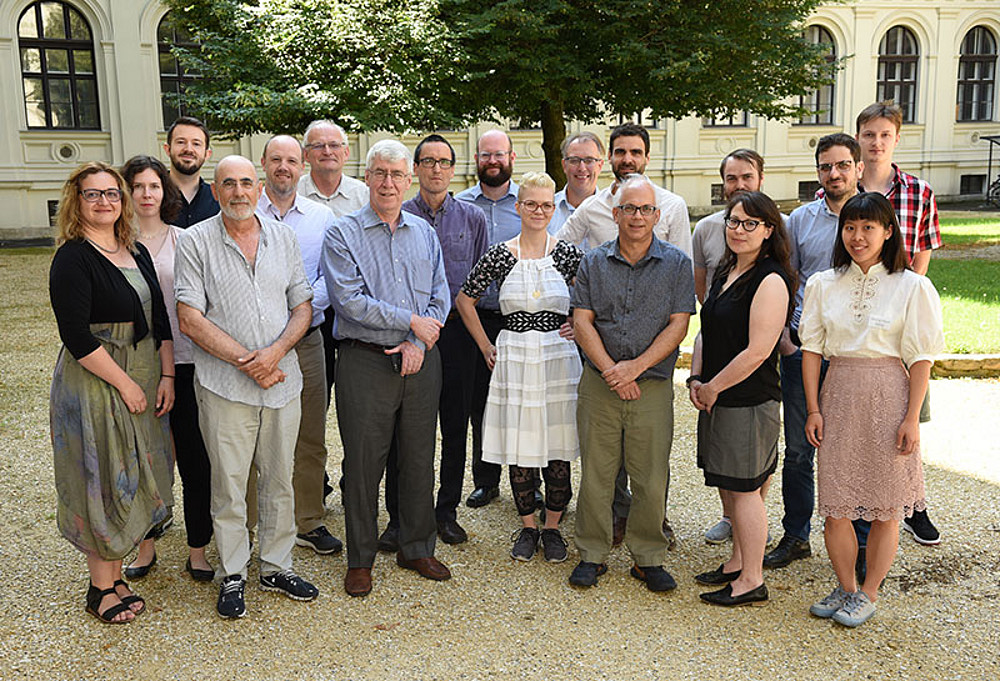
Kanita Kovacevic, Kerstin Reibold, Klemens Wieringer, Andrei Marmor, Burke Hendrix, Lukas Meyer, Jeremy Waldron, Gordon Christie, Timothy Waligore, Lena Remich, Daniel Butt, Julio Montero, Jeff Spinner-Halev, Daniel Lassnig, Amy Hondo, Santiago Truccone Borgogno, Bernhard Petutschnig und Seung Hyun Song (v.l.). Foto: Uni Graz/Leljak. ©Uni Graz/Leljak

Kanita Kovacevic, Kerstin Reibold, Klemens Wieringer, Andrei Marmor, Burke Hendrix, Lukas Meyer, Jeremy Waldron, Gordon Christie, Timothy Waligore, Lena Remich, Daniel Butt, Julio Montero, Jeff Spinner-Halev, Daniel Lassnig, Amy Hondo, Santiago Truccone Borgogno, Bernhard Petutschnig und Seung Hyun Song (v.l.). Foto: Uni Graz/Leljak.

International anerkannter Rechtsphilosoph Jeremy Waldron referierte zu Gerechtigkeit und Immigration

Sind Staaten berechtigt, Immigration zu beschränken oder zu verhindern, und falls ja, inwiefern und mit welchen Mitteln? Können die Konsequenzen historischen Unrechts durch geänderte Umstände aufgehoben werden? Über diese Fragen diskutierte der renommierte Rechtsphilosoph Jeremy Waldron, New York University, mit zahlreichen internationalen KollegInnen vergangene Woche an der Karl-Franzens-Universität Graz. Der Workshop fand im Rahmen einer Konferenz zum Projekt “Superseding Historical Injustice and Changed Circumstances“, das vom österreichischen Wissenschaftsfonds FWF gefördert und von Lukas Meyer, Arbeitsbereich Praktische Philosophie, geleitet wird. Im Workshop wurden die konzeptuellen und argumentativen Voraussetzungen und die Reichweite der von Waldron formulierten „Aufhebungsthese“, wonach Unrecht eben aufgehoben werden kann, kritisch untersucht, insbesondere auch anhand von historischen Fällen.

Neben Jeremy Waldron und den FWF ProjektmitarbeiternInnen Timothy Waligore, Seung Hyun Song und Santiago Truccone Borgogno nahmen Daniel Butt (University of Oxford), Gordon Christie (University of British Columbia), Burke Hendrix (University of Oregon), Amy Hondo (Princeton University), Andrei Marmor (Cornell University), Julio Montero (University of Buenos Aires) und Jeff Spinner-Halev (University of North Carolina at Chapel-Hill) an dem Workshop teil. Die Integration der Konferenz in verschiedene Lehrveranstaltungen des Instituts bot Studierenden die Möglichkeit, sich den Forschungsstand zu Fragen der Historischen Gerechtigkeit zu erarbeiten, wie auch Kontakt zu international renommierten WissenschafterInnen zu knüpfen.

Gefördert wurde die Veranstaltung vom Land Steiermark, von der Stadt Graz, der Gesellschaft für Analytische Philosophie, dem Büro für Internationale Beziehungen sowie dem Dekanat der Geisteswissenschaftlichen Fakultät der Universität Graz.

created by Klemens Wieringer & Gerhild Leljak

Related news

Chemical Christmas show at the University of Graz: An explosive evening at the Schauspielh

At the beginning of December, the University of Graz transformed the theater into a laboratory: as part of “Chemical Life,” teacher training students staged a chemical Christmas show for Styrian school classes—complete with ethanol rockets, nitrogen snow, and glowing effects. An evening designed to inspire interest in studying chemistry.

Train by train: Koralm railway accelerates exchange between the Universities

Lectures at the University of Klagenfurt in the morning, seminars at the University of Graz in the afternoon: Austria's longest tunnel and a journey time of around 45 minutes make it easy. The Koralm railway increases the speed of networking between the two university locations. The collaboration builds on existing cooperation - for example in the areas of teacher training, Slavic studies and as employers, the universities are well coordinated.

On the trail of the Big Bang: University of Graz receives 1.5 million euros for doctoral programmes

The Austrian Science Fund FWF has selected the Doctoral Programme in Theoretical Particle Physics at the University of Graz for funding from the Doc.funds. Six young scientists will be funded for 3.5 years. They will gain fundamentally new insights into the origins of the world.

From trans women and knee prostheses: sports science prizes awarded

Walking better with a prosthesis, successfully getting rid of excess weight, training more effectively, more fairness for trans people in sport: these were the topics addressed by the students at the University of Graz who were awarded the sports science prizes for their Master's theses on 3 December 2025.

Begin of page section:
Additional information:

University of Graz
Universitaetsplatz 3
8010 Graz
Austria
  • Contact
  • Web Editors
  • Moodle
  • UNIGRAZonline
  • Imprint
  • Data Protection Declaration
  • Accessibility Declaration
Weatherstation
Uni Graz

End of this page section. Go to overview of page sections

End of this page section. Go to overview of page sections

Begin of page section:

End of this page section. Go to overview of page sections