Begin of page section:
Page sections:

  • Go to contents (Accesskey 1)
  • Go to position marker (Accesskey 2)
  • Go to main navigation (Accesskey 3)
  • Go to sub navigation (Accesskey 4)
  • Go to additional information (Accesskey 5)
  • Go to page settings (user/language) (Accesskey 8)
  • Go to search (Accesskey 9)

End of this page section. Go to overview of page sections

Begin of page section:
Page settings:

English en
Deutsch de
Search
Login

End of this page section. Go to overview of page sections

Begin of page section:
Search:

Search for details about Uni Graz
Close

End of this page section. Go to overview of page sections


Search

Begin of page section:
Main navigation:

Page navigation:

  • University

    University
    • About the University
    • Organisation
    • Faculties
    • Library
    • Working at University of Graz
    • Campus
    Developing solutions for the world of tomorrow - that is our mission. Our students and our researchers take on the great challenges of society and carry the knowledge out.
  • Research Profile

    Research Profile
    • Our Expertise
    • Research Questions
    • Research Portal
    • Promoting Research
    • Research Transfer
    • Ethics in Research
    • Commission for Scientific Integrity
    Scientific excellence and the courage to break new ground. Research at the University of Graz creates the foundations for making the future worth living.
  • Studies

    Studies
    • Prospective Students
    • Students
    • Registration for Study Programme (Winter semester 2026/27)
    • Welcome Weeks for First Year Students
  • Community

    Community
    • International
    • Location
    • Research and Business
    • Alumni
    The University of Graz is a hub for international research and brings together scientists and business experts. Moreover, it fosters the exchange and cooperation in study and teaching.
Topics
  • Sustainable University
  • Researchers answer
  • Work for us
Close menu

End of this page section. Go to overview of page sections

Begin of page section:
You are here:

University of Graz News Gut oder böse?

End of this page section. Go to overview of page sections

Thursday, 13 June 2013

Gut oder böse?

Uni Graz-ForscherInnen erforschen Mechanismen in der Zelle. Foto: Madl.

Uni Graz-ForscherInnen erforschen Mechanismen in der Zelle. Foto: Madl.

ForscherInnen der Uni Graz klären die Funktion von Freien Radikalen im Zellstoffwechsel auf

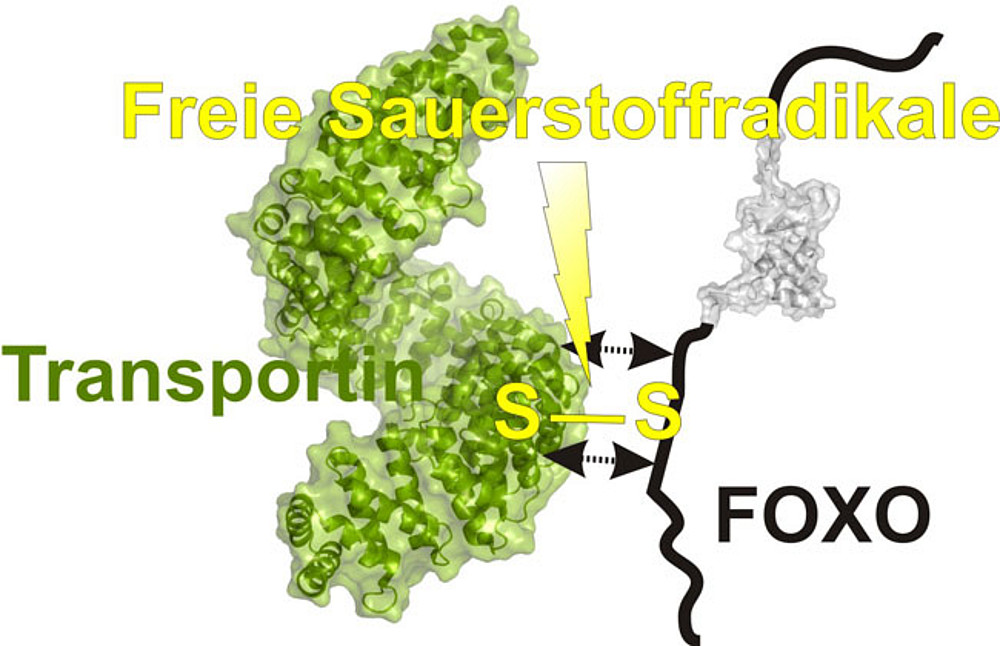
Freie Sauerstoffradikale sind aggressive Moleküle, die großen Schaden anrichten können, indem sie unkontrolliert chemische Reaktionen eingehen. Sie spielen bei der Alterung und auch bei der Entstehung vieler Krankheiten – wie zum Beispiel Krebs – eine zentrale Rolle. Radikale sind aber auch wichtig für das normale Funktionieren von Zellen im Organismus – sie initiieren ein Signal, das wiederum jene Gene aktiviert, die Zellen vor schädlichen äußeren Einflüssen schützen. Unter der Mitarbeit von Dr. Tobias Madl vom Institut für Chemie der Karl-Franzens-Universität Graz konnte nun ein internationales ForscherInnenteam die molekularen Mechanismen aufklären, die zeigen, wie Radikale die Gene aktivieren. Die Arbeit wurde in der aktuellen Ausgabe der renommierten Fachzeitschrift „Molecular Cell“ publiziert.


Unkontrollierte Zellteilung und Schäden in der Zelle sind die Hauptursachen von Krebs und altersbedingten Krankheiten wie Alzheimer und Parkinson. WissenschafterInnen konnten nun zeigen, dass Sauerstoffradikale eine bestimmte Klasse von Proteinen – sogenannte FOXO Transkriptionsfaktoren – anregen. „Die Proteine sammeln sich im Zellkern an und aktivieren eine Reihe von Genen, die dafür sorgen, dass sich die Zelle nicht mehr teilt und sich somit gegen Schäden schützt“, erklärt Madl. Der von ihm und dem Forschungsteam entdeckte Mechanismus ermöglicht es nun erstmalig, diesen Selbstschutzmechanismus der Zelle zu verstehen. „Mit diesem Wissen können neue Ansätze entwickelt und so eine Reihe von Krebsarten und altersbedingten Krankheiten bekämpft werden“, führt der Chemiker aus.


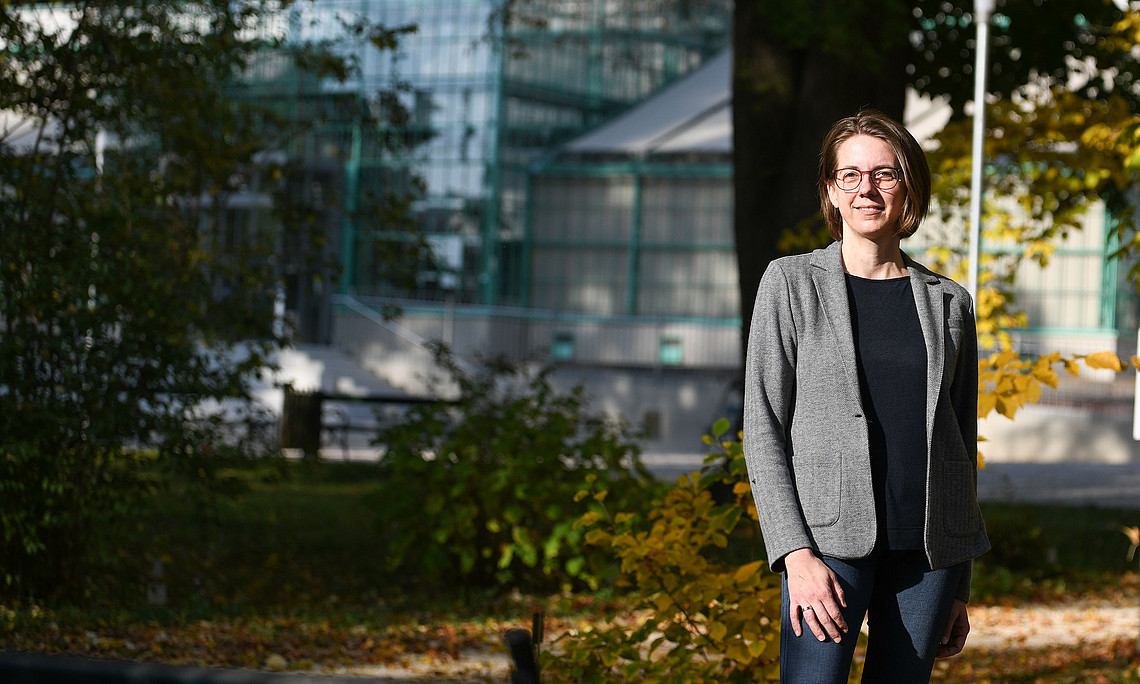
Der Grazer Tobias Madl forscht an der Universität Graz sowie an der Technischen Universität München und am Helmholtz Zentrum München. Seine Forschungsgruppe arbeitet auf dem Gebiet der Strukturbiologie. Ziel der Vorhaben ist es, die grundlegenden molekularen Mechanismen der Wechselwirkungen unstrukturierter Proteine aufzuklären und damit Einblick in die komplizierte Verbindung zwischen deren Funktion und Krankheiten zu erhalten.


Publikation:
Redox-Dependent Control of FOXO/DAF-16 by Transportin-1,
Putker Marrit, Madl Tobias, Vos Harmjan, de Ruiter Hester, Visscher Marieke, van den Berg MC, Kaplan Mohammed, Korswagen HC, Boelens Rolf, Vermeulen Michiel, Burgering Boudewijn, Dansen Tobias,
Molecular Cell 21. Februar 2013


Online verfügbar unter http://www.cell.com/molecular-cell/abstract/S1097-2765%2812%2901050-7
 

Rückfragen:
Dr. Tobias Madl
Institut für Chemie, Bereich Organische und Bioorganische Chemie
Karl-Franzens-Universität Graz
Tel.: 0316 / 380 – 5340
Mobil: 0699 12182896
E-Mail: tobias.madl(at)uni-graz.at
created by Tobias Madl & Konstantinos Tzivanopoulos

Related news

Commissioned by NATO: University of Graz tests high-tech textiles

As part of an international project, antimicrobial and fire-resistant fabrics with UV protection are being developed in Zagreb. Pharmacists from the University of Graz are ensuring that these fabrics are skin-friendly.

The Arctic up close: ORF special feature on the University of Graz’s research station in S

Students from the University of Graz are spending two weeks conducting research at the Univerisity of Graz research station at the Sermilik Fjord in Greenland, which has been operational for three years. They are measuring glacial runoff, tracking ice melt in real time and installing weather stations. ORF is following the expedition and will be reporting on the special feature ‘Arctic Adventure’ across its various channels from 20 July.

Medicine for ants: Caffeine prolongs the life of infected insects

Black coffee stimulates us and acts against bacteria. So, can caffeine also be good for insects? Yes, confirm biologists of the University of Graz. When ants suffer from a fungal disease, they consume more caffeine and remain active for longer.

How formulas are making medicine more personalised

When Federica Caforio talks about the heart, it doesn’t sound like an operating theatre, but rather like equations, parameters and simulations. Yet this is precisely where the medical promise of her research lies: one day, clinical data will be used to create a digital twin of the heart – a virtual model that will enable a better understanding of diseases and allow for more personalised treatment plans. She will be presenting her research at the ‘ECMTB 2026’ mathematics conference.

Begin of page section:
Additional information:

University of Graz
Universitaetsplatz 3
8010 Graz
Austria
  • Contact
  • Web Editors
  • Moodle
  • UNIGRAZonline
  • Imprint
  • Data Protection Declaration
  • Accessibility Declaration
Weatherstation
Uni Graz

End of this page section. Go to overview of page sections

End of this page section. Go to overview of page sections

Begin of page section:

End of this page section. Go to overview of page sections