Begin of page section:
Page sections:

  • Go to contents (Accesskey 1)
  • Go to position marker (Accesskey 2)
  • Go to main navigation (Accesskey 3)
  • Go to sub navigation (Accesskey 4)
  • Go to additional information (Accesskey 5)
  • Go to page settings (user/language) (Accesskey 8)
  • Go to search (Accesskey 9)

End of this page section. Go to overview of page sections

Begin of page section:
Page settings:

English en
Deutsch de
Search
Login

End of this page section. Go to overview of page sections

Begin of page section:
Search:

Search for details about Uni Graz
Close

End of this page section. Go to overview of page sections


Search

Begin of page section:
Main navigation:

Page navigation:

  • University

    University
    • About the University
    • Organisation
    • Faculties
    • Library
    • Working at University of Graz
    • Campus
    Developing solutions for the world of tomorrow - that is our mission. Our students and our researchers take on the great challenges of society and carry the knowledge out.
  • Research Profile

    Research Profile
    • Our Expertise
    • Research Questions
    • Research Portal
    • Promoting Research
    • Research Transfer
    • Ethics in Research
    Scientific excellence and the courage to break new ground. Research at the University of Graz creates the foundations for making the future worth living.
  • Studies

    Studies
    • Prospective Students
    • Students
  • Community

    Community
    • International
    • Location
    • Research and Business
    • Alumni
    The University of Graz is a hub for international research and brings together scientists and business experts. Moreover, it fosters the exchange and cooperation in study and teaching.
  • Spotlight
Topics
  • Our digital Advent calendar
  • Sustainable University
  • Researchers answer
  • Work for us
Close menu

End of this page section. Go to overview of page sections

Begin of page section:
You are here:

University of Graz News Gold und Geld

End of this page section. Go to overview of page sections

Friday, 17 January 2014

Gold und Geld

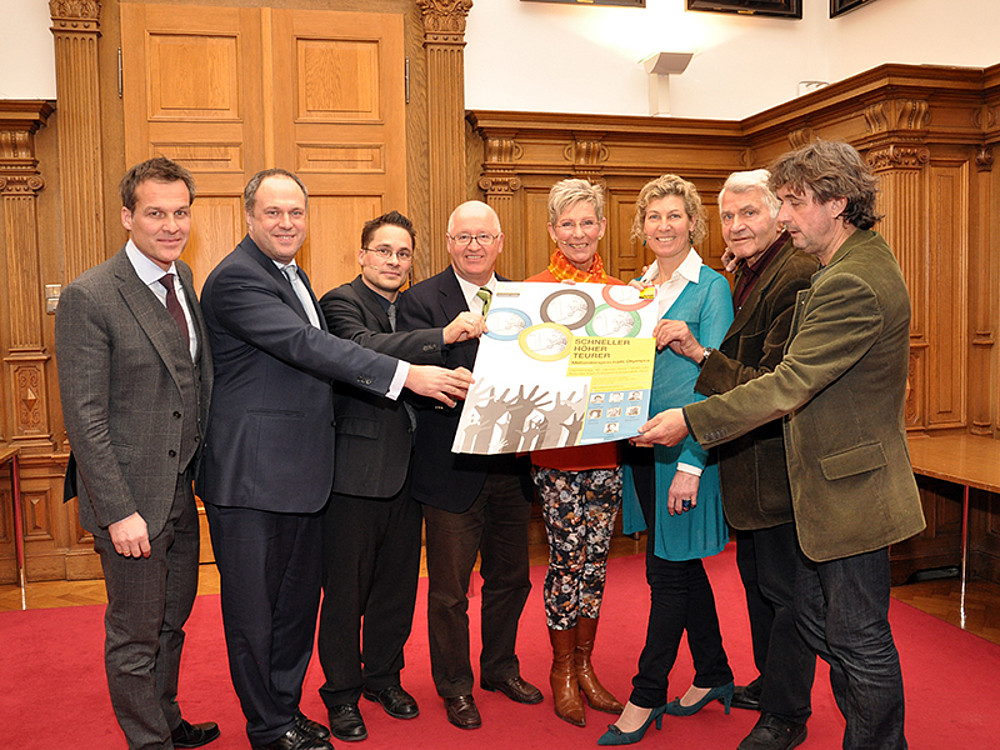
Olympia im Brennpunkt: Tarek Leitner, Richard Grasl, Walter Iber, Stefan Karner, Trixi Schuba, Petra Kornberger, Sigi Bergmann und Johann Skocek (v.l.)
Olympia im Brennpunkt: Tarek Leitner, Richard Grasl, Walter Iber, Stefan Karner, Trixi Schuba, Petra Kornberger, Sigi Bergmann und Johann Skocek (v.l.)

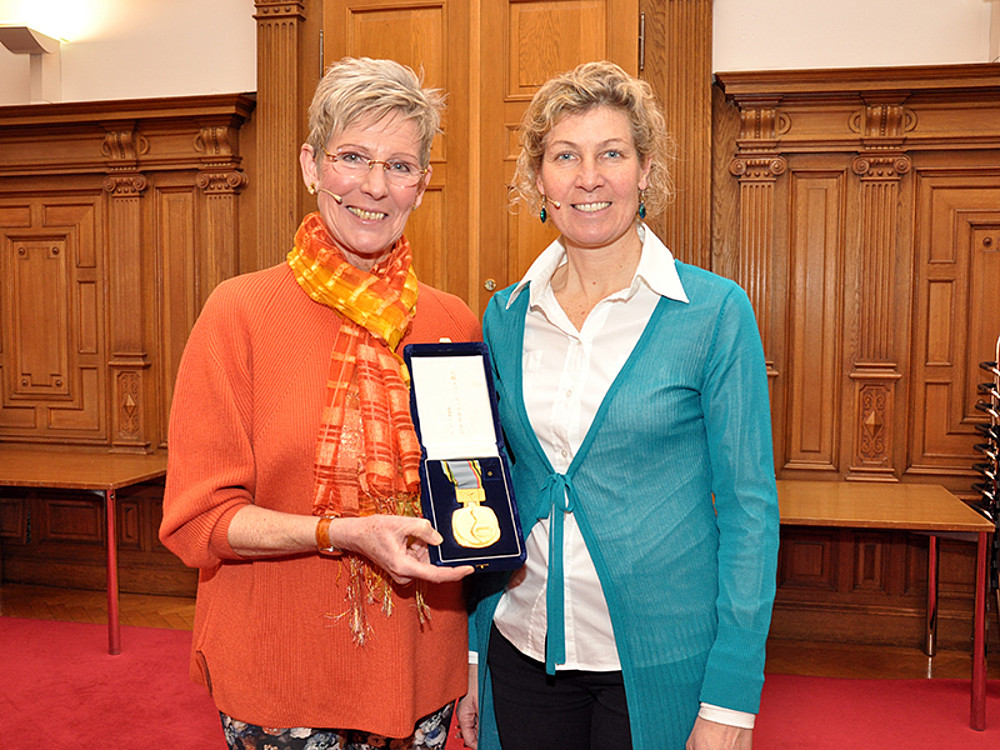
Olympiasiegerinnen Trixi Schuba (mit ihrer Medaille von Sapporo 1972) und Petra Kornberger
Olympiasiegerinnen Trixi Schuba (mit ihrer Medaille von Sapporo 1972) und Petra Kornberger

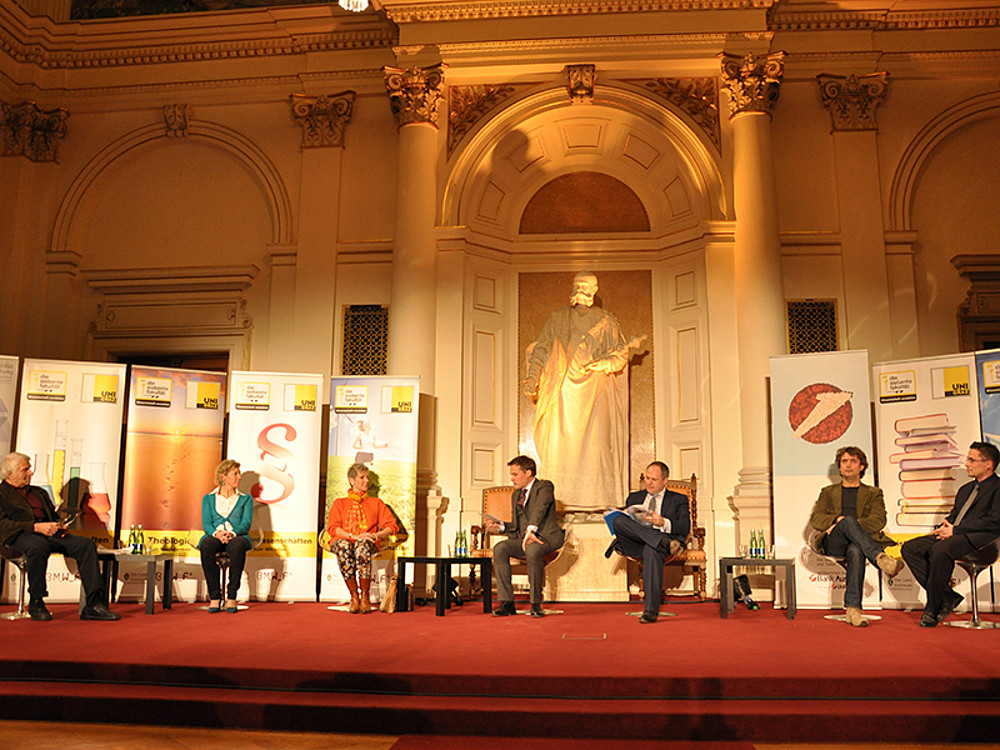
Drei Wochen vor dem Entzünden der Olympischen Flamme diskutierte unter der souveränen Leitung von ZIB-Moderator Tarek Leitner in der Aula der Uni Graz ein hochkarätig besetztes Podium
Drei Wochen vor dem Entzünden der Olympischen Flamme diskutierte unter der souveränen Leitung von ZIB-Moderator Tarek Leitner in der Aula der Uni Graz ein hochkarätig besetztes Podium

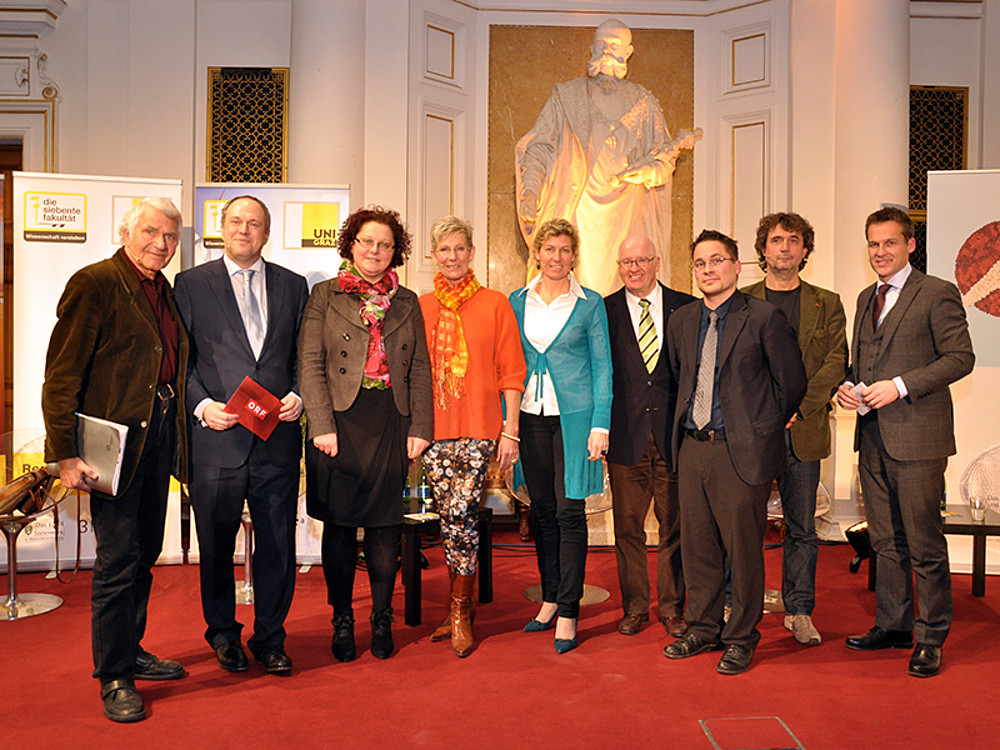
Podiumsgäste und Veranstalter: Sigi Bergmann, Richard Grasl, Andrea Penz (7. fakultät), Trixi Schuba, Petra Kronberger, Stefan Karner (Ludwig-Bolzmann-Institut), Walter Iber, Johann Skocek und Tarek Leitner (v.l.)

Podiumsgäste und Veranstalter: Sigi Bergmann, Richard Grasl, Andrea Penz (7. fakultät), Trixi Schuba, Petra Kronberger, Stefan Karner (Ludwig-Bolzmann-Institut), Walter Iber, Johann Skocek und Tarek Leitner (v.l.)

Das Milliardengeschäft mit Olympia: Sportstars Petra Kronberger und Trixi Schuba an der Uni Graz

Zwischen Goldmedaille und Geldstück: Die Olympischen Winterspiele 2014 in Sotschi sind das teuerste Sportereignis der Geschichte. Wohin führt der kommerzialisierte Hochleistungssport? Tritt die ursprüngliche Idee, die Messung sportlicher Leistung und die völkerverbindende Funktion, zusehends in den Hintergrund?
Drei Wochen vor dem Entzünden der Olympischen Flamme diskutierte unter der souveränen Leitung von ZIB-Moderator Tarek Leitner am 16. Jänner 2014 in der Aula der Uni Graz ein hochkarätig besetztes Podium.

Die Olympiasiegerinnen Trixi Schuba, im Eiskunstlauf (1972), und Petra Kronberger, Gold in Slalom sowie in der Kombination (1992), blickten auf ihre Teilnahmen zurück. Schuba beklagte, dass der „Gedanke des Gemeinsamen“ verloren gegangen sei. Kronberger erinnerte an Calgary 1988: „Das Leben im olympischen Dorf war ein Erlebnis, man hat Stars wie Katharina Witt gleich ums Eck getroffen.“
Bedenklich sah ORF-Sportkommentatoren-Legende Sigi Bergmann die Entwicklung: „Eine Hunderstelsekunde entscheidet darüber, ob man Millionär wird oder in zwei Wochen vergessen ist.“
Walter Iber, Historiker an der Uni Graz und des Ludwig Boltzmann-Instituts für Kriegsfolgen-Forschung, erklärte: „In den 1970er- und 80er-Jahren hat es zahlreiche Boykotte der Spiele gegeben, in dieser Zeit begann die Kommerzialisierung, um die Finanzierung zu sichern.“
Sportjournalist Johann Skocek fand kritische Worte: „Der Wettkampfsport ist eine Bühne, wobei Olympia die größte ist.“ Skocek sprach vom „Olympismus“, der den TV-Sendern sowohl symbolisches als auch finanzielles Kapital bringe.
Richard Grasl, kaufmännischer Direktor des ORF, widersprach, dass die Olympischen Spiele für den Öffentlichen Rundfunk ein Geschäft seien. Erstmals erfolgte die Vergabe der Fernsehrechte über eine Agentur, was die Kosten zusätzlich in die Höhe trieb. Grasl befürchtet künftig die Übertragung auf Pay-TV: „Olympische Spiele sollten ein Allgemeingut sein.“

Der Podiumsdiskussion wurde in Kooperation der 7. fakultät, des Zentrums für Gesellschaft, Wissen und Kommunikation, mit dem Ludwig Boltzmann-Instituts für Kriegsfolgen-Forschung und mit Unterstützung der Bank Austria veranstaltet.

created by Andreas Schweiger

Related news

Chemical Christmas show at the University of Graz: An explosive evening at the Schauspielh

At the beginning of December, the University of Graz transformed the theater into a laboratory: as part of “Chemical Life,” teacher training students staged a chemical Christmas show for Styrian school classes—complete with ethanol rockets, nitrogen snow, and glowing effects. An evening designed to inspire interest in studying chemistry.

Train by train: Koralm railway accelerates exchange between the Universities

Lectures at the University of Klagenfurt in the morning, seminars at the University of Graz in the afternoon: Austria's longest tunnel and a journey time of around 45 minutes make it easy. The Koralm railway increases the speed of networking between the two university locations. The collaboration builds on existing cooperation - for example in the areas of teacher training, Slavic studies and as employers, the universities are well coordinated.

On the trail of the Big Bang: University of Graz receives 1.5 million euros for doctoral programmes

The Austrian Science Fund FWF has selected the Doctoral Programme in Theoretical Particle Physics at the University of Graz for funding from the Doc.funds. Six young scientists will be funded for 3.5 years. They will gain fundamentally new insights into the origins of the world.

From trans women and knee prostheses: sports science prizes awarded

Walking better with a prosthesis, successfully getting rid of excess weight, training more effectively, more fairness for trans people in sport: these were the topics addressed by the students at the University of Graz who were awarded the sports science prizes for their Master's theses on 3 December 2025.

Begin of page section:
Additional information:

University of Graz
Universitaetsplatz 3
8010 Graz
Austria
  • Contact
  • Web Editors
  • Moodle
  • UNIGRAZonline
  • Imprint
  • Data Protection Declaration
  • Accessibility Declaration
Weatherstation
Uni Graz

End of this page section. Go to overview of page sections

End of this page section. Go to overview of page sections

Begin of page section:

End of this page section. Go to overview of page sections