Begin of page section:
Page sections:

  • Go to contents (Accesskey 1)
  • Go to position marker (Accesskey 2)
  • Go to main navigation (Accesskey 3)
  • Go to sub navigation (Accesskey 4)
  • Go to additional information (Accesskey 5)
  • Go to page settings (user/language) (Accesskey 8)
  • Go to search (Accesskey 9)

End of this page section. Go to overview of page sections

Begin of page section:
Page settings:

English en
Deutsch de
Search
Login

End of this page section. Go to overview of page sections

Begin of page section:
Search:

Search for details about Uni Graz
Close

End of this page section. Go to overview of page sections


Search

Begin of page section:
Main navigation:

Page navigation:

  • University

    University
    • About the University
    • Organisation
    • Faculties
    • Library
    • Working at University of Graz
    • Campus
    Developing solutions for the world of tomorrow - that is our mission. Our students and our researchers take on the great challenges of society and carry the knowledge out.
  • Research Profile

    Research Profile
    • Our Expertise
    • Research Questions
    • Research Portal
    • Promoting Research
    • Research Transfer
    • Ethics in Research
    • Commission for Scientific Integrity
    Scientific excellence and the courage to break new ground. Research at the University of Graz creates the foundations for making the future worth living.
  • Studies

    Studies
    • Prospective Students
    • Students
    • Welcome Weeks for First Year Students
  • Community

    Community
    • International
    • Location
    • Research and Business
    • Alumni
    The University of Graz is a hub for international research and brings together scientists and business experts. Moreover, it fosters the exchange and cooperation in study and teaching.
Topics
  • Sustainable University
  • Researchers answer
  • Work for us
Close menu

End of this page section. Go to overview of page sections

Begin of page section:
You are here:

University of Graz News Geschichte entdecken

End of this page section. Go to overview of page sections

Tuesday, 06 August 2013

Geschichte entdecken
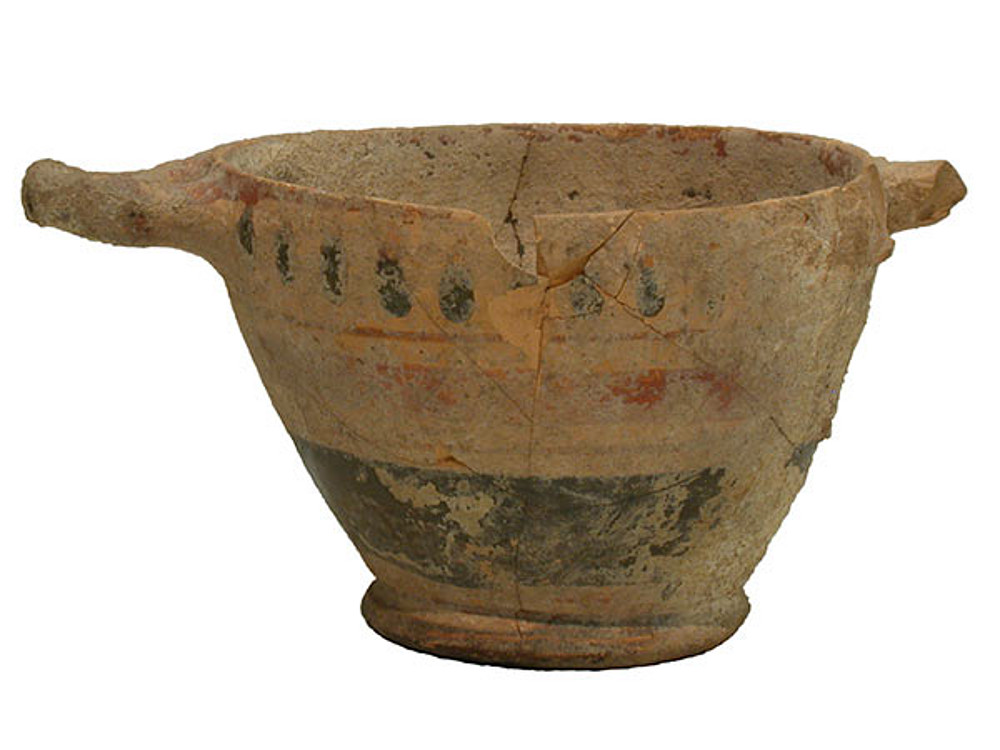
Ein korinthisches Trinkgefäß aus dem fünften Jahrhundert vor Christus, gefunden in einem slowenischen Fürstengrab.

Ein korinthisches Trinkgefäß aus dem fünften Jahrhundert vor Christus, gefunden in einem slowenischen Fürstengrab. Foto: Universalmuseum Joanneum
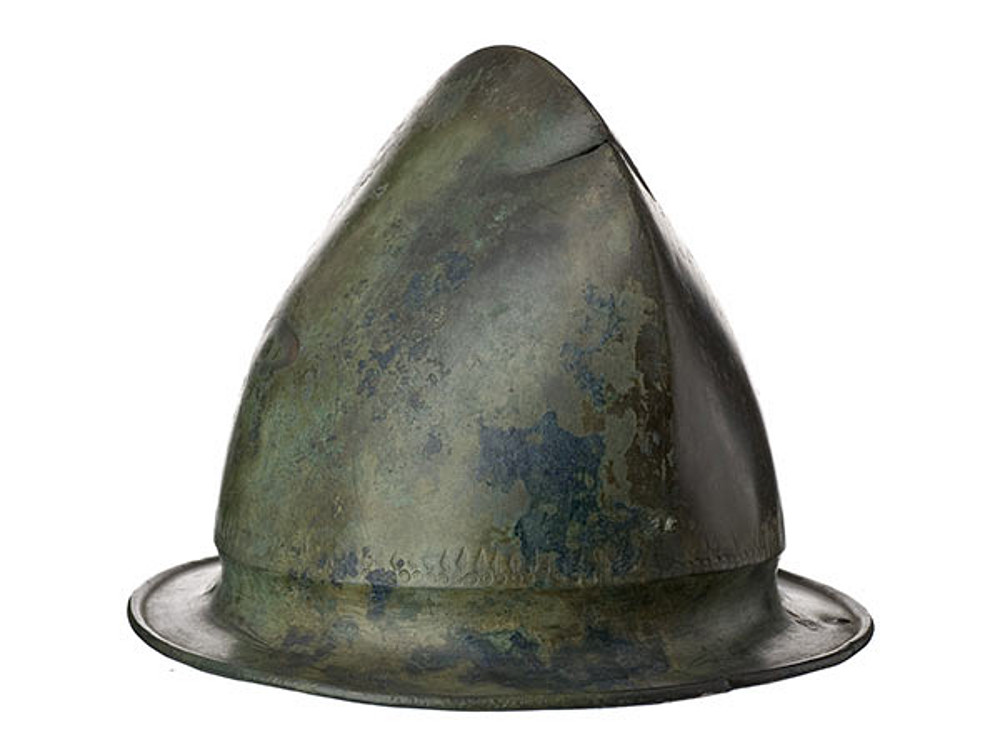
Ein Bronzehelm aus der späten Hallstattzeit, gefunden auf einem Acker in der Nähe von Maribor, zu sehen im Universalmuseum Joanneum.

Ein Bronzehelm aus der späten Hallstattzeit, gefunden auf einem Acker in der Nähe von Maribor, zu sehen im Universalmuseum Joanneum. Foto: Universalmuseum Joanneum
Archäologen der Uni Graz machen historische Stätten im Internet zugänglich

Ein Ausflug in die Südsteiermark, eine kleine Wanderung und vielleicht noch eine historische Entdeckung als Draufgabe? Die interaktive Online-Datenbank www.interarch-steiermark.eu mit Google-Landkarte zeigt die geschichtsträchtigen Stätten in der Steiermark sowie in Slowenien, liefert Details zu Fundgegenständen und sogar Archivdokumente. Bestückt wird das digitale Werkzeug unter anderem von Mag. Stephan Karl im Rahmen des von Ao.Univ.-Prof. Dr. Manfred Lehner geleiteten Projekts InterArch-Steiermark. Die beiden Archäologen der Uni Graz machen damit nicht nur ein Stück Geschichte der Öffentlichkeit zugänglich, sie liefern auch wichtige Impulse für die Forschung und haben bereits das eine oder andere historische Detail korrigiert.
„Wir stießen beispielsweise im slowenischen Landesinneren auf den nördlichsten Fundort einer korinthischen Keramik – einem Trinkgefäß, das einem reichen Fürsten mit ins Grab gegeben wurde“, erzählt Karl. Das wertvolle Stück stammt aus dem fünften Jahrhundert vor Christus – bislang war man davon ausgegangen, dass derartige Gegenstände erst hundert Jahre später Verbreitung fanden. Ebenfalls älter als angenommen sind Bronzehelme, die 1811 nordöstlich von Maribor gefunden wurden und heute zum Teil im Universalmuseum Joanneum zu sehen sind.
An dem aus Mitteln des Europäischen Fonds für Regionale Entwicklung geförderten Forschungsprojekt sind insgesamt sechs Partnerinstitutionen beteiligt. Bis Mitte 2014 sollen sämtliche archäologischen Funde, die zwischen 1800 und 1918 in der damaligen Steiermark getätigt wurden, erfasst sein. Von der Datenbank profitieren neben der Wissenschaft der Tourismus, Raumplanung und Denkmalschutz. Außerdem erhält das slowenische Denkmalamt nun erstmals Zugang zu archäologischen Gegenständen und Dokumenten, die das heutige Staatsgebiet betreffen, aber seit Kaisers Zeiten in österreichschen Archiven und Museen aufbewahrt werden.

Einen detaillierten Bericht über das Projekt InterArch Steiermark findet man in der aktuellen Ausgabe des Forschungsmagazins UNIZEIT

created by Dagmar Eklaude

Related news

A fresh start, a calling, holidays: what draws people from other career paths to teaching

They used to develop software; now they teach maths in the classroom. Career changers are expected to help address the shortage of qualified teachers in Austria’s schools. In their doctoral theses at the Institute for Educational Research and Teacher Training at the University of Graz, Melanie Gürentz and Claudia Mair examined how these new teachers perceive their new professional roles.

Talent Talks bridge the gap in career guidance

The Styrian Chamber of Commerce (WKO Steiermark), the Styrian Chamber of Labour (AK Steiermark) and the AMS are joining forces when it comes to training young people and, through the “Talent Talks”, are creating a seamless pathway to career guidance. This takes preparation and follow-up support – just in time for the start of the term and the scheme’s tenth anniversary – to a whole new level. A new survey conducted by the Talent Centre among 2,687 former participants to mark the anniversary shows just how important this development is. Of the young people who received follow-up support from the Talent Report, 74.6 per cent stated that they had a good understanding of their own strengths and talents following the Talent Check. Without follow-up support, the figure was 66.5 per cent – a significant difference of 8.1 percentage points.

ERC Starting Grants: three million euros for two researchers at the University of Graz

Two researchers from the University of Graz have secured prestigious and generously funded grants from the EU. Starting Grants from the European Research Council (ERC), each worth 1.5 million euros, have been awarded to the human geographer Heide Bruckner and the social scientist Silvana Weiss.

Austria’s emissions rose in 2025: University of Graz researchers analyse the causes

The Environment Agency Austria has today published the figures for the country’s greenhouse gas emissions in 2025. While emissions fell sharply year on year from 2022 to 2024, they rose again by just under 0.7 per cent in 2025. Researchers at the University of Graz have analysed how much of this increase was due to structural changes in the economy and how much was attributable to external factors over which there is little control. “In 2025, the colder winter compared with 2024 increased emissions by 0.81 per cent, while the weak economy reduced them by 0.38 per cent. If we factor out these influences, we find an underlying increase of 0.26 per cent compared with the previous year,” reports economist Karl Steininger. “This clearly means that Austria is not on track to meet its climate targets, which require a substantial reduction in emissions by 2030.”

Begin of page section:
Additional information:

University of Graz
Universitaetsplatz 3
8010 Graz
Austria
  • Contact
  • Web Editors
  • Moodle
  • UNIGRAZonline
  • Imprint
  • Data Protection Declaration
  • Accessibility Declaration
Weatherstation
Uni Graz

End of this page section. Go to overview of page sections

End of this page section. Go to overview of page sections

Begin of page section:

End of this page section. Go to overview of page sections