Begin of page section:
Page sections:

  • Go to contents (Accesskey 1)
  • Go to position marker (Accesskey 2)
  • Go to main navigation (Accesskey 3)
  • Go to sub navigation (Accesskey 4)
  • Go to additional information (Accesskey 5)
  • Go to page settings (user/language) (Accesskey 8)
  • Go to search (Accesskey 9)

End of this page section. Go to overview of page sections

Begin of page section:
Page settings:

English en
Deutsch de
Search
Login

End of this page section. Go to overview of page sections

Begin of page section:
Search:

Search for details about Uni Graz
Close

End of this page section. Go to overview of page sections


Search

Begin of page section:
Main navigation:

Page navigation:

  • University

    University
    • About the University
    • Organisation
    • Faculties
    • Library
    • Working at University of Graz
    • Campus
    Developing solutions for the world of tomorrow - that is our mission. Our students and our researchers take on the great challenges of society and carry the knowledge out.
  • Research Profile

    Research Profile
    • Our Expertise
    • Research Questions
    • Research Portal
    • Promoting Research
    • Research Transfer
    • Ethics in Research
    Scientific excellence and the courage to break new ground. Research at the University of Graz creates the foundations for making the future worth living.
  • Studies

    Studies
    • Prospective Students
    • Students
  • Community

    Community
    • International
    • Location
    • Research and Business
    • Alumni
    The University of Graz is a hub for international research and brings together scientists and business experts. Moreover, it fosters the exchange and cooperation in study and teaching.
  • Spotlight
Topics
  • Our digital Advent calendar
  • Sustainable University
  • Researchers answer
  • Work for us
Close menu

End of this page section. Go to overview of page sections

Begin of page section:
You are here:

University of Graz News Familie bevorzugt

End of this page section. Go to overview of page sections

Thursday, 31 January 2019

Familie bevorzugt

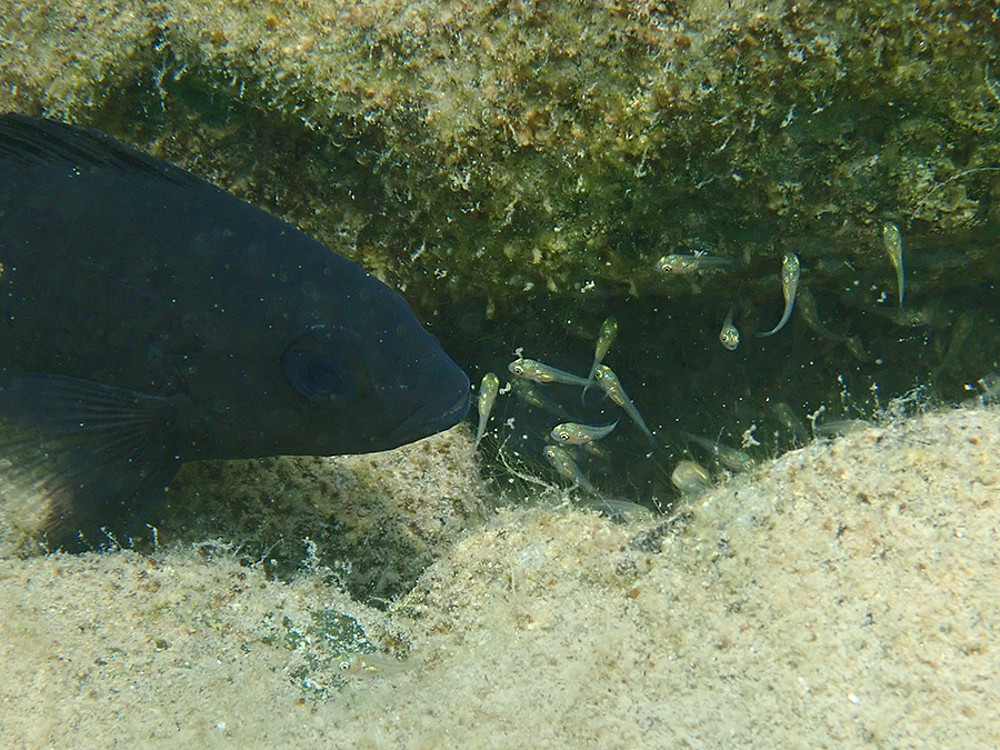
Buntbarsch-Männchen bei der Brutpflege: Manche kümmern sich auch um fremden Nachwuchs. Foto: Uni Graz/Bose ©Aneesh Bose

Buntbarsch-Männchen bei der Brutpflege: Manche kümmern sich auch um fremden Nachwuchs. Foto: Uni Graz/Bose

Team der Uni Graz fand heraus, warum manche Tiere verwandte Nebenbuhler dulden

Männer, die Nebenbuhler ins Nest lassen? Väter, die bereitwillig fremde Junge großziehen? Das erstaunt, da es im Tierreich eigentlich darum geht, möglichst viele eigene Nachkommen zu zeugen und Rivalen nicht zum Zug kommen zu lassen. In einer soeben erschienenen Publikation in BMC Biology kann Kristina Sefc vom Institut für Biologie der Universität Graz mit ihrem Team einen Teil des Rätsels klären.

Wenn ein „monogam“ lebendes Buntbarsch-Weibchen mit der Eiablage beginnt – im Regelfall klebt es mehr als hundert gut geschützt in Felsritzen und hinter Vorsprünge –, lauern neben seinem Männchen zehn und mehr fortpflanzungswillige Singles auf ihre Chance, ebenfalls Spermienflüssigkeit zu entlassen. „Der Partner ist also großer Konkurrenz ausgesetzt und hat gar keine Chance, alle Nebenbuhler abzuwehren“, schildert Sefc. Durch aufwändige genetische Untersuchungen haben die ForscherInnen herausgefunden, dass die fremden Väter im Schnitt näher mit den „gehörnten“ Nestbesitzer verwandt sind, als man es bei zufälligen Zusammentreffen erwarten würde. „Die Devise lautet also offensichtlich: ‚Hauptsache, es bleibt in der Familie‘“, fasst die Biologin zusammen. Wenn das Männchen schon auf eigene Nachkommen verzichten muss, stellt es so zumindest sicher, dass ein Teil seiner Gene dennoch weitergegeben wird.
Aus evolutionsbiologischer Sicht wäre es für die sogenannten „Cuckolders“, also der alleinstehenden Eindringlinge, aus demselben Grund allerdings sinnvoller, in völlig fremden Nestern Eier zu befruchten, denn auch für sie ist der Nachwuchs von Verwandten ein Gewinn. „Angesichts der großen Zahl an Nebenbuhlern kann es aber auch für sie ein Vorteil sein, sich innerhalb der Familie zu konkurrenzieren, wo sie mit weniger Aggression seitens der Nestbesitzer rechnen können“, folgert Sefc. Wie das Forschungsteam aus Modellrechnungen und Beobachtungen rückschließen konnte, scheinen die verwandten Männchen eine für beide vorteilhafte Allianz einzugehen. „Damit werfen wir ganz neues Licht auf das Phänomen ‚Cuckoldry‘ und seine Folgen für die beteiligten Akteure“, betont die Wissenschafterin.

Treue macht sich bezahlt
Die BiologInnen analysierten über hundert Buntbarsch-Nester und verglichen die Verwandtschaftsverhältnisse der Nachkommen. Dabei fanden sie außerdem heraus, dass liierte Männchen so gut wie nie fremdgehen und pro Kopf dennoch wesentlich größere Zeugungserfolge haben als Singles. Die „Cuckolders“ konzentrieren sich nämlich im Regelfall auf ein einziges Nest und können dort gemeinsam nur etwa die Hälfte der Brut befruchten.
„Unsere Untersuchung hilft uns weiter, die Reproduktionsstrategien von Tieren besser zu verstehen. Es wäre hoch interessant herauszufinden, welche anderen Arten ebenfalls verwandte Nebenbuhler akzeptieren“, schildert Sefc.

Die Studie ist Teil des vom Österreichischen Wissenschaftsfonds FWF geförderten Projekts „Coping with cuckoldry – How to mitigate the fitness costs of lost paternity“
Publikation:
Aneesh P. H. Bose, Jonathan M. Henshaw, Holger Zimmermann, Karoline Fritzsche and Kristina M. Sefc: Inclusive fitness benefits mitigate costs of cuckoldry to socially paired males, BMC Biology, DOI: 10.1186/s12915-018-0620-6

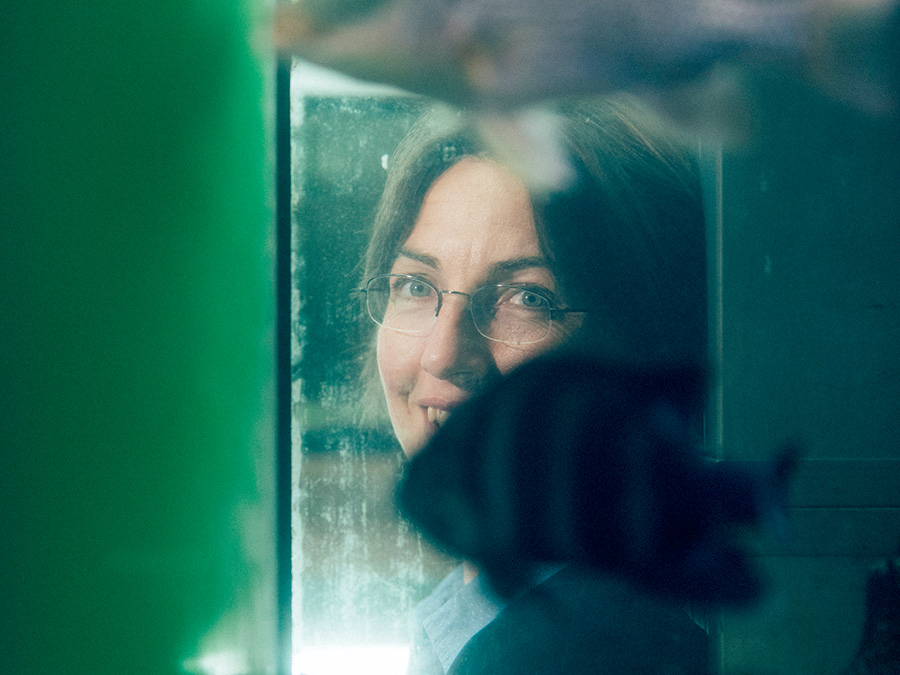
Kristina Sefc hat den Durchblick in der Verhaltensforschung: Sie klärte, warum manche Buntbarsche Nebenbuhler ins Nest lassen. Foto:Uni Graz/Kanizaj
created by Dagmar Eklaude

Related news

Fair distribution: Researchers determine just greenhouse gas budgets for all EU regions

Ten years ago, on 12 December 2015, the Paris Climate Agreement was signed at the UN Climate Conference. In order to limit global warming to well below two degrees, only a certain amount of CO2 may be emitted worldwide. While the focus was originally on national emission targets, more than 200 subnational regions and almost 300 cities have now adopted their own targets. But how many emissions are they fairly entitled to? Researchers at the University of Graz have now developed transparent criteria for fair distribution at the subnational level for the first time and determined corresponding greenhouse gas budgets for all European regions. The paper was published today in the scientific journal Nature Communications.

Chemical Christmas show at the University of Graz: An explosive evening at the Schauspielh

At the beginning of December, the University of Graz transformed the theater into a laboratory: as part of “Chemical Life,” teacher training students staged a chemical Christmas show for Styrian school classes—complete with ethanol rockets, nitrogen snow, and glowing effects. An evening designed to inspire interest in studying chemistry.

Train by train: Koralm railway accelerates exchange between the Universities

Lectures at the University of Klagenfurt in the morning, seminars at the University of Graz in the afternoon: Austria's longest tunnel and a journey time of around 45 minutes make it easy. The Koralm railway increases the speed of networking between the two university locations. The collaboration builds on existing cooperation - for example in the areas of teacher training, Slavic studies and as employers, the universities are well coordinated.

On the trail of the Big Bang: University of Graz receives 1.5 million euros for doctoral programmes

The Austrian Science Fund FWF has selected the Doctoral Programme in Theoretical Particle Physics at the University of Graz for funding from the Doc.funds. Six young scientists will be funded for 3.5 years. They will gain fundamentally new insights into the origins of the world.

Begin of page section:
Additional information:

University of Graz
Universitaetsplatz 3
8010 Graz
Austria
  • Contact
  • Web Editors
  • Moodle
  • UNIGRAZonline
  • Imprint
  • Data Protection Declaration
  • Accessibility Declaration
Weatherstation
Uni Graz

End of this page section. Go to overview of page sections

End of this page section. Go to overview of page sections

Begin of page section:

End of this page section. Go to overview of page sections