Begin of page section:
Page sections:

  • Go to contents (Accesskey 1)
  • Go to position marker (Accesskey 2)
  • Go to main navigation (Accesskey 3)
  • Go to sub navigation (Accesskey 4)
  • Go to additional information (Accesskey 5)
  • Go to page settings (user/language) (Accesskey 8)
  • Go to search (Accesskey 9)

End of this page section. Go to overview of page sections

Begin of page section:
Page settings:

English en
Deutsch de
Search
Login

End of this page section. Go to overview of page sections

Begin of page section:
Search:

Search for details about Uni Graz
Close

End of this page section. Go to overview of page sections


Search

Begin of page section:
Main navigation:

Page navigation:

  • University

    University
    • About the University
    • Organisation
    • Faculties
    • Library
    • Working at University of Graz
    • Campus
    Developing solutions for the world of tomorrow - that is our mission. Our students and our researchers take on the great challenges of society and carry the knowledge out.
  • Research Profile

    Research Profile
    • Our Expertise
    • Research Questions
    • Research Portal
    • Promoting Research
    • Research Transfer
    • Ethics in Research
    Scientific excellence and the courage to break new ground. Research at the University of Graz creates the foundations for making the future worth living.
  • Studies

    Studies
    • Prospective Students
    • Students
  • Community

    Community
    • International
    • Location
    • Research and Business
    • Alumni
    The University of Graz is a hub for international research and brings together scientists and business experts. Moreover, it fosters the exchange and cooperation in study and teaching.
  • Spotlight
Topics
  • Our digital Advent calendar
  • Sustainable University
  • Researchers answer
  • Work for us
Close menu

End of this page section. Go to overview of page sections

Begin of page section:
You are here:

University of Graz News European champion of biodiversity: Graz takes top place in City Nature Challenge

End of this page section. Go to overview of page sections

Tuesday, 14 May 2024

European champion of biodiversity: Graz takes top place in City Nature Challenge

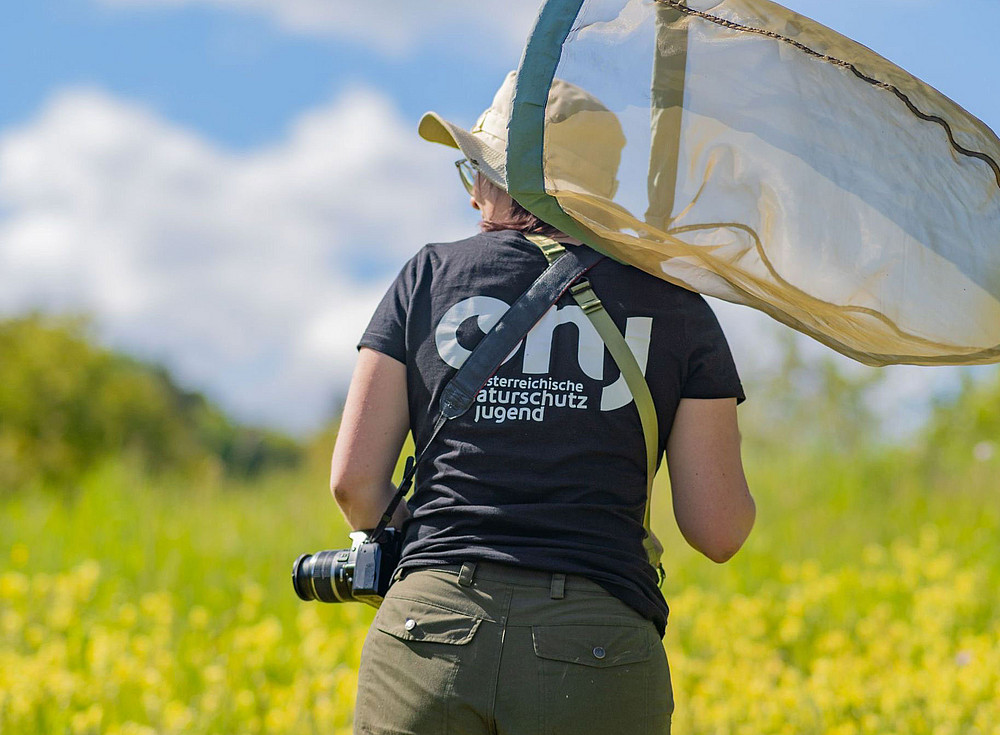
Students at the University of Graz with camera and butterfly net in nature

Professionally equipped biology students like Katharina Brüllmeir documented animals, plants and fungi in Styria as part of the City Nature Challenge. Photo: Saskia Kollegger

Over 43,000 nature observations in four days: this puts the "Graz to Southern Styria Nature Park" region in first place internationally outside of America in this year's City Nature Challenge. In terms of registered species, Styria is also the European champion with 4,065 and is in third place worldwide after La Paz (Bolivia) and Hong Kong.

"We are very pleased that we have found some new species for Styria, but also some that were thought to be extinct, such as the crow's-foot plantain," reports organizer Gernot Kunz from the Institute of Biology at the University of Graz. The leaf beetle Pachybrachis fimbriolatus, which had not been observed since 1950, and the shield beetle Cassida aurora, which was last seen in 1973, were also rediscovered. Several tree fungi, wasps and beetles as well as the jumping spider Pseudeuophrys vafra have been recorded for the first time in Styria. "This is a southern species that may have been introduced unintentionally," suspects the biodiversity researcher. Kunz and his students contributed significantly to the documentation and identification of the animals, plants and fungi.

All discoveries are available online .

International call
The City Nature Challenge is an annual friendly competition between cities and regions around the world. Participants try to document as many wild animals, plants and fungi as possible. The uploaded specimens are identified and evaluated. Graz and the surrounding area took part for the fifth time this year. In 2025, the observation area will be extended to Murau and south-eastern Styria. All uploaded data records remain stored on the iNaturalist reporting platform and are available for nature conservation and scientific purposes.

created by Dagmar Eklaude

Related news

Fair distribution: Researchers determine just greenhouse gas budgets for all EU regions

Ten years ago, on 12 December 2015, the Paris Climate Agreement was signed at the UN Climate Conference. In order to limit global warming to well below two degrees, only a certain amount of CO2 may be emitted worldwide. While the focus was originally on national emission targets, more than 200 subnational regions and almost 300 cities have now adopted their own targets. But how many emissions are they fairly entitled to? Researchers at the University of Graz have now developed transparent criteria for fair distribution at the subnational level for the first time and determined corresponding greenhouse gas budgets for all European regions. The paper was published today in the scientific journal Nature Communications.

Chemical Christmas show at the University of Graz: An explosive evening at the Schauspielh

At the beginning of December, the University of Graz transformed the theater into a laboratory: as part of “Chemical Life,” teacher training students staged a chemical Christmas show for Styrian school classes—complete with ethanol rockets, nitrogen snow, and glowing effects. An evening designed to inspire interest in studying chemistry.

Train by train: Koralm railway accelerates exchange between the Universities

Lectures at the University of Klagenfurt in the morning, seminars at the University of Graz in the afternoon: Austria's longest tunnel and a journey time of around 45 minutes make it easy. The Koralm railway increases the speed of networking between the two university locations. The collaboration builds on existing cooperation - for example in the areas of teacher training, Slavic studies and as employers, the universities are well coordinated.

On the trail of the Big Bang: University of Graz receives 1.5 million euros for doctoral programmes

The Austrian Science Fund FWF has selected the Doctoral Programme in Theoretical Particle Physics at the University of Graz for funding from the Doc.funds. Six young scientists will be funded for 3.5 years. They will gain fundamentally new insights into the origins of the world.

Begin of page section:
Additional information:

University of Graz
Universitaetsplatz 3
8010 Graz
Austria
  • Contact
  • Web Editors
  • Moodle
  • UNIGRAZonline
  • Imprint
  • Data Protection Declaration
  • Accessibility Declaration
Weatherstation
Uni Graz

End of this page section. Go to overview of page sections

End of this page section. Go to overview of page sections

Begin of page section:

End of this page section. Go to overview of page sections