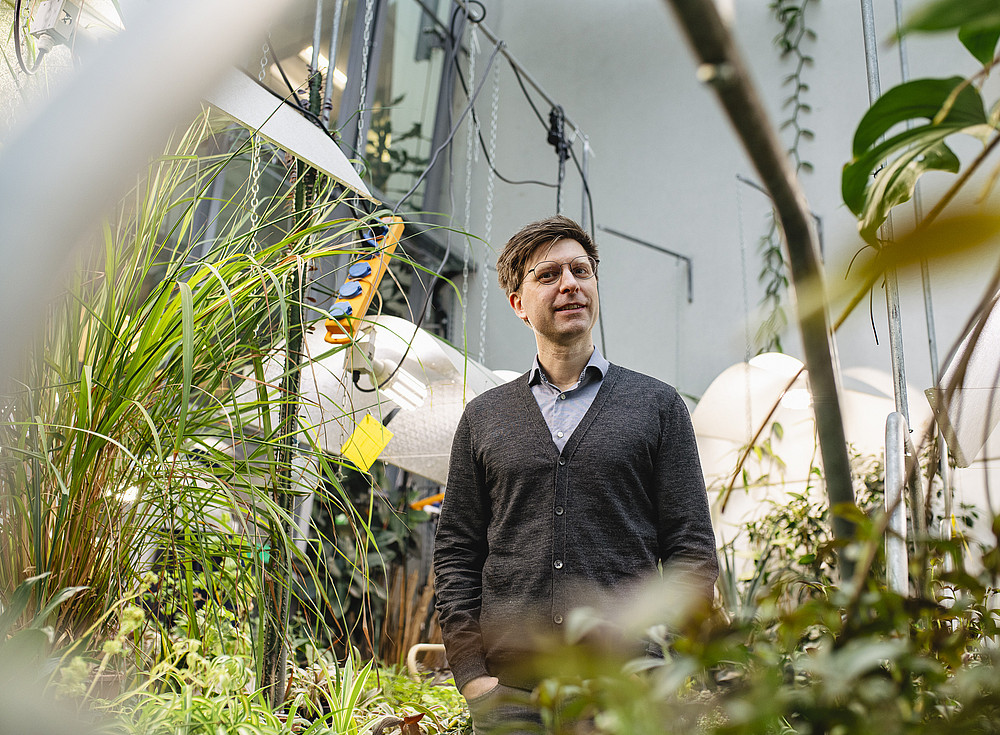
Climate change, drought and crop failures are major challenges for agriculture. However, a weed, thale cress, provides valuable insights into the internal processes of plants and thus offers a scientific basis for climate-adapted crops. Researchers at the University of Graz are using this inconspicuous cruciferous plant as a laboratory organism to understand how plants can withstand periods of drought.
"We are particularly interested in the transport of sugars in plants," explains Johannes Liesche from the Institute of Biology at the University of Graz. “The more sugar the plant cells store, the more water they can hold – a natural water reservoir. In times of heat and drought, this can make the difference between life and death for a plant.”
Until now, it was unclear how water moves between cells. The research group at the University of Graz has gained new insights here. Plants apparently have a kind of water tap that they can open and close as needed. Liesche: "Just like a valve, they can make the cell connections thicker and thinner, thus increasing or decreasing the flow."
Search for triggers
Three specific proteins play a central role in this process. "If one of these protein molecules is genetically deactivated, the plants look as if they are constantly suffering from drought stress, regardless of how much water they receive," says the biologist. "The next step is to gain a better understanding of the exact function of these proteins." It is still unclear what triggers this valve to open and close.
"We are also interested in what a diversion of water within the plant means for the transport of nutrients or phytohormones," asks Liesche. This valve would be of great importance for processes such as plant growth. “We are still at the very beginning here,” says the biologist. "We want to use thale cress to gain a better understanding of these processes. With this knowledge, field crops can then be adapted to the new climate conditions." If this succeeds, this weed could actually contribute to a climate-friendly future for agriculture.
Publication
Drought-dependent regulation of cell coupling in Arabidopsis leaf epidermis requires plasmodesmal protein NHL12, Journal of Experimenatal Botany → https://doi.org/10.1093/jxb/erae370
⇒ If you are interested in how nature deals with the many challenges in this world, you may find the answers in the Bachelor's programme in Biology.