Begin of page section:
Page sections:

  • Go to contents (Accesskey 1)
  • Go to position marker (Accesskey 2)
  • Go to main navigation (Accesskey 3)
  • Go to sub navigation (Accesskey 4)
  • Go to additional information (Accesskey 5)
  • Go to page settings (user/language) (Accesskey 8)
  • Go to search (Accesskey 9)

End of this page section. Go to overview of page sections

Begin of page section:
Page settings:

English en
Deutsch de
Search
Login

End of this page section. Go to overview of page sections

Begin of page section:
Search:

Search for details about Uni Graz
Close

End of this page section. Go to overview of page sections


Search

Begin of page section:
Main navigation:

Page navigation:

  • University

    University
    • About the University
    • Organisation
    • Faculties
    • Library
    • Working at University of Graz
    • Campus
    Developing solutions for the world of tomorrow - that is our mission. Our students and our researchers take on the great challenges of society and carry the knowledge out.
  • Research Profile

    Research Profile
    • Our Expertise
    • Research Questions
    • Research Portal
    • Promoting Research
    • Research Transfer
    • Ethics in Research
    Scientific excellence and the courage to break new ground. Research at the University of Graz creates the foundations for making the future worth living.
  • Studies

    Studies
    • Prospective Students
    • Students
  • Community

    Community
    • International
    • Location
    • Research and Business
    • Alumni
    The University of Graz is a hub for international research and brings together scientists and business experts. Moreover, it fosters the exchange and cooperation in study and teaching.
  • Spotlight
Topics
  • Our digital Advent calendar
  • Sustainable University
  • Researchers answer
  • Work for us
Close menu

End of this page section. Go to overview of page sections

Begin of page section:
You are here:

University of Graz News Ein Bild von Bildung

End of this page section. Go to overview of page sections

Tuesday, 09 February 2016

Ein Bild von Bildung
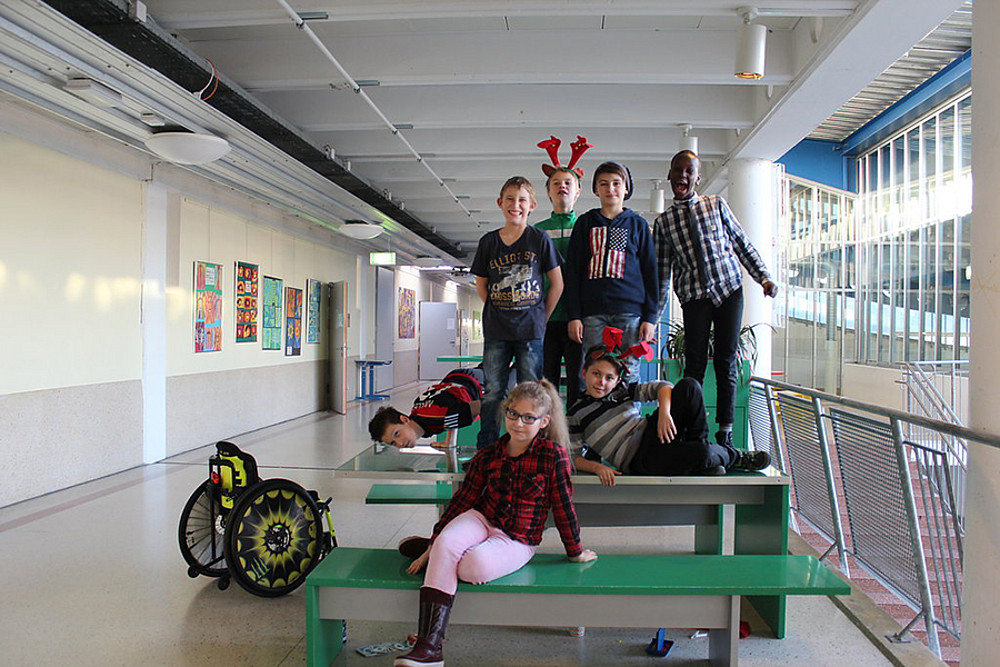
Foto: Elisabeth Schrammel
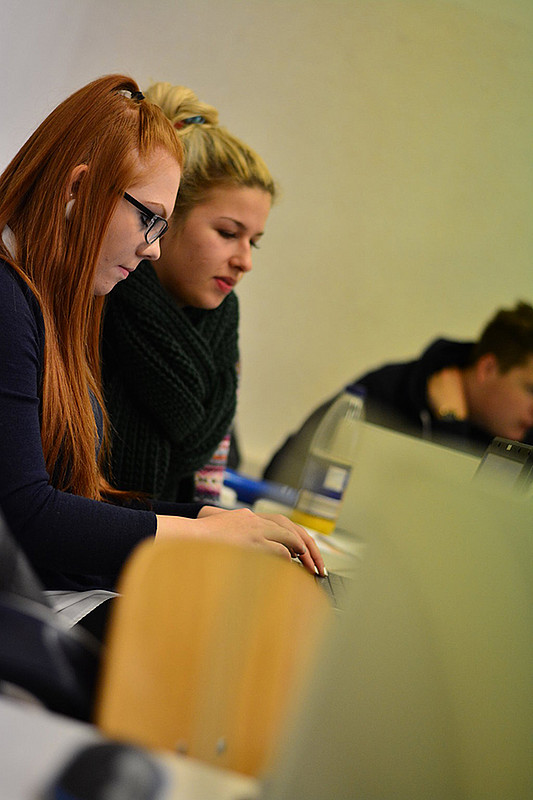
Foto: Elisabeth Schrammel

Foto: Karin Hohensinner ©
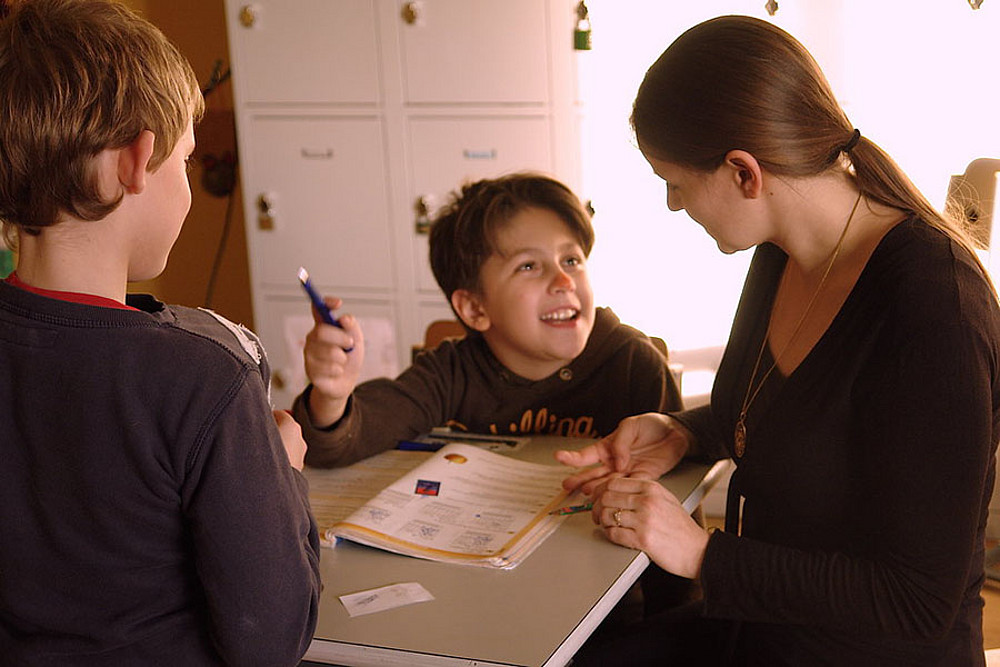
Foto: Karin Hohensinner

Foto: Sarah Edler

Foto: Sarah Edler

Foto: Sabrina Brugner, Stefan Fritz, Catherina Martinschitz, Susanne Lorber
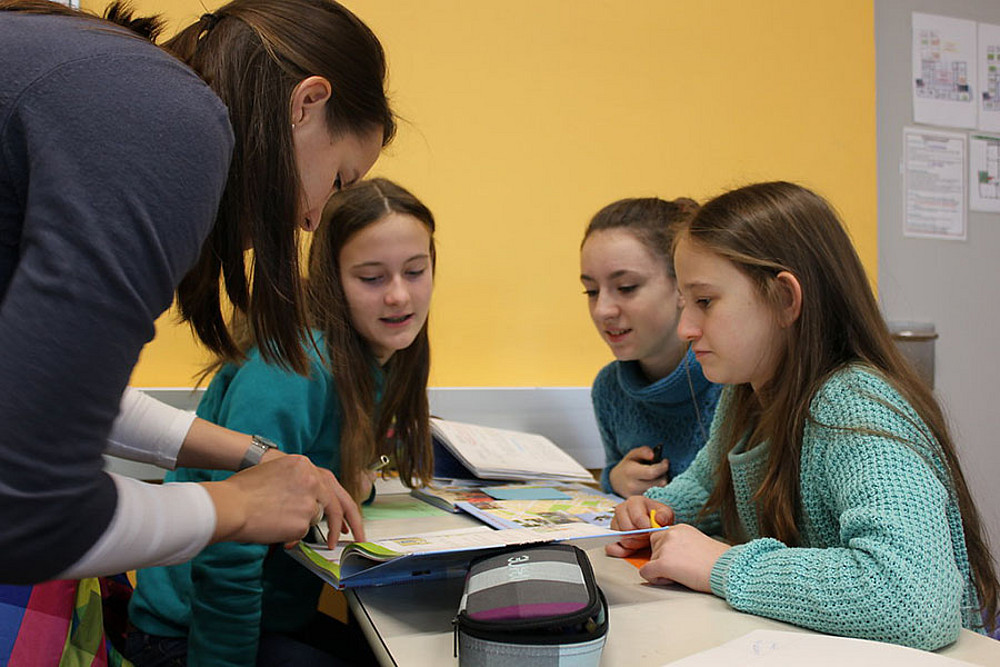
Foto: Sabrina Brugner, Stefan Fritz, Catherina Martinschitz, Susanne Lorber
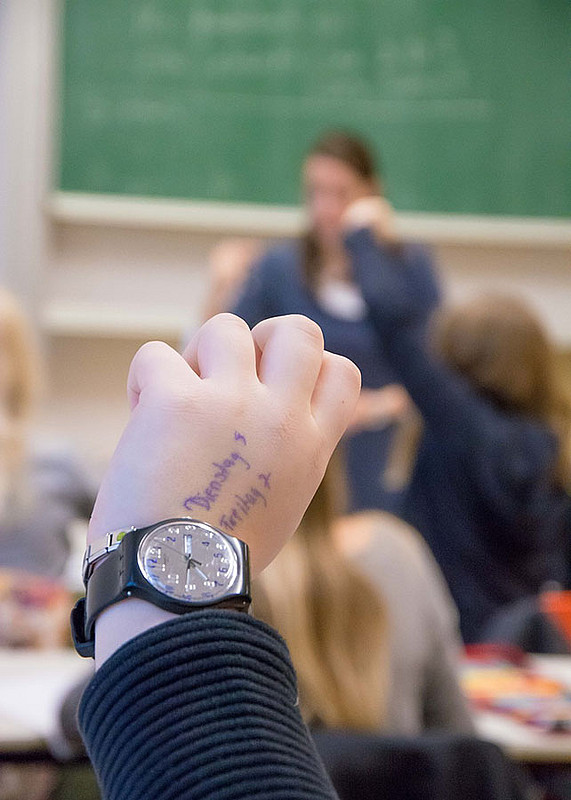
Foto: Sabrina Brugner, Stefan Fritz, Catherina Martinschitz, Susanne Lorber

Foto: Sabrina Brugner, Stefan Fritz, Catherina Martinschitz, Susanne Lorber

Foto: Karin Hohensinner
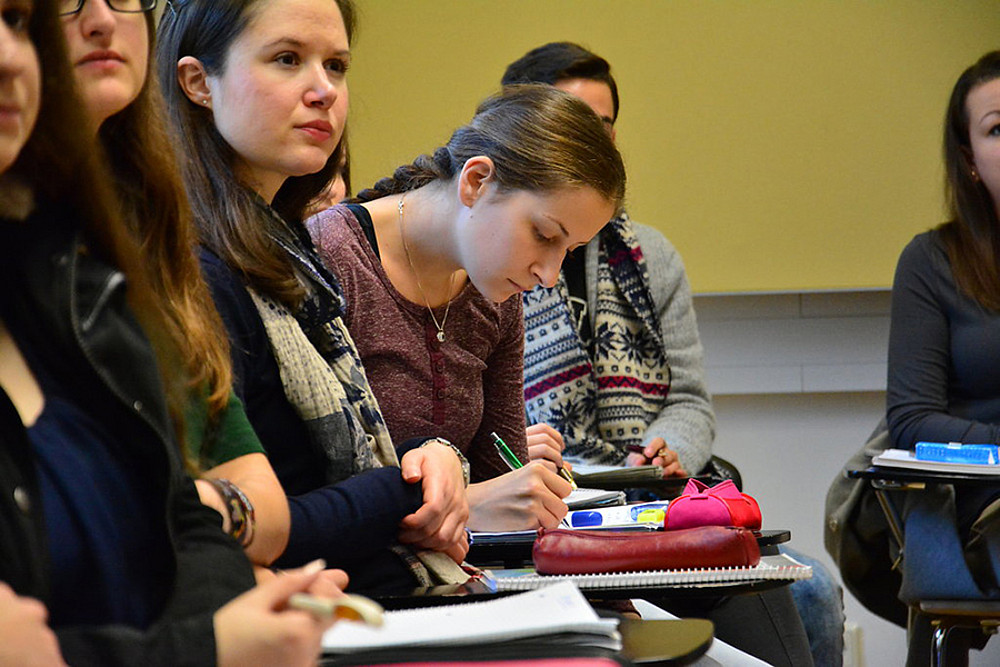
Foto: Karin Hohensinner
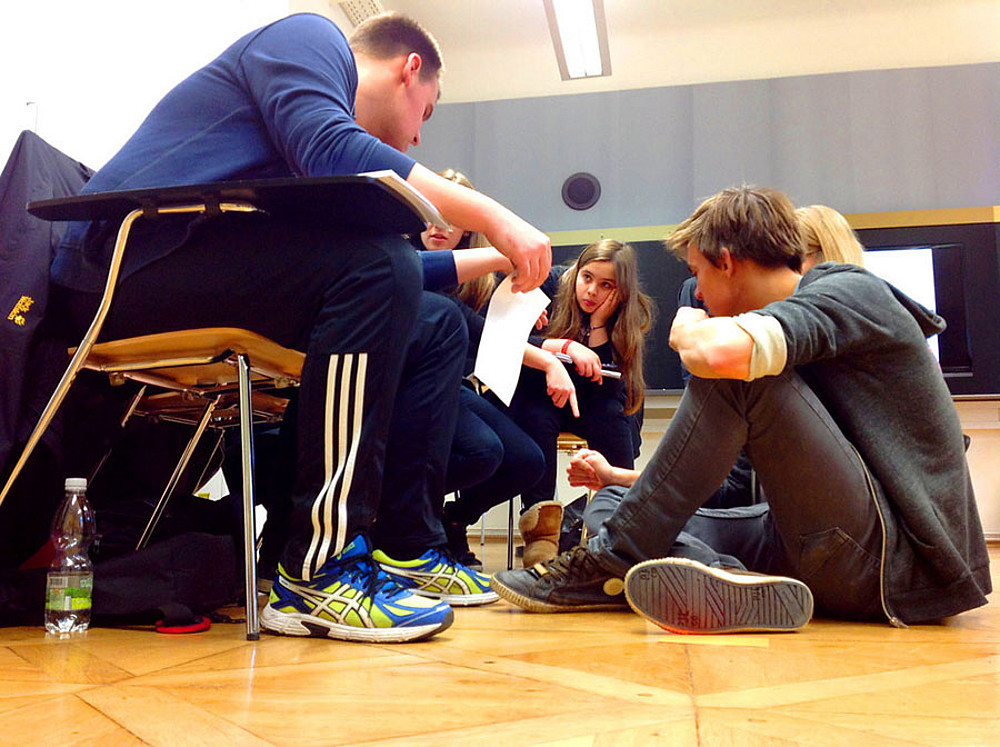
Foto: Karin Hohensinner ©

Foto: Karin Hohensinner

Foto: Mateja Grabovac
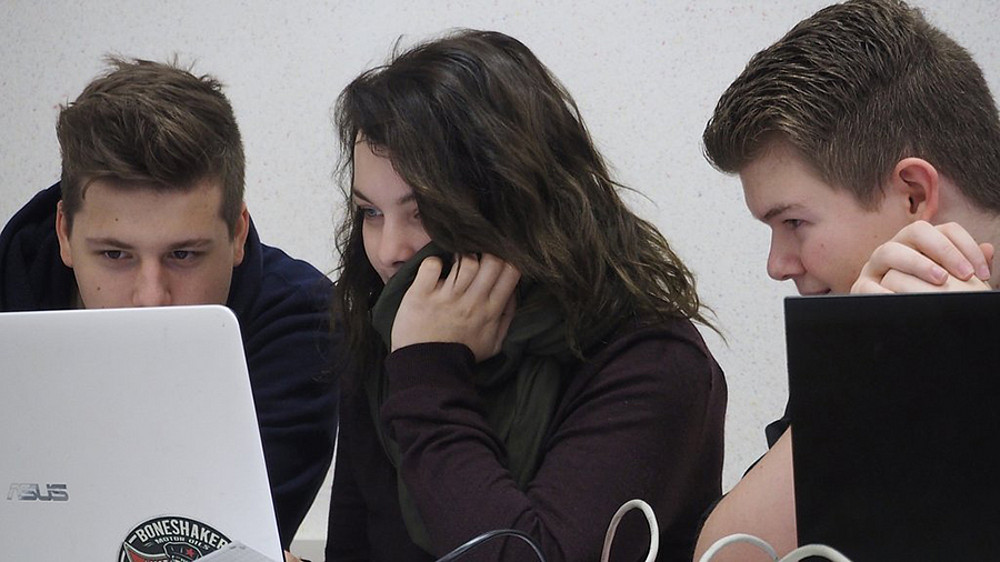
Foto: Mateja Grabovac

Foto: Georg Feiertag, Moritz Linni, Katrin Seitz
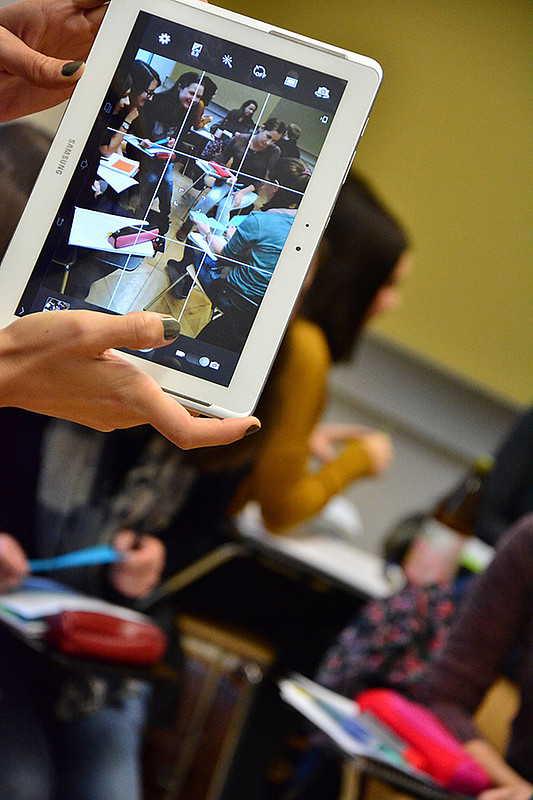
Foto: Georg Feiertag, Moritz Linni, Katrin Seitz

Foto: Karin Hohensinner ©

Foto: Karin Hohensinner

Visualisierung von Lernprozessen als Studierendenprojekt

Ein Bild sagt bekanntlich mehr als tausend Worte – insbesondere dann, wenn es um die Darstellung eines vielschichtigen Vorgangs geht. Und erst recht, wenn Lern- und Bildungsprozesse visualisiert werden sollen. Einer Herausforderung, der sich Lehramtsstudierende im Rahmen eines Proseminars unter der Leitung von Univ.-Prof. Dr. Agnieszka Czejkowska und Mitarbeit von Karin Hohensinner in diesem Wintersemester stellten und sich – auf innovative Weise – buchstäblich ein Bild von Bildung machten.

„Wie können Lernprozesse dargestellt werden?“, stand für die Studierenden als zentrale Frage am Anfang der Lehrveranstaltung. Welche Bilder von Schule und vom Lehren bzw. Lernen zirkulieren im wissenschaftlichen Umfeld, in der Medienlandschaft und dem Bildungswesen selbst? „Denn auch Bilder sind Inhalte, die der sozialen Situation und vor allem den Beteiligten in einer anerkennenden Weise gerecht werden sollten“, unterstreicht die Leiterin des Instituts für Pädagogische Professionalisierung.

Besonderer Wert wurde auf die Interaktion und auf die Kommunikation zwischen Studierenden und Lernenden – von Kindern bis zu Erwachsenen – in den jeweiligen Bildungsinstitutionen gelegt. Das Vertrauen, das den Studierenden seitens der beteiligten Institutionen entgegengebracht wurde (BG/BRG Lichtenfels Graz, NMS BG BRG Klusemannstraße Graz, Büro und Datenverarbeitungsschule BENKO Graz, Universität Graz) wurde ernst genommen. „Die fotografierten Personen durften nicht zu Objekten werden“, so Czejkowska. Daher waren die Betroffenen auch in die für die Veröffentlichung bestimmte Auswahl eingebunden. Insgesamt sind knapp 300 Fotos entstanden, die sich nun in den Abschlussarbeiten der angehenden PädagogInnen wiederfinden. Darin dokumentieren und reflektieren die Studierenden sowohl die Visualisierung als auch die dahinter liegenden Prozesse.

>> Institut für Pädagogische Professionalisierung

created by Andreas Schweiger

Related news

Setback: Austria's greenhouse gas emissions rise in 2025

Climate protection is currently facing an uphill battle. The United Nations have recently been unable to agree on a roadmap for phasing out fossil fuels, even though global warming continues to accelerate. Also Austria still does not have a national climate law with a clear target path for reducing emissions. This is evidently taking its toll: Austria’s greenhouse gas emissions rose again in 2025 for the first time in years, by around two and a half percent, according to calculations by researchers at the University of Graz. In addition to overly cautious climate action measures, this is due to somewhat colder winter months compared to 2024, which are driving up natural gas consumption.

Profound: Geoscientist Marko Bermanec deciphers processes of the Earth's plates

What happens deep down is very important to us above ground. Especially when hidden chemical processes between tectonic plates have serious consequences. Earth scientist Marko Bermanec investigates these processes in depth.

Kink in the curve: Eleonore Faber researches the "fuzzy" parts of algebra

How can the movements of robotic arms be described using maths? And what does a computer need to understand in order to function? The magic word to answer these questions is algebra. Eleonore Faber has been a professor of this branch of mathematics at the University of Graz for two years. She is particularly interested in complex phenomena that cannot be fully understood using conventional rules or laws - where algebra becomes "fuzzy".

Jurist Jürgen Pirker erhält den Wissenschaftspreises der Margaretha Lupac-Stiftung

Wie kann der Staat nationale Minderheiten schützen? Wie kann er darauf achten, dass Mitglieder einer bestimmten ethnischen oder religiösen Gruppe nicht gezwungen werden, ihre persönlichen Freiheiten aufgrund dieser Zugehörigkeit aufzugeben? Und wie ging Österreich in den vergangenen 180 Jahren mit dieser Frage um?

Begin of page section:
Additional information:

University of Graz
Universitaetsplatz 3
8010 Graz
Austria
  • Contact
  • Web Editors
  • Moodle
  • UNIGRAZonline
  • Imprint
  • Data Protection Declaration
  • Accessibility Declaration
Weatherstation
Uni Graz

End of this page section. Go to overview of page sections

End of this page section. Go to overview of page sections

Begin of page section:

End of this page section. Go to overview of page sections