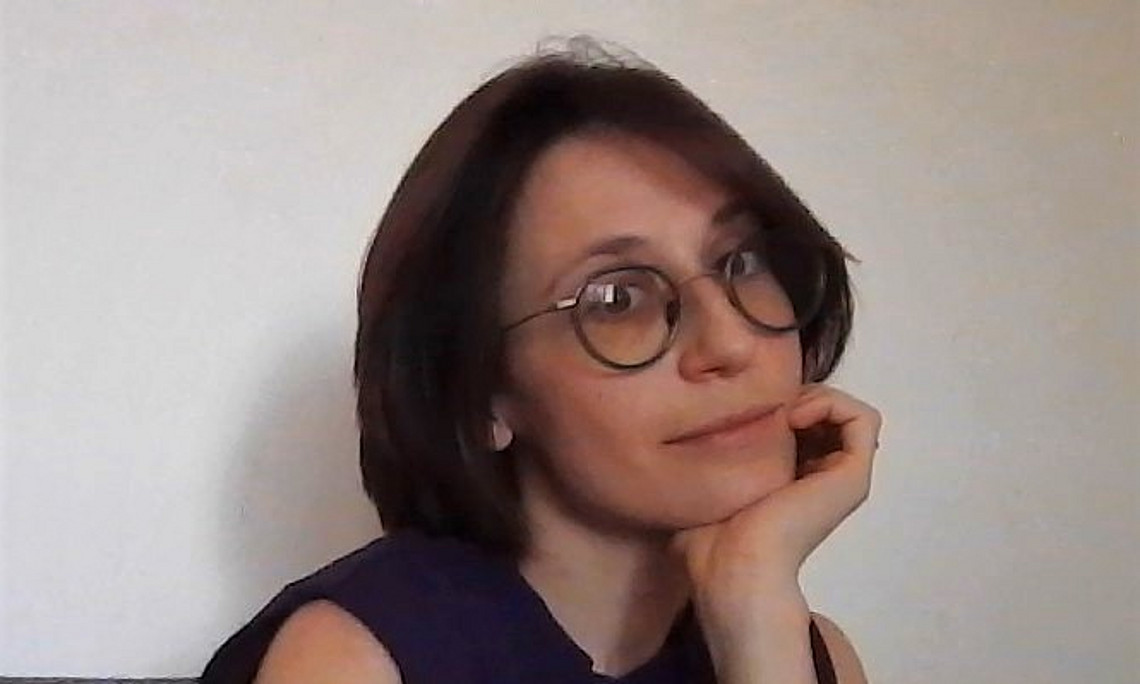




Fishing in Lake Erie or the Monongahela River near Pittsburgh, USA, was one of his favourite pastimes as a child. Even back then, David Max Findley was already wondering how humans and nature interact and why certain fish could not be eaten safely. Having studied environmental chemistry and history, and following research stays in Alaska, Australia and Germany, Findley has been working at the University of Graz for just under two months. With a Marie Skłodowska-Curie fellowship, he will be researching how Styria was used, managed and transformed between 1820 and 1870.
From a wallflower to an industrial region
For a long time, land use in Styria mainly served to supply the regional population. Then came the game-changer of the 19th century. The province transformed itself into a major supplier of iron, coal and timber. Mining and trade also gained in importance. “We are seeing a more commercialised and industrialised Styria,” confirms Findley. This development is documented in exceptional detail through a vast amount of archival material, including historical cadastral maps. This is where the researcher’s project at the Institute for Digital Humanities comes in. Using computer vision techniques and machine learning, he extracts and geolocates information from enormous amounts of data in order to visualise changes in land use over time – and thus also their potential impact on the region’s climate history.
From the Philippines to Styria
In an earlier research project, Findley had already reconstructed land use in the Philippines between the 16th and 19th centuries, despite the patchy nature of the sources. The method used at that time is now being applied to a region in Europe for the first time. The researcher sees a major advantage compared with his work in South-East Asia: “Here, there are often written family chronicles or sufficient documents to achieve a high level of individual detail. This extensive data might even enable us to make direct contact with living descendants who could confirm or refute our textual evidence.” >> Find out more about the project
30 years of Marie Skłodowska-Curie Actions (MSCA) in Austria
As part of ‘Horizon Europe’, the MSCA is the European Union’s flagship funding programme for the training of doctoral candidates and postdocs. It promotes excellent research and innovation, and equips researchers at all stages of their careers with new knowledge and skills. Today, 26 November 2026, the Austrian Research Promotion Agency (FFG) is celebrating 30 years of Marie Skłodowska-Curie Actions in Austria with a ceremony at the Haus der Forschung in Vienna. >> Find out more