


Wars destroy cities, livelihoods and social ties. They also shake political certainties to the core. What does peace mean under these circumstances? And whose voice is heard when decisions are made about a country’s future?
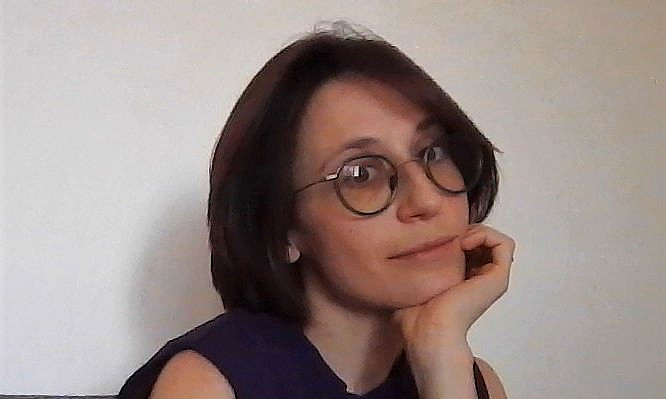
Veronica Lion is exploring these questions in the Global Governance department at the Institute for Legal Foundations. She is investigating how women-led movements operate in times of conflict and crisis. “For me, the key issue is how these movements generate political knowledge under extreme pressure and use it to develop new strategies, forms of solidarity and visions of peace and democracy,” explains the researcher.
What female activists learn from crises
In her project WOMACT – Women’s Movements as Agents of Crisis Transformation, she compares movements in Israel/Palestine and Ukraine. “I am interested in how women’s movements deal with these parallel crises, how they reorganise themselves and how they use their knowledge for political resistance and social change.”
The focus here is not only on demands and protest actions, but also on the everyday experiences of the activists: what insights do they gain from these? And how do they apply these politically?
Drawing on comparative ethnographic fieldwork, Lion develops the concept of ‘crisis epistemologies’. These refer to forms of knowledge that arise directly from experiences of crisis. The project explores what they reveal about feminist agency, solidarity and political imagination, and how this knowledge can be put into practice.
Lion’s research into peace initiatives goes back several years. In 2025, she completed her PhD at Bar-Ilan University on women-led peace movements in Israel. Her approach combines gender studies, social movement studies and peace and conflict studies. A key case study is the Israeli grassroots movement Women Wage Peace, founded in 2014. It advocates for a political solution to the Israeli-Palestinian conflict and for women’s participation in decisions concerning peace and security.
Before moving to Graz, Lion conducted research at the Sophie Davis Forum at the Hebrew University of Jerusalem and at the Taub Centre for Israel Studies at New York University.
30 years of Marie Curie funding
The European Union’s Marie Curie funding programme has been in existence since 1996. Since 2014, it has been known as the Marie Skłodowska-Curie Actions. It supports researchers in gaining international experience, furthering their education and advancing their academic careers. The Postdoctoral Fellowships are aimed at researchers with a PhD who wish to carry out their own research project abroad. The funding covers living expenses, research, further training and networking. The focus is on exchange across national, disciplinary and sectoral boundaries.