



Begin of page section:
Page sections:

  • Go to contents (Accesskey 1)
  • Go to position marker (Accesskey 2)
  • Go to main navigation (Accesskey 3)
  • Go to sub navigation (Accesskey 4)
  • Go to additional information (Accesskey 5)
  • Go to page settings (user/language) (Accesskey 8)
  • Go to search (Accesskey 9)

End of this page section. Go to overview of page sections

Begin of page section:
Page settings:

English en
Deutsch de
Search
Login

End of this page section. Go to overview of page sections

Begin of page section:
Search:

Search for details about Uni Graz
Close

End of this page section. Go to overview of page sections


Search

Begin of page section:
Main navigation:

Page navigation:

  • University

    University
    • About the University
    • Organisation
    • Faculties
    • Library
    • Working at University of Graz
    • Campus
    Developing solutions for the world of tomorrow - that is our mission. Our students and our researchers take on the great challenges of society and carry the knowledge out.
  • Research Profile

    Research Profile
    • Our Expertise
    • Research Questions
    • Research Portal
    • Promoting Research
    • Research Transfer
    • Ethics in Research
    • Commission for Scientific Integrity
    Scientific excellence and the courage to break new ground. Research at the University of Graz creates the foundations for making the future worth living.
  • Studies

    Studies
    • Prospective Students
    • Students
  • Community

    Community
    • International
    • Location
    • Research and Business
    • Alumni
    The University of Graz is a hub for international research and brings together scientists and business experts. Moreover, it fosters the exchange and cooperation in study and teaching.
  • Spotlight
Topics
  • Sustainable University
  • Researchers answer
  • Work for us
Close menu

End of this page section. Go to overview of page sections

Begin of page section:
You are here:

University of Graz News Clear & simple

End of this page section. Go to overview of page sections

Wednesday, 24 February 2021

Clear & simple

Can vaccination free us from anxiety?

Power to get through the pandemic: mentally resilient people cope better with crisis situations

Last year Claudia Traunmüller and her team also investigated how the pandemic restrictions affected the mental health of Austrians. Over 40 per cent of respondents admitted that they had experienced significant psychological effects, and just over a fifth suffered from stress, anxiety or depression.
So can vaccination free us from anxiety? According to the psychologist: “Vaccination has no direct effect on anxiety, but it can reduce the fear of infection or of becoming seriously ill.”

Clip (German only)


Power to get through the pandemic: mentally resilient people cope better with crisis situations

It’s a bit like your mobile phone. With a fully-charged battery you can enjoy a long conversation with no problem, even if you haven’t planned for it. Similarly, people with good mental resilience cope better with a crisis and recover from stressful situations much more quickly. A group of psychologists at the university conducted a study during the first COVID-19 lockdown which confirms this.

Some people deal with difficult circumstances better than others. The same is true for the pandemic. What impact does resilience – i.e. a fully-charged battery – have on this? A research team led by psychologist Claudia Traunmüller asked more than 4,700 people from all over Austria how they coped with the lockdown last spring.
The findings: “Resilient, mentally healthy people are not only able to fend off pressure and stress more robustly. Most strikingly, they also recuperate more quickly,” according to Traunmüller’s analysis. She makes a comparison: “If the battery is half empty, but I’m in a situation where maximum performance is required, the power available is used up more quickly towards the end. And our stress levels increase even more when we realise that our resources are running out.”

Recharge our batteries
So it is difficult to build up resilience during a crisis. “Just maintaining the same level is quite a feat,” says the researcher. So it is all the more important to have enough resilience.
But how can we recharge our batteries properly? “This is partly determined by genetic factors, but lifestyle also plays a major role,” replies the health psychologist. Part of the picture is adequate exercise, a balanced diet and social interaction. And she urges us all to consider what we can do to help ourselves. It’s not that we are unaware of the problem. Traunmüller uses another vivid comparison to explain: “If a red warning light comes on in your car, you take it straight to the workshop. But if our bodies send out warning signals, many of us ignore them.”

Can vaccination free us from anxiety?
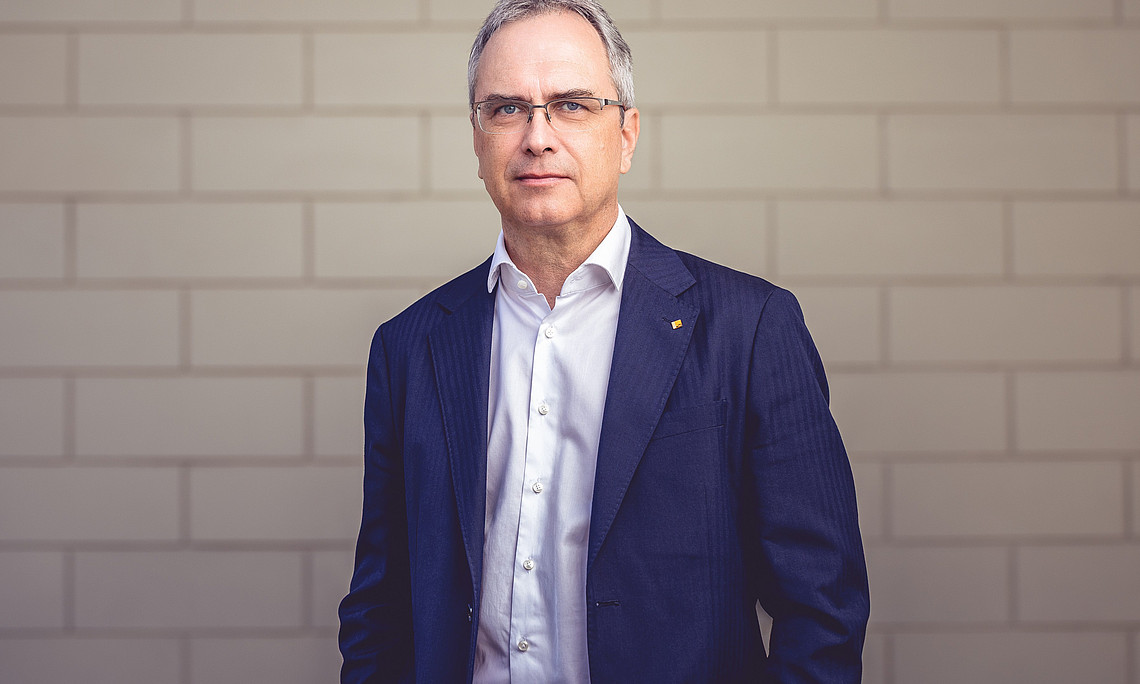
Claudia Traunmüller: "The fact is that COVID-19 poses a threat to the whole population, which generates negative emotions such as fear and anxiety. It is important to understand the distinction between these two emotions.
Fear arises when there is a clear threat. For example: I am afraid that I might become infected or seriously ill.
This fear can surely be reduced by being vaccinated. Anxiety, on the other hand, occurs in situations where the outcome is not entirely clear. For example: anxiety about the economic impact or the possible negative consequences for my child. Vaccination has no direct effect on this."

created by Andreas Schweiger

Related news

Career Booster: How the Research Careers Campus supports researchers

They are innovative, creative and productive – researchers who have not yet been appointed to a professorship make a massive contribution to a university’s research output. To provide them with even better support on their career path, the University of Graz has established the Research Careers Campus. The official launch took place on 22 April 2026 with a ‘festival’.

Greenery on the rise: over 500 new flowers, perennials and shrubs on campus

Bright blooms and fresh greenery make our hearts beat faster in spring. But it is not just us humans who delight in this colourful growth. For many animals, this splendour provides, above all, food and habitat. There has recently been an increase in this on the University of Graz campus. More than 500 native flowers, perennials and shrubs have been planted on strips of fallow land around Universitätsplatz 2.

Around the world in eight stops: the Long Night of Research at the University of Graz

On 24 April from 5 pm, you can take a short trip around the globe at the University of Graz, discovering pecularities of foreign countries or new local features in the entrance hall of the University Library. The itinerary takes you through introduced animal species, political attitudes and the omnipotence of algorithms. There will also be a programme in the historic reading hall, as well as at the UniGraz@Museum and the University Archive.

Building biological bridges: Chemist discovers an ecological tool for the pharmaceutical industry

Building a relationship on a solid foundation is also important in chemistry. To produce medicines, disinfectants or plant protection products, stable bonds between carbon atoms must be formed. Conventional chemical methods rely on environmentally harmful reagents and solvents to carry out the desired reaction. This process also produces unusable by-products. Chemist Lilla Gal has discovered an enzyme that enables the same process to take place efficiently and sustainably. The results of her research were recently published in the prestigious journal Angewandte Chemie.

Begin of page section:
Additional information:

University of Graz
Universitaetsplatz 3
8010 Graz
Austria
  • Contact
  • Web Editors
  • Moodle
  • UNIGRAZonline
  • Imprint
  • Data Protection Declaration
  • Accessibility Declaration
Weatherstation
Uni Graz

End of this page section. Go to overview of page sections

End of this page section. Go to overview of page sections

Begin of page section:

End of this page section. Go to overview of page sections

