Begin of page section:
Page sections:

  • Go to contents (Accesskey 1)
  • Go to position marker (Accesskey 2)
  • Go to main navigation (Accesskey 3)
  • Go to sub navigation (Accesskey 4)
  • Go to additional information (Accesskey 5)
  • Go to page settings (user/language) (Accesskey 8)
  • Go to search (Accesskey 9)

End of this page section. Go to overview of page sections

Begin of page section:
Page settings:

English en
Deutsch de
Search
Login

End of this page section. Go to overview of page sections

Begin of page section:
Search:

Search for details about Uni Graz
Close

End of this page section. Go to overview of page sections


Search

Begin of page section:
Main navigation:

Page navigation:

  • University

    University
    • About the University
    • Organisation
    • Faculties
    • Library
    • Working at University of Graz
    • Campus
    Developing solutions for the world of tomorrow - that is our mission. Our students and our researchers take on the great challenges of society and carry the knowledge out.
  • Research Profile

    Research Profile
    • Our Expertise
    • Research Questions
    • Research Portal
    • Promoting Research
    • Research Transfer
    • Ethics in Research
    • Commission for Scientific Integrity
    Scientific excellence and the courage to break new ground. Research at the University of Graz creates the foundations for making the future worth living.
  • Studies

    Studies
    • Prospective Students
    • Students
    • Registration for Study Programme (Winter semester 2026/27)
    • Welcome Weeks for First Year Students
  • Community

    Community
    • International
    • Location
    • Research and Business
    • Alumni
    The University of Graz is a hub for international research and brings together scientists and business experts. Moreover, it fosters the exchange and cooperation in study and teaching.
Topics
  • Sustainable University
  • Researchers answer
  • Work for us
Close menu

End of this page section. Go to overview of page sections

Begin of page section:
You are here:

University of Graz News Autorschaft, Genie, Geschlecht

End of this page section. Go to overview of page sections

Tuesday, 05 February 2013

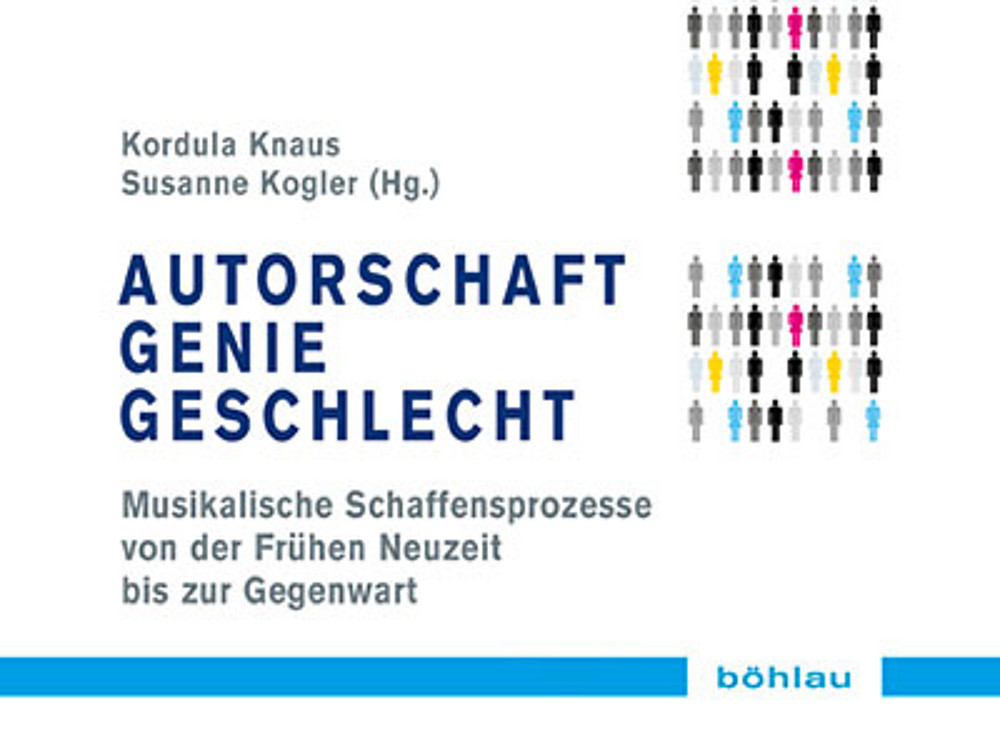
Autorschaft, Genie, Geschlecht

284 Seiten, 28 s/w-Abbildungen und Notenbeispiele, ISBN 978-3-412-20902-5

284 Seiten, 28 s/w-Abbildungen und Notenbeispiele, ISBN 978-3-412-20902-5

Neues Buch beleuchtet musikalische Schaffensprozesse von der frühen Neuzeit bis zur Gegenwart

Vorstellungen vom künstlerischen Schaffensprozess sowie Bilder und Selbstbilder von KomponistInnen im Zusammenhang mit geschlechtsspezifischen Sichtweisen stehen im Mittelpunkt eines neuen Buches, herausgegeben von Assoz. Univ.-Prof. Dr. Kordula Knaus und Dr. Susanne Kogler, Musikwissenschafterinnen an der Karl-Franzens-Universität Graz.


Die Auffassung des musikalischen Schaffensprozesses und der künstlerischen Kreation ist seit vielen Jahrzehnten ein viel diskutiertes Thema in der Musikwissenschaft. „Im 19. Jahrhundert trat mit dem Konzept des Genies als heroische Figur der Autor und Schöpfer stark in den Vordergrund. Im 20. Jahrhundert wurde die Vorstellung vom Genie wieder dekonstruiert. Es folgte das Paradigma vom ,Tod des Autors‘“, erklärt Kordula Knaus. Besonders deutlich werde das in der gegenwärtigen Musikproduktion, in der sich Kunstwerke mit Hilfe moderner Technologien quasi von selbst schaffen. „Traditionelle Schemata verlieren an Bedeutung, neue Möglichkeiten tun sich auf, zum Beispiel kollektives Komponieren oder das Schaffen von Musik im öffentlichen Raum“, so Knaus.


Das soeben im Böhlau-Verlag erschienene Buch „Autorschaft – Genie – Geschlecht“ beleuchtet die Entwicklungen der Vergangenheit und Gegenwart aus der Perspektive der Genderforschung. „In der Geschichte traten Frauen immer als Ausführende, zum Beispiel als Sängerinnen, in Erscheinung. Männer hingegen positionierten sich als Schöpfer, als Komponisten. Dass Mozart auch ein gefragter Pianist war, trat in den Hintergrund“, führt die Musikwissenschafterin aus. In der vorliegenden Publikation werden sowohl Konstruktionsmechanismen männlicher Genialität in historisch-kritischer Weise analysiert als auch alternative Konzepte für weibliche künstlerische Produktionen in der aktuellen Musikproduktion ausgelotet.


Das Buch ist aus einem internationalen Symposium hervorgegangen, das im April 2011 vom Institut für Musikwissenschaft der Karl-Franzens-Universität Graz und dem Zentrum für Genderforschung der Kunstuniversität Graz veranstaltet wurde.


Kordula Knaus, Susanne Kogler (Hg.): Autorschaft – Genie – Geschlecht. Musikalische Schaffensprozesse von der Frühen Neuzeit bis zur Gegenwart (Musik-Kultur-Gender, Band 11), Böhlau-Verlag 2013
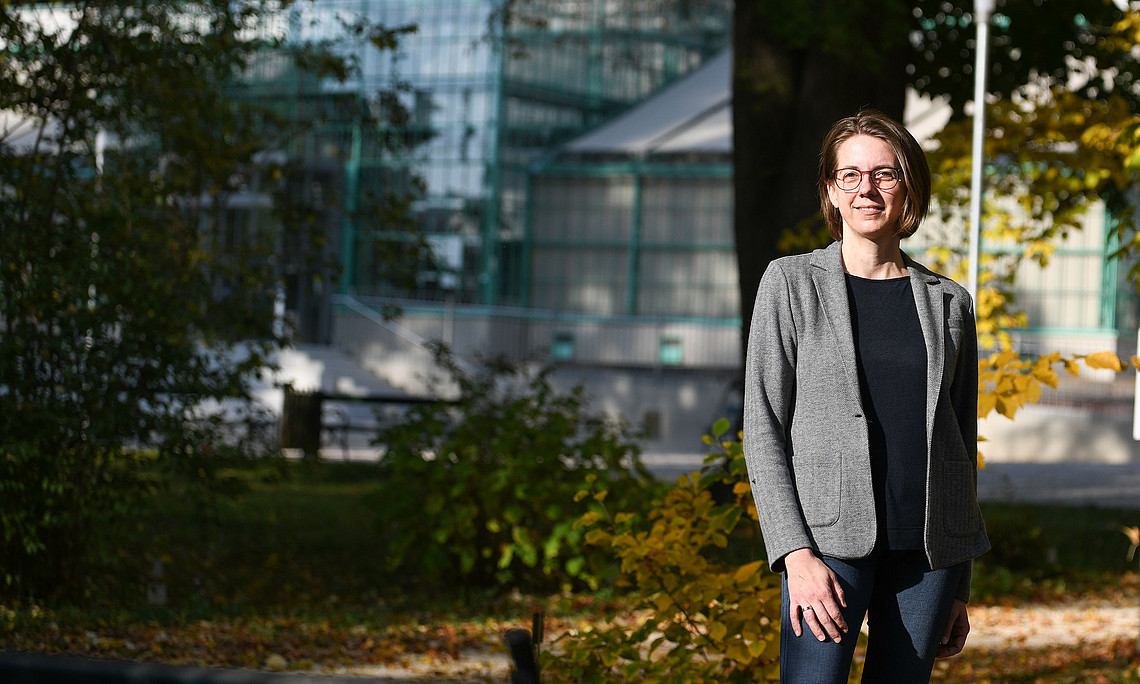
created by Gudrun Pichler

Related news

Commissioned by NATO: University of Graz tests high-tech textiles

As part of an international project, antimicrobial and fire-resistant fabrics with UV protection are being developed in Zagreb. Pharmacists from the University of Graz are ensuring that these fabrics are skin-friendly.

The Arctic up close: ORF special feature on the University of Graz’s research station in S

Students from the University of Graz are spending two weeks conducting research at the Univerisity of Graz research station at the Sermilik Fjord in Greenland, which has been operational for three years. They are measuring glacial runoff, tracking ice melt in real time and installing weather stations. ORF is following the expedition and will be reporting on the special feature ‘Arctic Adventure’ across its various channels from 20 July.

Medicine for ants: Caffeine prolongs the life of infected insects

Black coffee stimulates us and acts against bacteria. So, can caffeine also be good for insects? Yes, confirm biologists of the University of Graz. When ants suffer from a fungal disease, they consume more caffeine and remain active for longer.

How formulas are making medicine more personalised

When Federica Caforio talks about the heart, it doesn’t sound like an operating theatre, but rather like equations, parameters and simulations. Yet this is precisely where the medical promise of her research lies: one day, clinical data will be used to create a digital twin of the heart – a virtual model that will enable a better understanding of diseases and allow for more personalised treatment plans. She will be presenting her research at the ‘ECMTB 2026’ mathematics conference.

Begin of page section:
Additional information:

University of Graz
Universitaetsplatz 3
8010 Graz
Austria
  • Contact
  • Web Editors
  • Moodle
  • UNIGRAZonline
  • Imprint
  • Data Protection Declaration
  • Accessibility Declaration
Weatherstation
Uni Graz

End of this page section. Go to overview of page sections

End of this page section. Go to overview of page sections

Begin of page section:

End of this page section. Go to overview of page sections