Begin of page section:
Page sections:

  • Go to contents (Accesskey 1)
  • Go to position marker (Accesskey 2)
  • Go to main navigation (Accesskey 3)
  • Go to sub navigation (Accesskey 4)
  • Go to additional information (Accesskey 5)
  • Go to page settings (user/language) (Accesskey 8)
  • Go to search (Accesskey 9)

End of this page section. Go to overview of page sections

Begin of page section:
Page settings:

English en
Deutsch de
Search
Login

End of this page section. Go to overview of page sections

Begin of page section:
Search:

Search for details about Uni Graz
Close

End of this page section. Go to overview of page sections


Search

Begin of page section:
Main navigation:

Page navigation:

  • University

    University
    • About the University
    • Organisation
    • Faculties
    • Library
    • Working at University of Graz
    • Campus
    Developing solutions for the world of tomorrow - that is our mission. Our students and our researchers take on the great challenges of society and carry the knowledge out.
  • Research Profile

    Research Profile
    • Our Expertise
    • Research Questions
    • Research Portal
    • Promoting Research
    • Research Transfer
    • Ethics in Research
    Scientific excellence and the courage to break new ground. Research at the University of Graz creates the foundations for making the future worth living.
  • Studies

    Studies
    • Prospective Students
    • Students
  • Community

    Community
    • International
    • Location
    • Research and Business
    • Alumni
    The University of Graz is a hub for international research and brings together scientists and business experts. Moreover, it fosters the exchange and cooperation in study and teaching.
  • Spotlight
Topics
  • Our digital Advent calendar
  • Sustainable University
  • Researchers answer
  • Work for us
Close menu

End of this page section. Go to overview of page sections

Begin of page section:
You are here:

University of Graz News „Asozial“

End of this page section. Go to overview of page sections

Wednesday, 13 March 2019

„Asozial“

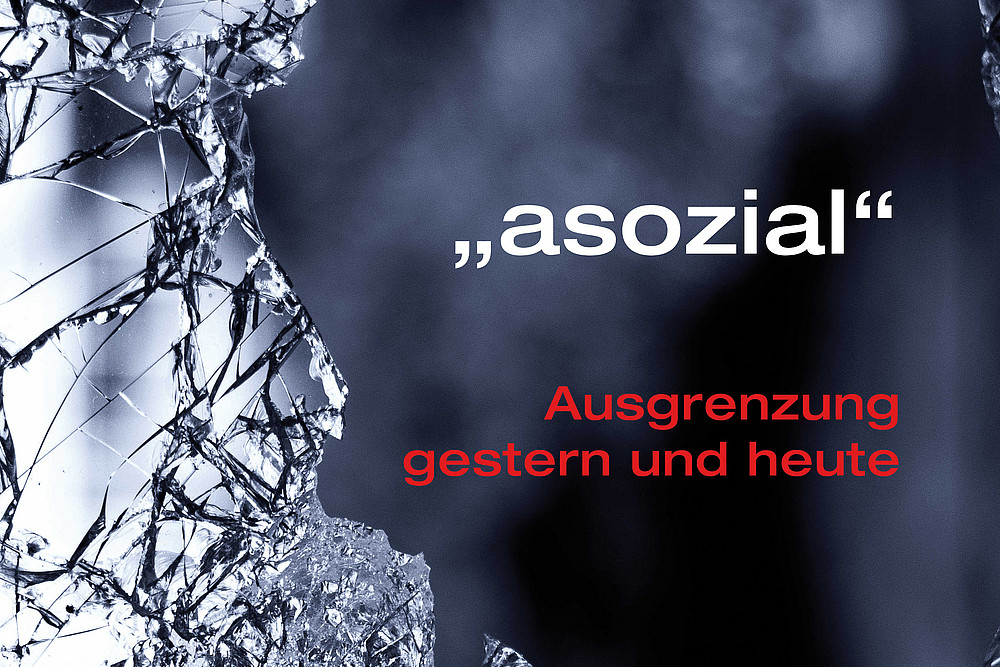
Die Austellung im RESOWI-Zentrum zeigt, wie "Asoziale" im Nationalsozialismus systematisch ausgegrenzt wurden. Foto: Bernadette Dewald.

Die Austellung im RESOWI-Zentrum zeigt, wie "Asoziale" im Nationalsozialismus systematisch ausgegrenzt wurden. Foto: Bernadette Dewald.

Ausstellung zeigt systematische Ausgrenzung im Nationalsozialismus

Viele Menschen wurden in den Jahren 1938 bis 1945 in Österreich als „asozial“ stigmatisiert und so systematisch ausgegrenzt, verfolgt und inhaftiert. Wie dieser Prozess bei Frauen und Mädchen vor sich ging, ist Thema einer Posterausstellung an der Universität Graz, die am kommenden Donnerstag, 21. März 2019, eröffnet wird. „Diese Mädchen und Frauen waren oft mit haltlosen Vorwürfen konfrontiert. Liederlicher Lebenswandel oder Arbeitsunwille waren gängige Unterstellungen. Nicht selten endeten diese derart stigmatisierten Frauen in den Konzentrationslagern Ravensbrück oder Uckermark“, so Helga Amesberger vom Wiener Institut für Konfliktforschung. Sie hat gemeinsam mit ihrer Kollegin Brigitte Halbmayr die Ausstellung erarbeitet.

Besonderes Augenmerk legten die Kuratorinnen auf die behördlichen Strukturen, die für den Zweck der systematischen Ausgrenzung von Randgruppen geschaffen worden waren. Anhand konkreter Lebensgeschichten zeichnen zwei Poster der Ausstellung den Weg jener Unangepassten nach, für die in der nationalsozialistischen „Volksgemeinschaft“ kein Platz war – und die auch nach Ende des Krieges keine Rehabilitation erfuhren. Darüber hinaus bringt die Ausstellung zum Ausdruck, welche Muster es im Umgang mit vermeintlich „Anderen“ über die Jahrhunderte hinweg gab und gibt. Denn auch heute verlaufen ausgrenzende Diskurse ähnlich, unterstreicht Amesberger: „Wenn wir uns ansehen, wie über die sogenannten Sozialschmarotzer, über Langzeitarbeitslosigkeit oder offen gelebte weibliche Sexualität gesprochen wird, dann sehen wir hier eindeutige Parallelen.“

Die Ausstellung wird im Rahmen des „Conflict–Peace–Democracy Clusters“ der Rechtswissenschaftlichen Fakultät der Universität Graz realisiert. Anlässlich der Vernissage diskutieren ExpertInnen um 18:30 Uhr über die „Sozialschmarotzer“ von heute. Auf der Finissage am 7. Mai 2019 präsentieren die Autorinnen Helga Amesberger, Brigitte Halbmayr und Elke Rajal ihr Buch mit dem Titel „‘Arbeitsscheu und moralisch verkommen‘. Verfolgung von Frauen als ‚Asoziale‘ im Nationalsozialismus“, das die Grundlage für diese Ausstellung ist.

Der Eintritt zur Ausstellung ist frei.

 
Ausstellung: "asozial". Ausgrenzung gestern und heute
Ort: Foyer des RESOWI-Zentrums an der Universität Graz, Trakt C, Erdgeschoss
Dauer der Ausstellung: 21. März bis 26. April 2019
Eröffnung: 21. März 2019, 18.00 bis 19.30 Uhr
Zur Ausstellung spricht: Dr. Brigitte Halbmayr, Institut für Konfliktforschung


Podiumsgespräch: Die „Sozialschmarotzer“ von heute und politische Antworten, mit:
Dr. Helga Amesberger, Institut für Konfliktforschung
Dr. Stefan Benedik, Haus der Geschichte Österreich
Ao. Prof. Dr. Kurt Remele, Institut für Ethik und Gesellschaftslehre der Universität Graz
DSA Lisa Rücker, ehemalige Politikerin der Grünen


created by Gerhild Leljak

Related news

Semester abroad without barriers: University of Graz wins award for promoting inclusion

The University of Graz has been awarded the Internationalization Award for its new inclusion initiative. Students with fewer opportunities now also receive financial support for their semester abroad outside Europe.

Fair distribution: Researchers determine just greenhouse gas budgets for all EU regions

Ten years ago, on 12 December 2015, the Paris Climate Agreement was signed at the UN Climate Conference. In order to limit global warming to well below two degrees, only a certain amount of CO2 may be emitted worldwide. While the focus was originally on national emission targets, more than 200 subnational regions and almost 300 cities have now adopted their own targets. But how many emissions are they fairly entitled to? Researchers at the University of Graz have now developed transparent criteria for fair distribution at the subnational level for the first time and determined corresponding greenhouse gas budgets for all European regions. The paper was published today in the scientific journal Nature Communications.

Chemical Christmas show at the University of Graz: An explosive evening at the Schauspielh

At the beginning of December, the University of Graz transformed the theater into a laboratory: as part of “Chemical Life,” teacher training students staged a chemical Christmas show for Styrian school classes—complete with ethanol rockets, nitrogen snow, and glowing effects. An evening designed to inspire interest in studying chemistry.

Train by train: Koralm railway accelerates exchange between the Universities

Lectures at the University of Klagenfurt in the morning, seminars at the University of Graz in the afternoon: Austria's longest tunnel and a journey time of around 45 minutes make it easy. The Koralm railway increases the speed of networking between the two university locations. The collaboration builds on existing cooperation - for example in the areas of teacher training, Slavic studies and as employers, the universities are well coordinated.

Begin of page section:
Additional information:

University of Graz
Universitaetsplatz 3
8010 Graz
Austria
  • Contact
  • Web Editors
  • Moodle
  • UNIGRAZonline
  • Imprint
  • Data Protection Declaration
  • Accessibility Declaration
Weatherstation
Uni Graz

End of this page section. Go to overview of page sections

End of this page section. Go to overview of page sections

Begin of page section:

End of this page section. Go to overview of page sections