



Begin of page section:
Page sections:

  • Go to contents (Accesskey 1)
  • Go to position marker (Accesskey 2)
  • Go to main navigation (Accesskey 3)
  • Go to sub navigation (Accesskey 4)
  • Go to additional information (Accesskey 5)
  • Go to page settings (user/language) (Accesskey 8)
  • Go to search (Accesskey 9)

End of this page section. Go to overview of page sections

Begin of page section:
Page settings:

English en
Deutsch de
Search
Login

End of this page section. Go to overview of page sections

Begin of page section:
Search:

Search for details about Uni Graz
Close

End of this page section. Go to overview of page sections


Search

Begin of page section:
Main navigation:

Page navigation:

  • University

    University
    • About the University
    • Organisation
    • Faculties
    • Library
    • Working at University of Graz
    • Campus
    Developing solutions for the world of tomorrow - that is our mission. Our students and our researchers take on the great challenges of society and carry the knowledge out.
  • Research Profile

    Research Profile
    • Our Expertise
    • Research Questions
    • Research Portal
    • Promoting Research
    • Research Transfer
    • Ethics in Research
    • Commission for Scientific Integrity
    Scientific excellence and the courage to break new ground. Research at the University of Graz creates the foundations for making the future worth living.
  • Studies

    Studies
    • Prospective Students
    • Students
  • Community

    Community
    • International
    • Location
    • Research and Business
    • Alumni
    The University of Graz is a hub for international research and brings together scientists and business experts. Moreover, it fosters the exchange and cooperation in study and teaching.
Topics
  • Sustainable University
  • Researchers answer
  • Work for us
Close menu

End of this page section. Go to overview of page sections

Begin of page section:
You are here:

University of Graz News Arsenic and Baby Bonnets

End of this page section. Go to overview of page sections

Thursday, 05 August 2021

Arsenic and Baby Bonnets

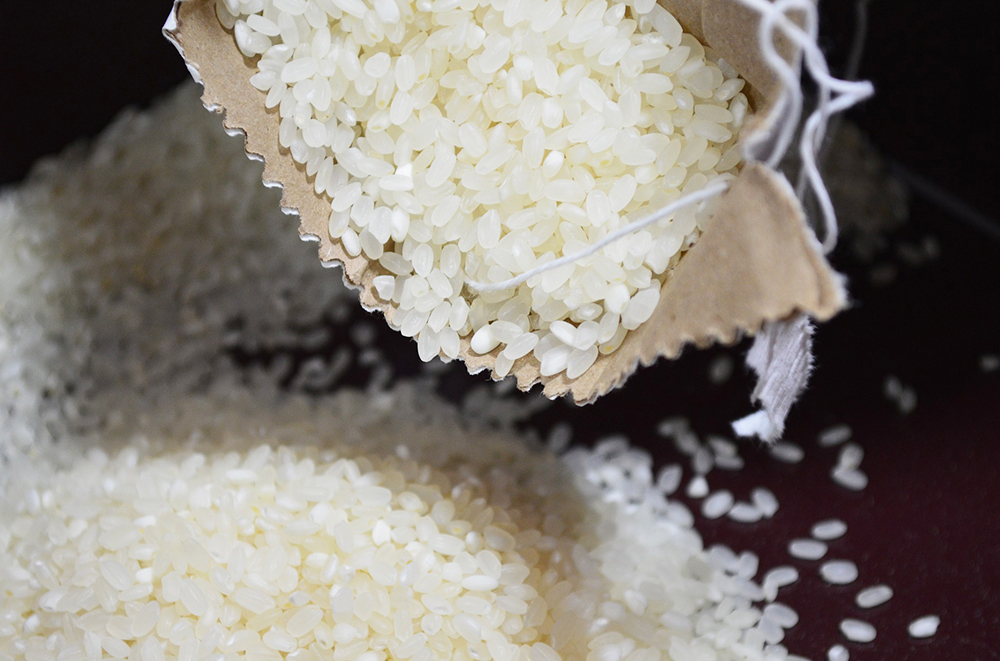
rice Photo: white kim - pixabay

Chemists at the University of Graz have found a method to reduce harmful arsenic in rice. Photo: white kim - pixabay

Chemists at the University of Graz reduce toxins in children's food made from rice

Only the best for our children. Nutritious rice flakes, tasty rice waffles. But what can we do if the grains used are not just unhealthy but laden with arsenic? Chemists at the University of Graz have now found a method to lower the concentration of arsenic in rice grains: granulated iron added to the soil reduces the metalloid enormously.

The chemical element plays a deadly role in the Hollywood classic “Arsenic and Old Lace” or in many an Agatha Christie flick. Jörg Feldmann, environmental chemist at the University of Graz, also has the instincts of a detective. Poisonous substances in living beings and food are his specialty. The researcher and his colleagues laid the foundations for the European Union to have a legally stipulated maximum limit value for arsenic in rice since 2016. Even stricter regulations apply for young children. The result: “Due to the low limit, high-quality raw materials are in high demand, especially for baby food, but they are difficult to find,” says Feldmann.
Scientists from the University of Graz, the University of Aberdeen (UK) and the Lilongwe University of Agriculture and Natural Resources (Malawi) have turned to this problem and deliberated ways of reducing the toxic substance in one of the world's most important foods.
Research shows that, among other things, the cultivation method determines the occurrence of toxic arsenic. “When you flood a rice paddy, water in the soil changes the chemical formula of the compound,” explains Feldmann. “Arsenate turns into arsenite, which the plant absorbs differently and preferentially on agricultural land and this is stored in the grain.”
In the course of a comprehensive study in Malawi (Southeast Africa), the chemists attempted to influence this process. They enriched the irrigated arable land prepared for the Kilombero and Faya rice varieties, with granulated iron filings. Feldmann: “We found that arsenic reacts with iron.”
As a result, the concentration of the pollutant metalloid could be reduced by 80 percent. Furthermore, as a positive side effect, the level of cadmium, which is just as toxic, could also decreased by a third – and this without any losses for the harvest, as the researcher notes.
Future projects now aim to examine both the large-scale cultivation and the application for other rice varieties.

Jörg Feldmann sees no reason to ban rice from the menu in general, as this issue concerns inorganic arsenic only, which is strictly regulated in the EU. In addition, the concentration depends on many factors such as the type of grain, the cultivation region and the method of peeling.

The article was recently published online in the journal Science of The Total Environment.

created by Andreas Schweiger

Related news

Superti-Furga will becomefounding director of the CORI Institute in Graz

The Austrian Academy of Sciences (ÖAW) is establishing a new flagship centre for research into metabolic diseases in collaboration with the three universities in Graz. This innovative research approach combines mathematics and experimental biology with artificial intelligence

A match for life

Stem cell donations save lives. However, the only way to determine who is ultimately compatible with whom is through a testing process. Pharmacist Marion Mußbacher explains the mechanisms behind this. On 6 May 2026, the ÖH and the charity “Geben für Leben” are calling for people to come forward for typing at the University of Graz.

Mild Research Night: Around 750 visitors travelled around the world at the university

Lovely weather and a wide range of research topics drew visitors to the University of Graz last Friday. Highlights included a journey around the globe in eight stops, a ‘speed-dating’ session with books, insights into Alfred Wegener’s Greenland expedition, and guided tours of the democracy exhibition at the UniGraz@Museum.

Career Booster: How the Research Careers Campus supports researchers

They are innovative, creative and productive – researchers who have not yet been appointed to a professorship make a massive contribution to a university’s research output. To provide them with even better support on their career path, the University of Graz has established the Research Careers Campus. The official launch took place on 22 April 2026 with a ‘festival’.

Begin of page section:
Additional information:

University of Graz
Universitaetsplatz 3
8010 Graz
Austria
  • Contact
  • Web Editors
  • Moodle
  • UNIGRAZonline
  • Imprint
  • Data Protection Declaration
  • Accessibility Declaration
Weatherstation
Uni Graz

End of this page section. Go to overview of page sections

End of this page section. Go to overview of page sections

Begin of page section:

End of this page section. Go to overview of page sections


