Begin of page section:
Page sections:

  • Go to contents (Accesskey 1)
  • Go to position marker (Accesskey 2)
  • Go to main navigation (Accesskey 3)
  • Go to sub navigation (Accesskey 4)
  • Go to additional information (Accesskey 5)
  • Go to page settings (user/language) (Accesskey 8)
  • Go to search (Accesskey 9)

End of this page section. Go to overview of page sections

Begin of page section:
Page settings:

English en
Deutsch de
Search
Login

End of this page section. Go to overview of page sections

Begin of page section:
Search:

Search for details about Uni Graz
Close

End of this page section. Go to overview of page sections


Search

Begin of page section:
Main navigation:

Page navigation:

  • University

    University
    • About the University
    • Organisation
    • Faculties
    • Library
    • Working at University of Graz
    • Campus
    Developing solutions for the world of tomorrow - that is our mission. Our students and our researchers take on the great challenges of society and carry the knowledge out.
  • Research Profile

    Research Profile
    • Our Expertise
    • Research Questions
    • Research Portal
    • Promoting Research
    • Research Transfer
    • Ethics in Research
    • Commission for Scientific Integrity
    Scientific excellence and the courage to break new ground. Research at the University of Graz creates the foundations for making the future worth living.
  • Studies

    Studies
    • Prospective Students
    • Students
  • Community

    Community
    • International
    • Location
    • Research and Business
    • Alumni
    The University of Graz is a hub for international research and brings together scientists and business experts. Moreover, it fosters the exchange and cooperation in study and teaching.
  • Spotlight
Topics
  • Sustainable University
  • Researchers answer
  • Work for us
Close menu

End of this page section. Go to overview of page sections

Begin of page section:
You are here:

University of Graz News Achtung, ansteckend

End of this page section. Go to overview of page sections

Wednesday, 07 September 2016

Achtung, ansteckend

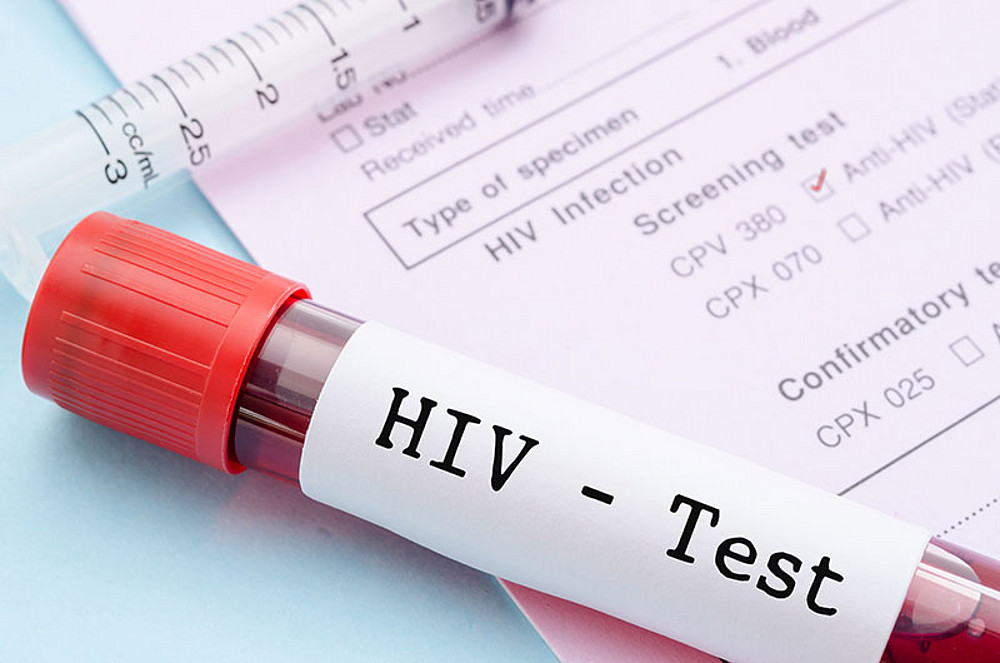
Sexuell übertragbare Krankheiten, wie etwa HIV, sind weltweit auf dem Vormarsch. Foto: Gam1983/shutterstock.com

Sexuell übertragbare Krankheiten, wie etwa HIV, sind weltweit auf dem Vormarsch. Foto: Gam1983/shutterstock.com

Grazer Forscher veröffentlichen erste frei verfügbare Zusammenstellung der häufigsten sexuell übertragbaren Krankheiten

Hepatitis B, HIV, Chlamydien: Sexuell übertragbare Krankheiten (STDs) sind weltweit auf dem Vormarsch. Laut der Weltgesundheitsorganisation WHO haben sich in Europa die Infektionsraten von Gonorrhoe – umgangssprachlich Tripper – zwischen 2008 und 2014 mehr als verdoppelt. Im Jahre 2014 wurde die höchste Zahl neuer HIV-Infektionen seit Beginn der Aufzeichnungen in den 1980er Jahren bekannt gegeben. „Die WHO schätzt, dass sich weltweit täglich etwa eine Million Menschen mit einer sexuell übertragbaren Krankheit anstecken“, weiß Ass.-Prof. Dr. Didac Carmona-Gutierrez vom Institut für Molekulare Biowissenschaften der Karl-Franzens-Universität Graz. Der Forscher veröffentlichte Anfang dieser Woche gemeinsam mit seinem Kollegen Univ.-Prof. Dr. Frank Madeo die erste frei verfügbare Zusammenfassung der medizinischen und molekularen Details der acht häufigsten sexuell übertragbaren Krankheiten in einer Sonderausgabe des englischsprachigen online Journals „Microbial Cell“.


Sexuell übertragbare Krankheiten beeinflussen nicht nur das Wohlbefinden und die Gesundheit Betroffener maßgeblich, sondern stellen auch ein sozioökonomisches Problem dar: „In den USA entstehen jährlich Kosten in der Höhe von 16 Milliarden US Dollar für die Behandlung der acht häufigsten Infektionen“, bestätigt Carmona-Gutierrez. Weltweit am meisten verbreitet sind Syphilis, Gonorrhoe, Chlamydien, trichomoniasis, Hepatitis B, Herpes-simplex-Virus, HIV und humanes Papillomavirus. Wie diese Erkrankungen entstehen, übertragen und kuriert werden können, haben renommierte WissenschafterInnen im online Journal jeweils in Übersichtsartikeln in englischer Sprache aufgearbeitet. Jede der acht Krankheiten wurde außerdem hinsichtlich folgender Fragen abgehandelt: Übertragung und Schutz; Pathologie/Symptomatologie; Epidemiologie, Inzidenz und Prävalenz; Behandlung und Heilbarkeit sowie Molekulare Mechanismen der Infektion.


„Microbial Cell“ ist eine monatlich erscheinende wissenschaftliche Zeitschrift mit Sitz in Graz und bietet eine internationale Plattform für die Publikation von Forschungsarbeiten, die die Verwendung einzelliger Organismen und mehrzelliger Mikroorganismen implementieren, um zelluläre Reaktionen auf innere und äußere Reize zu verstehen und/oder menschliche Krankheiten zu modellieren. „Microbial Cell“ wird als Open-Access Journal herausgegeben und bietet somit den freien Zugang zu seinem gesamten Inhalt.

created by Gerhild Kastrun

Related news

Studying at the University of Graz: How to enrol

Ready for a new chapter in your life with the start of your studies at the University of Graz in the winter semester 2026/27? Here you will find information on deadlines, admission procedures, registration, and everything else you need to successfully start your studies in the fall.

Interpreting data: Why studies sometimes get it wrong

Hilmar Brohmer and Ziva Korda from the Institute of Psychology, together with 500 international colleagues, have re-evaluated a hundred scientific publications and have often come to different conclusions.

Crystal-clear: AI method revolutionises solar observation

The Sun makes life on Earth possible. However, its magnetic fields can also cause massive disruption. This makes it all the more important to gain a better understanding of the processes taking place on our nearest star. A research team from the University of Graz and the High Altitude Observatory in Boulder (USA) has succeeded in doing just that. The astrophysicists have developed an AI-supported method that makes even the smallest structures on the Sun visible. The scientists are convinced that this will bring about a lasting change in solar observation and that the new method can be used for the planned European Solar Telescope.

Long Night of Research: How many languages are there in the world?

From a linguistic perspective, there are worlds of difference between Bern, Berlin and Vienna. A dialect impersonator will demonstrate live just how varied German can sound. How many languages are there in the world? What are their distinctive features? Which of these are spoken in Austria? These and other questions will be answered during the Long Night of Research at the University of Graz: on Friday, 24 April 2025, from 5 pm to 11 pm, in the University Library. Visitors can immerse themselves in the diversity of languages without travelling far by taking part in a quiz at the station.

Begin of page section:
Additional information:

University of Graz
Universitaetsplatz 3
8010 Graz
Austria
  • Contact
  • Web Editors
  • Moodle
  • UNIGRAZonline
  • Imprint
  • Data Protection Declaration
  • Accessibility Declaration
Weatherstation
Uni Graz

End of this page section. Go to overview of page sections

End of this page section. Go to overview of page sections

Begin of page section:

End of this page section. Go to overview of page sections