Begin of page section:
Page sections:

  • Go to contents (Accesskey 1)
  • Go to position marker (Accesskey 2)
  • Go to main navigation (Accesskey 3)
  • Go to sub navigation (Accesskey 4)
  • Go to additional information (Accesskey 5)
  • Go to page settings (user/language) (Accesskey 8)
  • Go to search (Accesskey 9)

End of this page section. Go to overview of page sections

Begin of page section:
Page settings:

English en
Deutsch de
Search
Login

End of this page section. Go to overview of page sections

Begin of page section:
Search:

Search for details about Uni Graz
Close

End of this page section. Go to overview of page sections


Search

Begin of page section:
Main navigation:

Page navigation:

  • University

    University
    • About the University
    • Organisation
    • Faculties
    • Library
    • Working at University of Graz
    • Campus
    Developing solutions for the world of tomorrow - that is our mission. Our students and our researchers take on the great challenges of society and carry the knowledge out.
  • Research Profile

    Research Profile
    • Our Expertise
    • Research Questions
    • Research Portal
    • Promoting Research
    • Research Transfer
    • Ethics in Research
    Scientific excellence and the courage to break new ground. Research at the University of Graz creates the foundations for making the future worth living.
  • Studies

    Studies
    • Prospective Students
    • Students
  • Community

    Community
    • International
    • Location
    • Research and Business
    • Alumni
    The University of Graz is a hub for international research and brings together scientists and business experts. Moreover, it fosters the exchange and cooperation in study and teaching.
  • Spotlight
Topics
  • Sustainable University
  • Researchers answer
  • Work for us
Close menu

End of this page section. Go to overview of page sections

Begin of page section:
You are here:

University of Graz News Abenteuer Biologie

End of this page section. Go to overview of page sections

Thursday, 05 October 2017

Abenteuer Biologie

Türkis-grau gemusterter Buntbarsch. Foto: pixabay

Faszinierende Biologie: Einige Grundprinzipien, wie etwa die ständige Veränderung des genetischen Materials, was unter anderem zur Entstehung neuer Arten führen kann, ziehen sich durch die gesamte Natur. Foto: pixabay
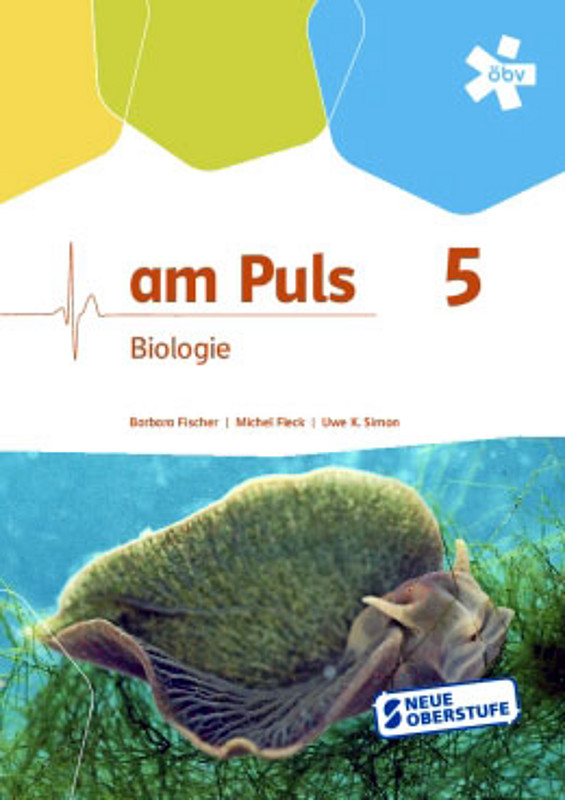
Cover des Schulbuchs „am Puls Biologie 5“. Foto: öbv

Die Schulbuchreihe „am Puls Biologie“ soll SchülerInnen für das Fach begeistern. Foto: öbv

WissenschafterInnen aus Graz und Wien bereiten aktuelle Erkenntnisse in neuer Schulbuchreihe spannend auf

„Biologie ist unglaublich faszinierend: von der Wirkweise kleinster molekularer Maschinen über Parasiten, Symbiosen und Stoffwechselstörungen bis hin zu großräumigen ökologischen Zusammenhängen und evolutiven Veränderungen“, schwärmt Ass.-Prof. Dr. Uwe Simon, Leiter des Fachdidaktikzentrums für Biologie und Umweltkunde der Karl-Franzens-Universität Graz. Um auch SchülerInnen für das vielfältige und sich rasant vermehrende Wissen auf diesem Gebiet zu begeistern, bereitet Simon mit KollegInnen aus Wien den aktuellen Stand der Forschung in der neuen Schulbuchreihe „am Puls Biologie“ optisch und sprachlich ansprechend auf.

„Am Puls Biologie“ trägt den Vorgaben des neuen Lehrplans für die Oberstufe AHS Rechnung, der mit Start des Schuljahres 2017/18 in Kraft getreten ist. Grundlegend ist darin Kompetenzorientierung und das Lernen mit sogenannten Basiskonzepten. „In der Biologie handelt es sich dabei um Grundprinzipien, die allgemeine Gültigkeit haben und in vielen Bereichen bestimmend sind“, erklärt Simon und nennt ein Beispiel: „Ein Basiskonzept ist die Variabilität. Das bedeutet, dass sich genetisches Material ständig verändert, dass etwa neue Arten entstehen oder sich bei bestehenden Arten neue Eigenschaften herausbilden. So ist die Anpassung an veränderte Umweltfaktoren gesichert.“ Diese Grundprinzipien führen als Leitmotive durch die Bücher der Reihe „am Puls Biologie“.

Ausdrückliches Ziel der AutorInnen ist es, neben der Freude an der Biologie im Unterricht das Erkennen von Zusammenhängen zu fördern, statt einzelne Themengebiete isoliert zu behandeln. Sonderseiten vermitteln zusätzlich wissenschaftliche Arbeitsmethoden und stellen historisch oder aktuell bedeutende Forschungsbeispiele vor. „Didaktik bedeutet auch, dass neue Erkenntnisse aus der Fachwissenschaft schülergerecht aufbereitet in den Unterricht gebracht werden“, sind sich die drei AutorInnen Barbara Fischer (Universität Wien), Michel Fleck (AHS-Direktor in Wien) und Uwe Simon einig.

Der erste Band der Reihe – „am Puls Biologie 5“ für die 5. Klasse AHS – ist seit kurzem beim öbv erhältlich. Folgen werden Bände für die 6., 7. und 8. Klasse.

created by Gudrun Pichler

Related news

AI in schools: Maria Bertel drafts legal guidelines for teachers

The legal expert and her team analysed the legal situation regarding the use of artificial intelligence in education as part of an EU project and answered open questions from practice.

Cosmetics in the environment: University of Graz proves danger to ants

Titanium dioxide, which is found in cosmetics, for example, is increasingly entering the environment in the form of nanoparticles. This could also put insects at risk. If ants ingest the substance in combination with the pesticide glyphosate, it disturbs the development of their offspring. Scientists at the University of Graz are drawing attention to the negative consequences of this toxic cocktail.

Varied and healthy: studies move

Exercise is the ideal way to balance out everyday stress, prevent illness and keep fit. Why this is the case, how to do it properly and what role human bodily functions and psychology play can be studied at the University of Graz.

Religious scholar Theresia Heimerl: Fasting as a spiritual boost

Fasting is not just a strategy for losing weight – it is a ritual dating back thousands of years with spiritual and evolutionary roots that has positive effects on the body. At the University of Graz, religious scholar Theresia Heimerl is investigating why fasting is a "spiritual boost".

Begin of page section:
Additional information:

University of Graz
Universitaetsplatz 3
8010 Graz
Austria
  • Contact
  • Web Editors
  • Moodle
  • UNIGRAZonline
  • Imprint
  • Data Protection Declaration
  • Accessibility Declaration
Weatherstation
Uni Graz

End of this page section. Go to overview of page sections

End of this page section. Go to overview of page sections

Begin of page section:

End of this page section. Go to overview of page sections