Begin of page section:
Page sections:

  • Go to contents (Accesskey 1)
  • Go to position marker (Accesskey 2)
  • Go to main navigation (Accesskey 3)
  • Go to sub navigation (Accesskey 4)
  • Go to additional information (Accesskey 5)
  • Go to page settings (user/language) (Accesskey 8)
  • Go to search (Accesskey 9)

End of this page section. Go to overview of page sections

Begin of page section:
Page settings:

English en
Deutsch de
Search
Login

End of this page section. Go to overview of page sections

Begin of page section:
Search:

Search for details about Uni Graz
Close

End of this page section. Go to overview of page sections


Search

Begin of page section:
Main navigation:

Page navigation:

  • University

    University
    • About the University
    • Organisation
    • Faculties
    • Library
    • Working at University of Graz
    • Campus
    Developing solutions for the world of tomorrow - that is our mission. Our students and our researchers take on the great challenges of society and carry the knowledge out.
  • Research Profile

    Research Profile
    • Our Expertise
    • Research Questions
    • Research Portal
    • Promoting Research
    • Research Transfer
    • Ethics in Research
    • Commission for Scientific Integrity
    Scientific excellence and the courage to break new ground. Research at the University of Graz creates the foundations for making the future worth living.
  • Studies

    Studies
    • Prospective Students
    • Students
    • Welcome Weeks for First Year Students
  • Community

    Community
    • International
    • Location
    • Research and Business
    • Alumni
    The University of Graz is a hub for international research and brings together scientists and business experts. Moreover, it fosters the exchange and cooperation in study and teaching.
Topics
  • Sustainable University
  • Researchers answer
  • Work for us
Close menu

End of this page section. Go to overview of page sections

Begin of page section:
You are here:

University of Graz News 500 Jahre armenischer Buchdruck

End of this page section. Go to overview of page sections

Tuesday, 08 January 2013

500 Jahre armenischer Buchdruck

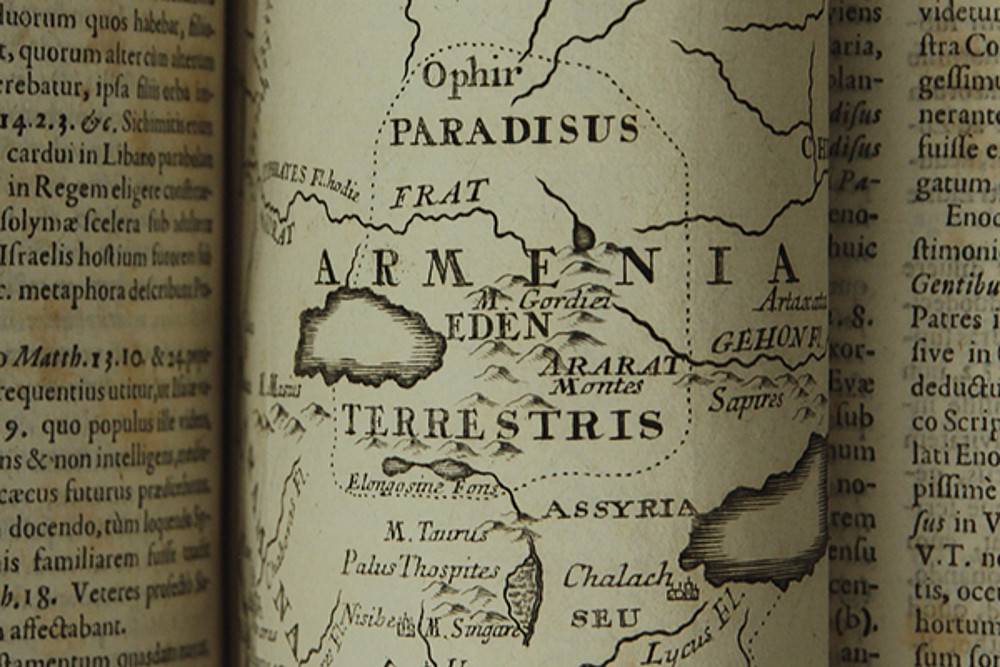
Das Land Armenien und seine Kultur faszinierte die Europäer schon immer. Foto: SOSA/UB Graz.

Das Land Armenien und seine Kultur faszinierte die Europäer schon immer. Foto: SOSA/UB Graz.

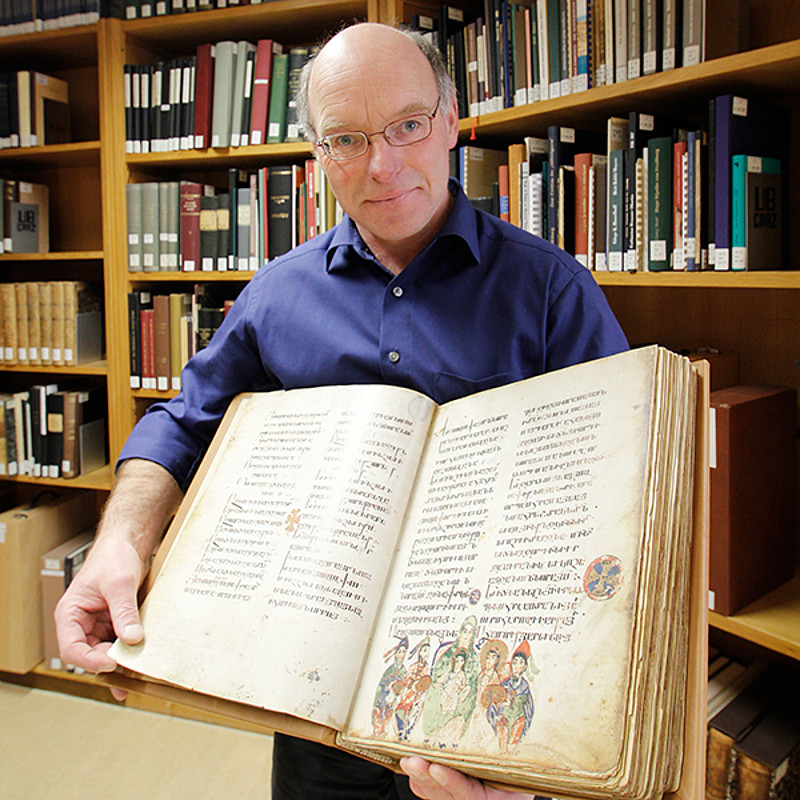
Erich Renhart erforscht unter anderem armenische Bild- und Textzeugnisse. Die Ergebnisse seiner Arbeit erscheinen nun in einem Büchlein

Erich Renhart erforscht unter anderem armenische Bild- und Textzeugnisse. Die Ergebnisse seiner Arbeit erscheinen nun in einem Büchlein

Uni Graz feiert rundes Jubiläum mit neuer Publikation

Armenien, ein Binnenstaat im Kaukasus. Ein Bergland zwischen Georgien, Aserbaidschan, dem Iran und der Türkei, voller Mystik und Geheimnisse. Die Heimat der prunus armeniaca, der Marille. Wenige Jahrzehnte nach der Erfindung des Buchdrucks in Deutschland durch Johannes Gutenberg wird im Jahre 1512 in Venedig der Grundstein für die orientalische Druck-Tradition gelegt: Das erste armenische Buch wird gedruckt. Zum 500-jährigen Jubiläum erscheint an der Universitätsbibliothek Graz (UB) ein 60-seitiges Buch, das dem armenischen Schrifttum in den Sondersammlungen der Universität nachgeht und ein besonderes Bild über das Land, seine Menschen und deren Kultur zeichnet. Am 17. Jänner 2013 wird es in Graz präsentiert.


Spurensuche

Ao.Univ.-Prof. Dr. Erich Renhart, Wissenschafter an der UB Graz sowie Leiter des Forschungszentrums VESTIGIA, stöberte seit Beginn des Jahres 2012 in den Sondersammlungen der Universitätsbibliothek Graz und ging den Spuren armenischen Schrifttums, den so genannten „Armeniaca“, nach. Als sich Renhart auf die Suche machte, wusste er noch nicht, welche wertvollen Schätze sich dort verbergen: Neben einer armenischen Handschrift aus dem ersten Jahrtausend sowie einer aus dem 14. und einer weiteren aus dem 15. Jahrhundert stachen ihm vor allem zwei Inkunabeln – frühe Drucke vor 1500 –, die sich mit dem Land befassen, ins Auge. „Interessanterweise sind letztere Textzeugnisse Reiseberichte in deutscher Sprache, ungefähr um 1480 erschienen.


Die Sondersammlungen an der UB beherbergen insgesamt zwischen 250.000 und 280.000 Objekte. Der Großteil der Literatur über Armenien beziehungsweise in armenischer Sprache sind Texte aus den Druckereien der Mechitharisten, einem Orden von armenisch-katholischen Mönchen, die sich in Venedig und Wien niederließen. Eine weitere Quelle ist der Nachlass des Orientalisten Karl Mlaker. Dieser hatte eine umfangreiche armenologische Bibliothek aufgebaut und sie nach seinem Tod der Universität Graz vermacht. „In seiner Sammlung befinden sich überwiegend Titel in armenischer Sprache und Schrift“, betont Renhart. Durch sie erfahren wir unglaublich Detailliertes aus der Kulturgeschichte und über die Eigenarten der Menschen dieses Landes“, erklärt er.

Die Ergebnisse seiner Forschungen verpackte Renhart in eine Publikation, die am 17. Jänner 2013 in Zusammenarbeit mit dem Katholischen Bildungswerk, der Armenischen Kirchengemeinde Graz und der Stiftung Pro Oriente der Öffentlichkeit präsentiert wird.


Publikaktion:
Das Bild Armeniens in ausgewählten Schriften und Druckwerken an der Universitätsbibliothek Graz, Vestigia Publikation, Graz 2012. Herausgegeben von Erich Renhart, ISBN 978-3-9502795-2-8


Termin: „500 Jahre Armenischer Buchdruck“
Zeit: Donnerstag, 17. Jänner 2013, 19 Uhr
Ort: Barocksaal des Priesterseminars; Bürgergasse 2, 8010 Graz
Der Eintritt ist frei


Rückfragen:
Ao.Univ.-Prof. Dr. Erich Renhart
Sondersammlungen der Universitätsbibliothek
Karl-Franzens-Universität Graz
Tel.: +43 (316) 380 1445
E-Mail: erich.renhart(at)uni-graz.at

created by Konstantinos Tzivanopoulos

Related news

A fresh start, a calling, holidays: what draws people from other career paths to teaching

They used to develop software; now they teach maths in the classroom. Career changers are expected to help address the shortage of qualified teachers in Austria’s schools. In their doctoral theses at the Institute for Educational Research and Teacher Training at the University of Graz, Melanie Gürentz and Claudia Mair examined how these new teachers perceive their new professional roles.

Talent Talks bridge the gap in career guidance

The Styrian Chamber of Commerce (WKO Steiermark), the Styrian Chamber of Labour (AK Steiermark) and the AMS are joining forces when it comes to training young people and, through the “Talent Talks”, are creating a seamless pathway to career guidance. This takes preparation and follow-up support – just in time for the start of the term and the scheme’s tenth anniversary – to a whole new level. A new survey conducted by the Talent Centre among 2,687 former participants to mark the anniversary shows just how important this development is. Of the young people who received follow-up support from the Talent Report, 74.6 per cent stated that they had a good understanding of their own strengths and talents following the Talent Check. Without follow-up support, the figure was 66.5 per cent – a significant difference of 8.1 percentage points.

ERC Starting Grants: three million euros for two researchers at the University of Graz

Two researchers from the University of Graz have secured prestigious and generously funded grants from the EU. Starting Grants from the European Research Council (ERC), each worth 1.5 million euros, have been awarded to the human geographer Heide Bruckner and the social scientist Silvana Weiss.

Austria’s emissions rose in 2025: University of Graz researchers analyse the causes

The Environment Agency Austria has today published the figures for the country’s greenhouse gas emissions in 2025. While emissions fell sharply year on year from 2022 to 2024, they rose again by just under 0.7 per cent in 2025. Researchers at the University of Graz have analysed how much of this increase was due to structural changes in the economy and how much was attributable to external factors over which there is little control. “In 2025, the colder winter compared with 2024 increased emissions by 0.81 per cent, while the weak economy reduced them by 0.38 per cent. If we factor out these influences, we find an underlying increase of 0.26 per cent compared with the previous year,” reports economist Karl Steininger. “This clearly means that Austria is not on track to meet its climate targets, which require a substantial reduction in emissions by 2030.”

Begin of page section:
Additional information:

University of Graz
Universitaetsplatz 3
8010 Graz
Austria
  • Contact
  • Web Editors
  • Moodle
  • UNIGRAZonline
  • Imprint
  • Data Protection Declaration
  • Accessibility Declaration
Weatherstation
Uni Graz

End of this page section. Go to overview of page sections

End of this page section. Go to overview of page sections

Begin of page section:

End of this page section. Go to overview of page sections