

Begin of page section:
Page sections:

  • Go to contents (Accesskey 1)
  • Go to position marker (Accesskey 2)
  • Go to main navigation (Accesskey 3)
  • Go to sub navigation (Accesskey 4)
  • Go to additional information (Accesskey 5)
  • Go to page settings (user/language) (Accesskey 8)
  • Go to search (Accesskey 9)

End of this page section. Go to overview of page sections

Begin of page section:
Page settings:

English en
Deutsch de
Search
Login

End of this page section. Go to overview of page sections

Begin of page section:
Search:

Search for details about Uni Graz
Close

End of this page section. Go to overview of page sections


Search

Begin of page section:
Main navigation:

Page navigation:

  • University

    University
    • About the University
    • Organisation
    • Faculties
    • Library
    • Working at University of Graz
    • Campus
    Developing solutions for the world of tomorrow - that is our mission. Our students and our researchers take on the great challenges of society and carry the knowledge out.
  • Research Profile

    Research Profile
    • Our Expertise
    • Research Questions
    • Research Portal
    • Promoting Research
    • Research Transfer
    • Ethics in Research
    Scientific excellence and the courage to break new ground. Research at the University of Graz creates the foundations for making the future worth living.
  • Studies

    Studies
    • Prospective Students
    • Students
  • Community

    Community
    • International
    • Location
    • Research and Business
    • Alumni
    The University of Graz is a hub for international research and brings together scientists and business experts. Moreover, it fosters the exchange and cooperation in study and teaching.
  • Spotlight
Topics
  • Our digital Advent calendar
  • Sustainable University
  • Researchers answer
  • Work for us
Close menu

End of this page section. Go to overview of page sections

Begin of page section:
You are here:

University of Graz News 10 Jahre "groschenlose" Theaterkunst

End of this page section. Go to overview of page sections

Tuesday, 16 May 2017

10 Jahre "groschenlose" Theaterkunst

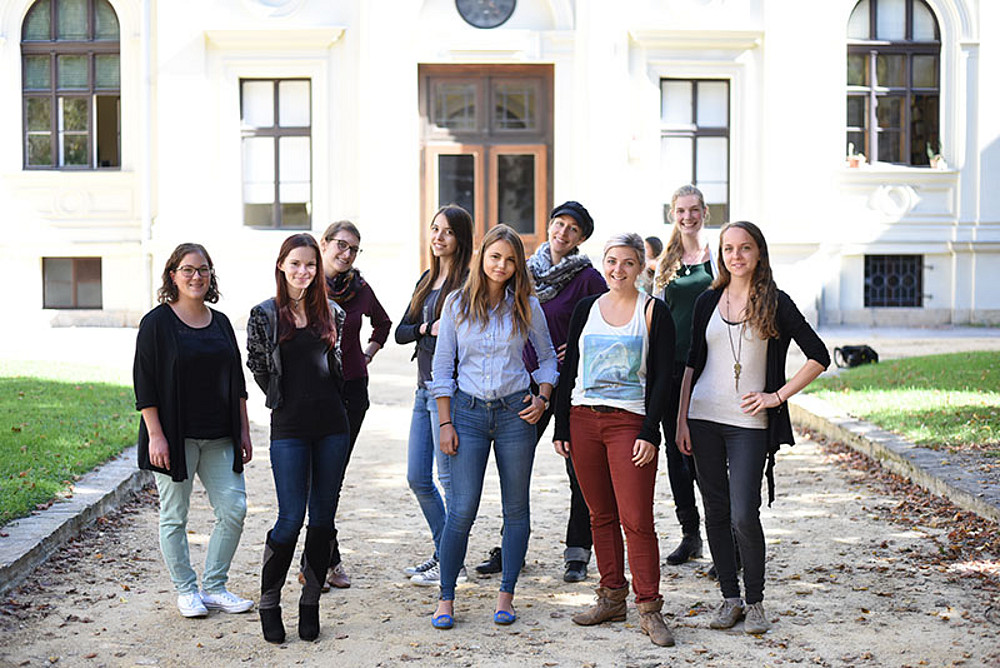
Das Team des Webradios produziert für Sie wöchentlich vier Informationsbeiträge. Foto: Uni Graz/Tzivanopoulos.

Das Team des Webradios produziert für Sie wöchentlich vier Informationsbeiträge. Foto: Uni Graz/Tzivanopoulos.

Auf Radio Soundportal sind die Webradio-Beiträge täglich einmal vormittags und einmal nachmittags zu hören: http://www.soundportal.at

Auf Radio Soundportal sind die Webradio-Beiträge täglich einmal vormittags und einmal nachmittags zu hören: http://www.soundportal.at

 Die Webradio-Beiträge werden mit dem Web-Service von Auphonic nachbearbeitet: htttp://auphonic.com

Die Webradio-Beiträge werden mit dem Web-Service von Auphonic nachbearbeitet: htttp://auphonic.com

Vier neue Webradio-Beiträge sind online

Das Webradio der Grazer Universitäten versorgt Studierende, MitarbeiterInnen, Lehrende, Forschende, Alumni sowie alle Interessierten wöchentlich mit vier Informationsbeiträgen. Spannende Forschungsgeschichten, interessante Veranstaltungstipps, aktuelle Neuigkeiten und vieles mehr in nur dreieinhalb Minuten pro Beitrag bietet das kostenlose Programm. Alle Beiträge bleiben online gespeichert, eignen sich dadurch auch zum Nachhören und stehen ebenfalls zum Download bereit. Zwei mal täglich sind sie außerdem auf Radio Soundportal.


Diese Woche im Programm: 


1) Forschung: "Wie klingt ein Stück wann (anders)?" Wenn eine Komposition aufgeführt wird, wird es jedes Mal auch neu interpretiert. Auch technische Entwicklungen beeinflussen den Klang. Ein vom Wissenschaftsfonds FWF gefördertes Projekt an der Kunstuni Graz untersucht Orchestermusik mit Hilfe computergestützter Methoden am Beispiel des Dirigenten Herbert von Karajan. 


2) Bildung: "Neue Architekturstudios unter dem Dach der Alten Technik." Die Architekturstudierenden der TU Graz bekommen eine neue "Spielwiese": In Graz einzigartige Studios erlauben den Master-Studierenden, wann immer sie möchten und in aller Ruhe an ihren Modellen zu arbeiten. Die TU stellt zwei, jeweils rund 500 Quadratmeter große Räume ab Anfang Oktober zu Verfügung.


3) Campusleben: "Voller Durchblick." An der Med Uni Graz wurde ein innovatives Magnet-Resonanz-Tomographie-Verfahren entwickelt, mit dem es zukünftig eventuell möglich ist, Erkrankungen des Herz-Kreislauf-Systems früher zu erkennen. Wie das funktioniert, erklärt Gernot Reishofer im Webradio-Interview.


4) Aktuell Gefragt: "10 Jahre "groschenlose" Theaterkunst." Zum 10-jährigen Jubiläum wagt sich die non-profit Theatergruppe „Pennyless Players“ an einen wahren Klassiker der Weltliteratur: Der von Georg Orwell verfasste Roman „1984“ dient als Vorlage der derzeitigen Produktion, die am 18. Mai im Theater am Lend Premiere feiert. In einer Zeit von „alternative facts“ und ständiger Überwachung erscheint die Thematik des Buches aktueller denn je.

created by Gerhild Kastrun

Related news

Rector Peter Riedler: Starting the year with confidence

In 2026, we will continue to work consistently on positioning the University of Graz as a relevant player in Europe, while at the same time focusing on a modern, sustainable and climate-friendly university campus. When new digital applications are rolled out in January, we will not only create a stable and secure IT environment, but also modern working and studying conditions for future generations. Peter Rielder, Rector of the University of Graz

Uni Vibes 2026: the campus festival that transcends borders again

On 29 May 2026, it's that time again: the University of Graz celebrates, dances and vibrates. The campus will become a stage for art, science and music.

Setback: Austria's greenhouse gas emissions rise in 2025

Climate protection is currently facing an uphill battle. The United Nations have recently been unable to agree on a roadmap for phasing out fossil fuels, even though global warming continues to accelerate. Also Austria still does not have a national climate law with a clear target path for reducing emissions. This is evidently taking its toll: Austria’s greenhouse gas emissions rose again in 2025 for the first time in years, by around two and a half percent, according to calculations by researchers at the University of Graz. In addition to overly cautious climate action measures, this is due to somewhat colder winter months compared to 2024, which are driving up natural gas consumption.

Profound: Geoscientist Marko Bermanec deciphers processes of the Earth's plates

What happens deep down is very important to us above ground. Especially when hidden chemical processes between tectonic plates have serious consequences. Earth scientist Marko Bermanec investigates these processes in depth.

Begin of page section:
Additional information:

University of Graz
Universitaetsplatz 3
8010 Graz
Austria
  • Contact
  • Web Editors
  • Moodle
  • UNIGRAZonline
  • Imprint
  • Data Protection Declaration
  • Accessibility Declaration
Weatherstation
Uni Graz

End of this page section. Go to overview of page sections

End of this page section. Go to overview of page sections

Begin of page section:

End of this page section. Go to overview of page sections