


Yannis Hadjinicolaou: The Global Art of Falconry
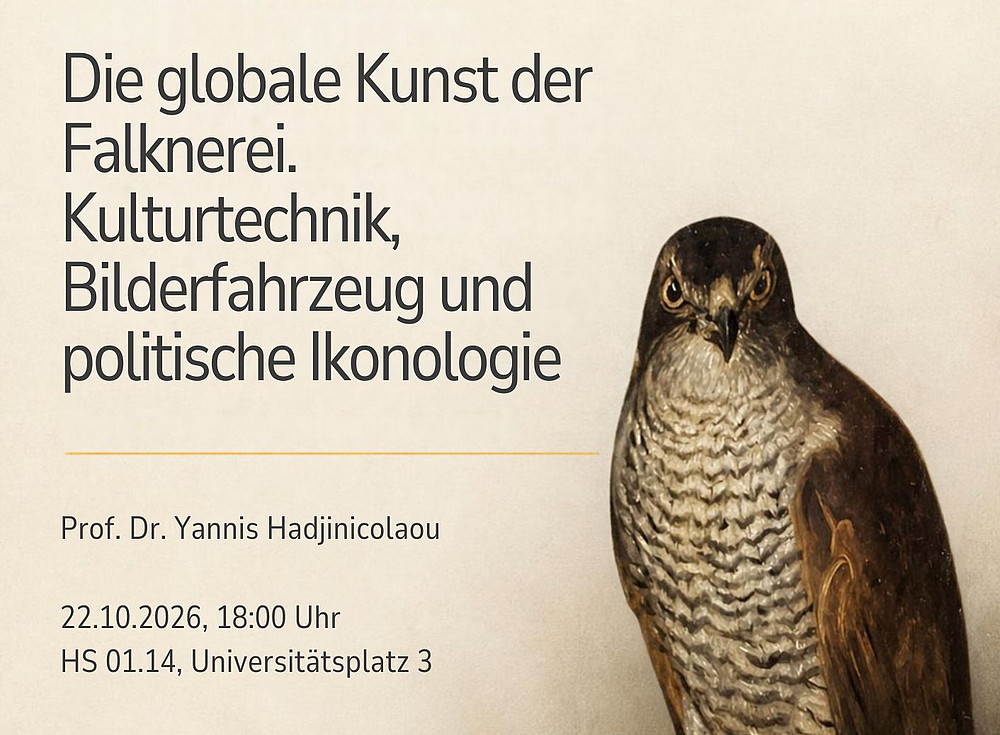
Both art history and cultural history have, until now, largely neglected the political iconology and cultural practices of falconry. In recent years, however, this has begun to change, as falconry is increasingly recognized as a field in which questions of domination, movement, knowledge transfer, and the relationships between humans, animals, and objects converge. This lecture examines how depictions of falconry and the birds themselves have shaped notions of domination and political power. Drawing on images and practices of falconry, it demonstrates how its specific techniques can help us understand the visual and political impact of this “art.” Central to this analysis is the concept of movement, which is examined by drawing on Aby Warburg’s concept of the “image vehicle.” In particular, the so-called “feather games” offer a vivid example of instruments and images that are set in motion through their technical manipulation while simultaneously evoking metaphorical notions of political power. The art of falconry thus proves to be an aesthetic practice that extends far beyond hunting, sport, and political representation. It combines bodies, animals, images, and technical processes into a specific form of political and visual practice. Among other things, the lecture focuses on the court painter Cornelis Gijsbrechts and his relationship with Christian V in Copenhagen.