Begin of page section:
Page sections:

  • Go to contents (Accesskey 1)
  • Go to position marker (Accesskey 2)
  • Go to main navigation (Accesskey 3)
  • Go to sub navigation (Accesskey 4)
  • Go to additional information (Accesskey 5)
  • Go to page settings (user/language) (Accesskey 8)
  • Go to search (Accesskey 9)

End of this page section. Go to overview of page sections

Begin of page section:
Page settings:

English en
Deutsch de
Search
Login

End of this page section. Go to overview of page sections

Begin of page section:
Search:

Search for details about Uni Graz
Close

End of this page section. Go to overview of page sections


Search

Begin of page section:
Main navigation:

Page navigation:

  • University

    University
    • About the University
    • Organisation
    • Faculties
    • Library
    • Working at University of Graz
    • Campus
    Developing solutions for the world of tomorrow - that is our mission. Our students and our researchers take on the great challenges of society and carry the knowledge out.
  • Research Profile

    Research Profile
    • Our Expertise
    • Research Questions
    • Research Portal
    • Promoting Research
    • Research Transfer
    • Ethics in Research
    Scientific excellence and the courage to break new ground. Research at the University of Graz creates the foundations for making the future worth living.
  • Studies

    Studies
    • Prospective Students
    • Students
  • Community

    Community
    • International
    • Location
    • Research and Business
    • Alumni
    The University of Graz is a hub for international research and brings together scientists and business experts. Moreover, it fosters the exchange and cooperation in study and teaching.
  • Spotlight
Topics
  • Our digital Advent calendar
  • Sustainable University
  • Researchers answer
  • Work for us
Close menu

End of this page section. Go to overview of page sections

Begin of page section:
You are here:

University of Graz News When new times change the old world: Austrian Contemporary History Day

End of this page section. Go to overview of page sections

Wednesday, 03 April 2024

When new times change the old world: Austrian Contemporary History Day

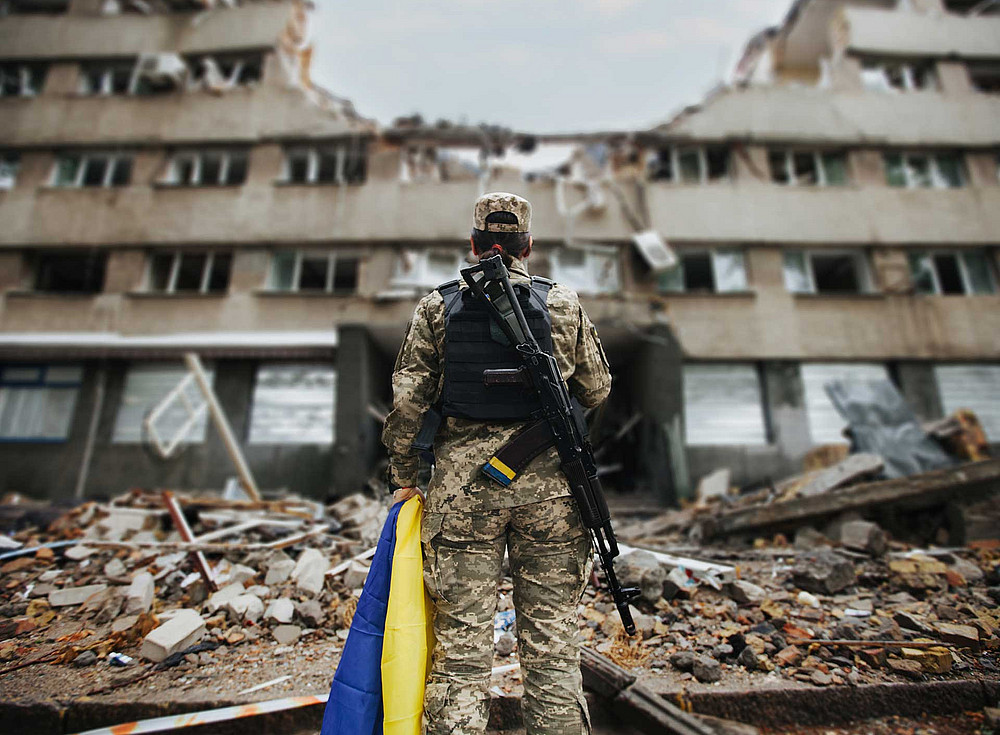
Soldatin vor zerstörtem Gebäude

Russlands Angriff auf die Ukraine hat eine Zeitenwende eingeläutet. Foto: alimyakubov - stock.adobe.com

Two world wars, economic crisis, the annexation of Austria to the Nazi regime, student protests in 1968, the fall of the Iron Curtain - the 20th century was characterised by a continuous loop of deep cuts that changed society. With Russia's invasion of Ukraine, German Chancellor Olaf Scholz has proclaimed the next turning point in 2022. Under the title "Zeitenwenden - Wendezeiten?", the Austrian Contemporary History Day from 11 to 13 April 2024 at the University of Graz will attempt to classify historical events that led to lasting upheavals.

After 2016, the University of Graz is once again hosting the 15th Austrian Contemporary History Day this year. More than 250 national and international academics will come together at the most important conference of contemporary historians in Austria, sharing their knowledge in a total of 100 lectures, discussion panels and sound performances.
Christiane Berth, Professor of Contemporary History, and Barbara Stelzl-Marx, Director of the Ludwig Boltzmann Institute for Research on the Consequences of War and contemporary historian at the Institute of History, have taken on the organisation. They are delighted that two Graz-specific anniversaries will be celebrated during the conference: 40 years ago, the University of Graz established the Department of Contemporary History. The Ludwig Boltzmann Institute for Research on the Consequences of War, which is closely linked to the University of Graz, was founded 30 years ago.

When we actually speak of the turn of an era or who defines it - for political reasons, for example - are among the main topics. This includes uncertainties and uncertainties, which in turn give rise to a strong interest in forecasts for the future. Technical innovations also often provide an opportunity to herald a "new era". At the same time, they challenge the historians themselves. They have to ask themselves the question: how can we preserve digital sources for posterity?

► Interview with the contemporary historians Christiane Berth and Barbara Stelzl-Marx

Opening on 11 April: Keynote on the war in Ukraine
One of the highlights will be dedicated to the Russian invasion of Ukraine: Serhii Plokii, Professor of Ukrainian History at Harvard University (USA), will trace the origins of the conflict and explain why the Cold War is back after a 30-year break.
In addition to the keynote speech, Rector Peter Riedler and high-ranking government representatives are expected to attend the opening of the conference, including Science Minister Martin Polaschek, National Council President Wolfgang Sobotka and Science Minister Barbara Eibinger-Miedl.

► https://zeitgeschichtetag-2024.uni-graz.at


created by Andreas Schweiger

Related news

Chemical Christmas show at the University of Graz: An explosive evening at the Schauspielh

At the beginning of December, the University of Graz transformed the theater into a laboratory: as part of “Chemical Life,” teacher training students staged a chemical Christmas show for Styrian school classes—complete with ethanol rockets, nitrogen snow, and glowing effects. An evening designed to inspire interest in studying chemistry.

Train by train: Koralm railway accelerates exchange between the Universities

Lectures at the University of Klagenfurt in the morning, seminars at the University of Graz in the afternoon: Austria's longest tunnel and a journey time of around 45 minutes make it easy. The Koralm railway increases the speed of networking between the two university locations. The collaboration builds on existing cooperation - for example in the areas of teacher training, Slavic studies and as employers, the universities are well coordinated.

On the trail of the Big Bang: University of Graz receives 1.5 million euros for doctoral programmes

The Austrian Science Fund FWF has selected the Doctoral Programme in Theoretical Particle Physics at the University of Graz for funding from the Doc.funds. Six young scientists will be funded for 3.5 years. They will gain fundamentally new insights into the origins of the world.

From trans women and knee prostheses: sports science prizes awarded

Walking better with a prosthesis, successfully getting rid of excess weight, training more effectively, more fairness for trans people in sport: these were the topics addressed by the students at the University of Graz who were awarded the sports science prizes for their Master's theses on 3 December 2025.

Begin of page section:
Additional information:

University of Graz
Universitaetsplatz 3
8010 Graz
Austria
  • Contact
  • Web Editors
  • Moodle
  • UNIGRAZonline
  • Imprint
  • Data Protection Declaration
  • Accessibility Declaration
Weatherstation
Uni Graz

End of this page section. Go to overview of page sections

End of this page section. Go to overview of page sections

Begin of page section:

End of this page section. Go to overview of page sections