Begin of page section:
Page sections:

  • Go to contents (Accesskey 1)
  • Go to position marker (Accesskey 2)
  • Go to main navigation (Accesskey 3)
  • Go to sub navigation (Accesskey 4)
  • Go to additional information (Accesskey 5)
  • Go to page settings (user/language) (Accesskey 8)
  • Go to search (Accesskey 9)

End of this page section. Go to overview of page sections

Begin of page section:
Page settings:

English en
Deutsch de
Search
Login

End of this page section. Go to overview of page sections

Begin of page section:
Search:

Search for details about Uni Graz
Close

End of this page section. Go to overview of page sections


Search

Begin of page section:
Main navigation:

Page navigation:

  • University

    University
    • About the University
    • Organisation
    • Faculties
    • Library
    • Working at University of Graz
    • Campus
    Developing solutions for the world of tomorrow - that is our mission. Our students and our researchers take on the great challenges of society and carry the knowledge out.
  • Research Profile

    Research Profile
    • Our Expertise
    • Research Questions
    • Research Portal
    • Promoting Research
    • Research Transfer
    • Ethics in Research
    • Commission for Scientific Integrity
    Scientific excellence and the courage to break new ground. Research at the University of Graz creates the foundations for making the future worth living.
  • Studies

    Studies
    • Prospective Students
    • Students
  • Community

    Community
    • International
    • Location
    • Research and Business
    • Alumni
    The University of Graz is a hub for international research and brings together scientists and business experts. Moreover, it fosters the exchange and cooperation in study and teaching.
  • Spotlight
Topics
  • Sustainable University
  • Researchers answer
  • Work for us
Close menu

End of this page section. Go to overview of page sections

Begin of page section:
You are here:

University of Graz News What do my data say about me?

End of this page section. Go to overview of page sections

Tuesday, 06 October 2020

What do my data say about me?

Photo: Pixabay.com/Sammy Williams

Photo: Pixabay.com/Sammy Williams

Data-driven technologies such as artificial intelligence or chatbots are changing the business world. Stefan Thalmann and his team investigate these new technologies.

Today, industry espionage often takes place when exchanged production data are analyzed by competitors. Many companies aren’t aware of the the knowledge that’s actually contained in the data sets they automatically share with suppliers and customers. Stefan Thalmann develops strategies that support the use of technical, organisational and legal measures for the protection of critical knowledge. This kind of concept is important, because the fear of loosing critical knowledge can be a big hurdle for the adoption of digital technologies and new business models.

WHAT IS YOUR RESEARCH GOAL? We want to investigate opportunities and challenges of new technologies for our society. For that reason, we take a design-oriented approach and develop prototypes and security concepts. We also gain theoretical knowledge by evaluating these prototypes.

WHICH CHALLENGES ARE YOU FACING? For this type of research, we often need access to company data that they don’t like to release. We need to address certain concerns before we can even begin our work.

WHAT WOULD YOU LIKE YOUR STUDENTS TO LEARN? While data-driven technologies have an enormous potential, people should also be aware of the risks they pose. Furthermore, students should achieve a basic level of technical competence, so they can design data-driven solutions for business applications and support their implementation. There’s currently a high demand for this knowledge on the job market.

WHY HAVE YOU CHOSEN TO WORK AT THE UNIVERSITY OF GRAZ? We consider it really important to examine the interaction between the different disciplines. Good networks are found here, which allow us to investigate the topic of digitalisation from many perspectives. The university also has a good reputation with companies, which is very important for my work.


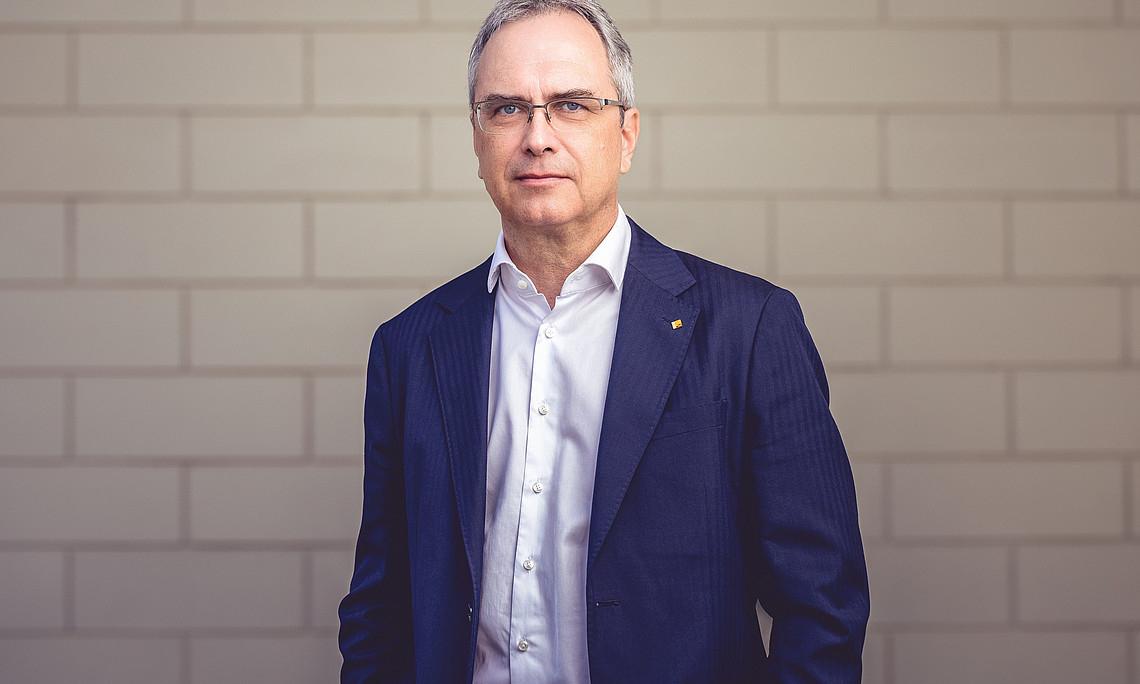
Stefan Thalmann is head of the Business Analytics and Data Science Center and member of the core research area "Smart Regulation". Researchers from different disciplines analyse the chances and challenges connected with technical innovations.
 

created by Dagmar Eklaude

Related news

Higher Education Strategy 2040: Austria’s universities on course for the future

Austria has 77 higher education institutions, which is above the EU average – but does this really make sense? The new Higher Education Strategy 2040 focuses on cooperation rather than mergers. As one of the six largest universities in Austria, the University of Graz plays a central role in this.

Climate research in Greenland: Old data provides new insights

The polar explorer and University of Graz professor Alfred Wegener left behind a unique collection of climate data from Greenland. A research team from the University of Graz is now analysing this 100-year-old treasure trove of data and comparing it with current measurements.

Diversity in nature and science: How we talk about plants and each other

Ginkgo, kiwi, hemp: they exist as male and female plants. Anyone who paid attention in biology class will confirm this. But is this categorisation, established by Carl von Linné almost 300 years ago, still valid today? An interdisciplinary team at the University of Graz is questioning these attributions and using this as a starting point to provide food for thought for gender-sensitive interaction between students, scientific and teaching staff.

Around the world in eight stops: the Long Night of Research at the University of Graz

On 24 April from 5 pm, you can take a short trip around the globe at the University of Graz, discovering pecularities of foreign countries or new local features in the entrance hall of the University Library. The itinerary takes you through introduced animal species, political attitudes and the omnipotence of algorithms. There will also be a programme in the historic reading hall, as well as at the UniGraz@Museum and the University Archive.

Begin of page section:
Additional information:

University of Graz
Universitaetsplatz 3
8010 Graz
Austria
  • Contact
  • Web Editors
  • Moodle
  • UNIGRAZonline
  • Imprint
  • Data Protection Declaration
  • Accessibility Declaration
Weatherstation
Uni Graz

End of this page section. Go to overview of page sections

End of this page section. Go to overview of page sections

Begin of page section:

End of this page section. Go to overview of page sections