Begin of page section:
Page sections:

  • Go to contents (Accesskey 1)
  • Go to position marker (Accesskey 2)
  • Go to main navigation (Accesskey 3)
  • Go to sub navigation (Accesskey 4)
  • Go to additional information (Accesskey 5)
  • Go to page settings (user/language) (Accesskey 8)
  • Go to search (Accesskey 9)

End of this page section. Go to overview of page sections

Begin of page section:
Page settings:

English en
Deutsch de
Search
Login

End of this page section. Go to overview of page sections

Begin of page section:
Search:

Search for details about Uni Graz
Close

End of this page section. Go to overview of page sections


Search

Begin of page section:
Main navigation:

Page navigation:

  • University

    University
    • About the University
    • Organisation
    • Faculties
    • Library
    • Working at University of Graz
    • Campus
    Developing solutions for the world of tomorrow - that is our mission. Our students and our researchers take on the great challenges of society and carry the knowledge out.
  • Research Profile

    Research Profile
    • Our Expertise
    • Research Questions
    • Research Portal
    • Promoting Research
    • Research Transfer
    • Ethics in Research
    • Commission for Scientific Integrity
    Scientific excellence and the courage to break new ground. Research at the University of Graz creates the foundations for making the future worth living.
  • Studies

    Studies
    • Prospective Students
    • Students
    • Registration for Study Programme (Winter semester 2026/27)
  • Community

    Community
    • International
    • Location
    • Research and Business
    • Alumni
    The University of Graz is a hub for international research and brings together scientists and business experts. Moreover, it fosters the exchange and cooperation in study and teaching.
Topics
  • Sustainable University
  • Researchers answer
  • Work for us
Close menu

End of this page section. Go to overview of page sections

Begin of page section:
You are here:

University of Graz News Vermittler

End of this page section. Go to overview of page sections

Wednesday, 20 January 2016

Vermittler

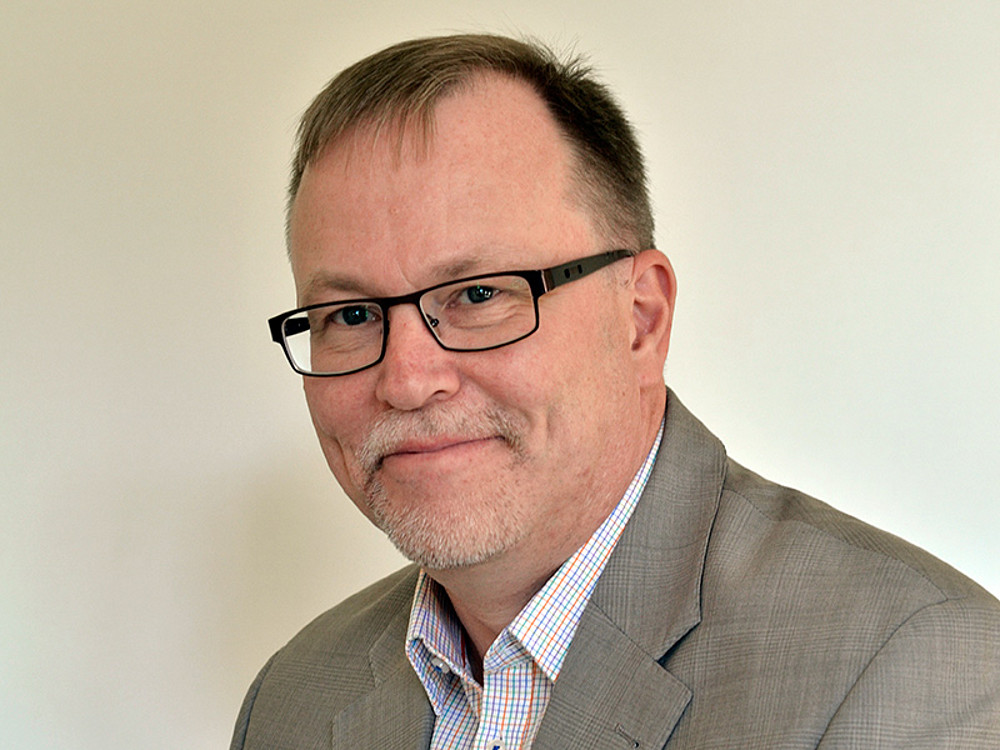
Der Finne Pekka Kujamäki ist seit September Professor für Translationswissenschaften an der Uni Graz. Foto: KK

Der Finne Pekka Kujamäki ist seit September Professor für Translationswissenschaften an der Uni Graz. Foto: KK

Pekka Kujamäki ist neuer Professor am Institut für Theoretische und Angewandte Translationswissenschaft

Welche Rolle spielt Dolmetschen und Übersetzen in der Gesellschaft? Welche Bedeutung haben ÜbersetzerInnen und DolmetscherInnen beim kulturellen Miteinander? Unter anderem mit solchen Fragen beschäftigt sich Pekka Kujamäki, seit 1. September 2015 Professor für Translationswissenschaft an der Uni Graz. Davor war der aus Finnland stammende Wissenschafter Professor für Deutsche Sprache und Translation an der Universität Ostfinnland.
Erste Kontakte nach Graz hat er schon vor einigen Jahren geknüpft, unter anderem hielt er 2013 hier ein Seminar zum Thema Dolmetschen im Krieg. In einem großen Forschungsprojekt, das er nun an der Karl-Franzens-Universität fortführt, analysiert er sehr umfassend die Dolmetschtätigkeiten während des Zweiten Weltkriegs in Finnland: „Es gab offizielle Dolmetscher der deutschen Wehrmacht, wesentlich bedeutsamer waren aber inoffizielle – etwa Frauen und Kinder oder Kriegsgefangene“, schildert Kujamäki. Wie die Sprachbarrieren in den Gefangenenlagern, im finnischen Militärhauptquartier oder innerhalb der deutsch-finnischen Waffenbrüderschaft überbrückt wurden beziehungsweise welche Bedürfnisse das Heer hatte, sind weitere Fragen, denen sich der Wissenschafter widmet. „Wir haben vier Jahre lang sehr viel Material in Archiven gesammelt, das wir nun bearbeiten.“

Momentan nehmen aber die Studierenden und das Vertrautwerden mit dem österreichischen Universitätssystem mehr Zeit in Anspruch als die Forschung. „Die Intensität der Betreuungsarbeit hat mich überrascht“, gesteht der Finne. Dennoch hat ihn gerade die Vielfalt der Studierenden am Institut nach Graz gelockt. „Ihre unterschiedlichen kulturellen, nationalen und ethnischen Hintergründe sind für mich sehr reizvoll und bieten neue Perspektiven für den Unterricht.“ Die Stadt gefällt ihm ebenfalls sehr gut – samt dem aktuellen Temperaturunterschied zu seiner Heimat von rund 40 Grad. „Ich habe mit meinen 52 Jahren schon genug vom finnischen Winter abbekommen“, lacht Kujamäki auf die Frage, ob ihm das skandinavische Klima nicht abgeht.

created by Dagmar Eklaude

Related news

"Mathematics explains the world"

How can life be quantified? And what can science reveal that remains hidden from the naked eye? The 14th European Conference on Mathematical and Theoretical Biology at the University of Graz is dedicated to these questions. From 13 to 17 July, around 1,300 researchers from all over the world will gather on campus to discuss models, biological processes and the future of data-driven medicine. Klemens Fellner, Dean of the Faculty of Natural Sciences and Mathematics and a mathematician, talks about the language that explains the world

Internationally up-to-date: University of Graz offers new degree programmes in art studies

From the Old Masters to AI art – three newly designed degree programmes offer students at the University of Graz fresh perspectives on artistic production. In addition to historical art, the programmes place a greater emphasis on contemporary and global developments. The registration period is open.

The Nazi elite school Napola: Historian seeks memories and personal documents

They were to be brought up to become the future elite of National Socialism: boys and girls aged ten and over who, following the ‘Anschluss’ of Austria to the German Reich, attended a so-called Napola (short for Nationalpolitische Lehranstalt; also known as NPEA, Nationalpolitische Erziehungsanstalt). There were nine such institutions in what is now Austria between 1939 and 1945.

Heat-resistant: Eva Preinfalk explains how cities can protect their residents

Certain demographic and some occupational groups are particularly vulnerable to high temperatures. A range of measures is needed to provide relief for everyone, explains climate economist Eva Preinfalk.

Begin of page section:
Additional information:

University of Graz
Universitaetsplatz 3
8010 Graz
Austria
  • Contact
  • Web Editors
  • Moodle
  • UNIGRAZonline
  • Imprint
  • Data Protection Declaration
  • Accessibility Declaration
Weatherstation
Uni Graz

End of this page section. Go to overview of page sections

End of this page section. Go to overview of page sections

Begin of page section:

End of this page section. Go to overview of page sections