Begin of page section:
Page sections:

  • Go to contents (Accesskey 1)
  • Go to position marker (Accesskey 2)
  • Go to main navigation (Accesskey 3)
  • Go to sub navigation (Accesskey 4)
  • Go to additional information (Accesskey 5)
  • Go to page settings (user/language) (Accesskey 8)
  • Go to search (Accesskey 9)

End of this page section. Go to overview of page sections

Begin of page section:
Page settings:

English en
Deutsch de
Search
Login

End of this page section. Go to overview of page sections

Begin of page section:
Search:

Search for details about Uni Graz
Close

End of this page section. Go to overview of page sections


Search

Begin of page section:
Main navigation:

Page navigation:

  • University

    University
    • About the University
    • Organisation
    • Faculties
    • Library
    • Working at University of Graz
    • Campus
    Developing solutions for the world of tomorrow - that is our mission. Our students and our researchers take on the great challenges of society and carry the knowledge out.
  • Research Profile

    Research Profile
    • Our Expertise
    • Research Questions
    • Research Portal
    • Promoting Research
    • Research Transfer
    • Ethics in Research
    • Commission for Scientific Integrity
    Scientific excellence and the courage to break new ground. Research at the University of Graz creates the foundations for making the future worth living.
  • Studies

    Studies
    • Prospective Students
    • Students
  • Community

    Community
    • International
    • Location
    • Research and Business
    • Alumni
    The University of Graz is a hub for international research and brings together scientists and business experts. Moreover, it fosters the exchange and cooperation in study and teaching.
Topics
  • Sustainable University
  • Researchers answer
  • Work for us
Close menu

End of this page section. Go to overview of page sections

Begin of page section:
You are here:

University of Graz News Training und Therapie

End of this page section. Go to overview of page sections

Tuesday, 11 November 2014

Training und Therapie

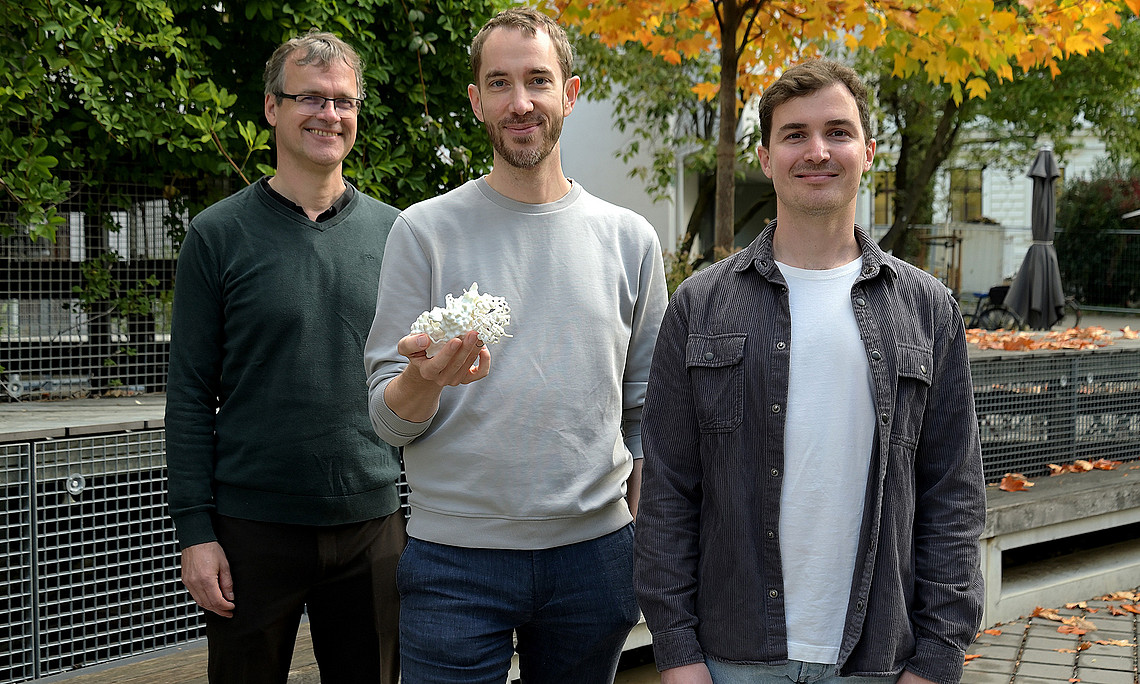
Training statt Tablette: Peter Hofmann, Gerhard Tschakert und Manfred Wonisch (v.l.), Foto: Uni Graz/Schweiger

Training statt Tablette: Peter Hofmann, Gerhard Tschakert und Manfred Wonisch (v.l.), Foto: Uni Graz/Schweiger
Sportwissenschafter diskutierten über die Effekte eines „bewegten Körpers“

42 Prozent der Bevölkerung in der EU gehen wöchentlich weniger als 2,5 Stunden einer moderaten oder weniger als eine Stunde einer anstrengenden körperlichen Aktivität nach. Sie gelten damit als inaktiv. Das war die ernüchternde Ausgangssituation für eine Podiumsdiskussion am 10. November 2014 im Rahmen der Uni-Graz-Reihe „der bewegte Körper“. Sportwissenschafter Gerhard Tschakert hatte Trainingsforscher Peter Hofmann und Sportmediziner Manfred Wonisch in den großen, mit etwa 180 BesucherInnnen gefüllten Hörsaal des Zentrums für Molekulare Biowissenschaften eingeladen.
Ist Training das universale Medikament? lautete die zentrale Frage. Die Antwort der Experten: „Fitness ist ein wesentlicher Punkt in der Vermeidung von Erkrankungen.“ In der Gesellschaft aufgrund unterschiedlicher Rahmenbedingungen ist dieser Aspekt nach wie vor zu wenig ausgeprägt. Daher forderte Sportwissenschafter Hofmann: „Wir brauchen eine Kultur für Bewegung.“
In der ärztlichen Therapie ist körperliches Training heutzutage fix verankert, etabliert hat sich dies jedoch erst in 1970er-Jahren. Dabei, so Mediziner Wonisch, habe Training einen breiteren Effekt, der bis ins Alter wirkt: „Es geht um Mobilität und Beweglichkeit.“

Die Veranstaltungsreihe „Der bewegte Körper“ ist Teil der 7. fakultät, des Zentrums für Gesellschaft, Wissen und Kommunikation an der Uni Graz.

created by Andreas Schweiger

Related news

Superti-Furga will becomefounding director of the CORI Institute in Graz

The Austrian Academy of Sciences (ÖAW) is establishing a new flagship centre for research into metabolic diseases in collaboration with the three universities in Graz. This innovative research approach combines mathematics and experimental biology with artificial intelligence

A match for life

Stem cell donations save lives. However, the only way to determine who is ultimately compatible with whom is through a testing process. Pharmacist Marion Mußbacher explains the mechanisms behind this. On 6 May 2026, the ÖH and the charity “Geben für Leben” are calling for people to come forward for typing at the University of Graz.

Mild Research Night: Around 750 visitors travelled around the world at the university

Lovely weather and a wide range of research topics drew visitors to the University of Graz last Friday. Highlights included a journey around the globe in eight stops, a ‘speed-dating’ session with books, insights into Alfred Wegener’s Greenland expedition, and guided tours of the democracy exhibition at the UniGraz@Museum.

Career Booster: How the Research Careers Campus supports researchers

They are innovative, creative and productive – researchers who have not yet been appointed to a professorship make a massive contribution to a university’s research output. To provide them with even better support on their career path, the University of Graz has established the Research Careers Campus. The official launch took place on 22 April 2026 with a ‘festival’.

Begin of page section:
Additional information:

University of Graz
Universitaetsplatz 3
8010 Graz
Austria
  • Contact
  • Web Editors
  • Moodle
  • UNIGRAZonline
  • Imprint
  • Data Protection Declaration
  • Accessibility Declaration
Weatherstation
Uni Graz

End of this page section. Go to overview of page sections

End of this page section. Go to overview of page sections

Begin of page section:

End of this page section. Go to overview of page sections