



Begin of page section:
Page sections:

  • Go to contents (Accesskey 1)
  • Go to position marker (Accesskey 2)
  • Go to main navigation (Accesskey 3)
  • Go to sub navigation (Accesskey 4)
  • Go to additional information (Accesskey 5)
  • Go to page settings (user/language) (Accesskey 8)
  • Go to search (Accesskey 9)

End of this page section. Go to overview of page sections

Begin of page section:
Page settings:

English en
Deutsch de
Search
Login

End of this page section. Go to overview of page sections

Begin of page section:
Search:

Search for details about Uni Graz
Close

End of this page section. Go to overview of page sections


Search

Begin of page section:
Main navigation:

Page navigation:

  • University

    University
    • About the University
    • Organisation
    • Faculties
    • Library
    • Working at University of Graz
    • Campus
    Developing solutions for the world of tomorrow - that is our mission. Our students and our researchers take on the great challenges of society and carry the knowledge out.
  • Research Profile

    Research Profile
    • Our Expertise
    • Research Questions
    • Research Portal
    • Promoting Research
    • Research Transfer
    • Ethics in Research
    • Commission for Scientific Integrity
    Scientific excellence and the courage to break new ground. Research at the University of Graz creates the foundations for making the future worth living.
  • Studies

    Studies
    • Prospective Students
    • Students
    • Post-registration Law
  • Community

    Community
    • International
    • Location
    • Research and Business
    • Alumni
    The University of Graz is a hub for international research and brings together scientists and business experts. Moreover, it fosters the exchange and cooperation in study and teaching.
Topics
  • Sustainable University
  • Researchers answer
  • Work for us
Close menu

End of this page section. Go to overview of page sections

Begin of page section:
You are here:

University of Graz News Süchtig nach mehr

End of this page section. Go to overview of page sections

Tuesday, 08 July 2014

Süchtig nach mehr

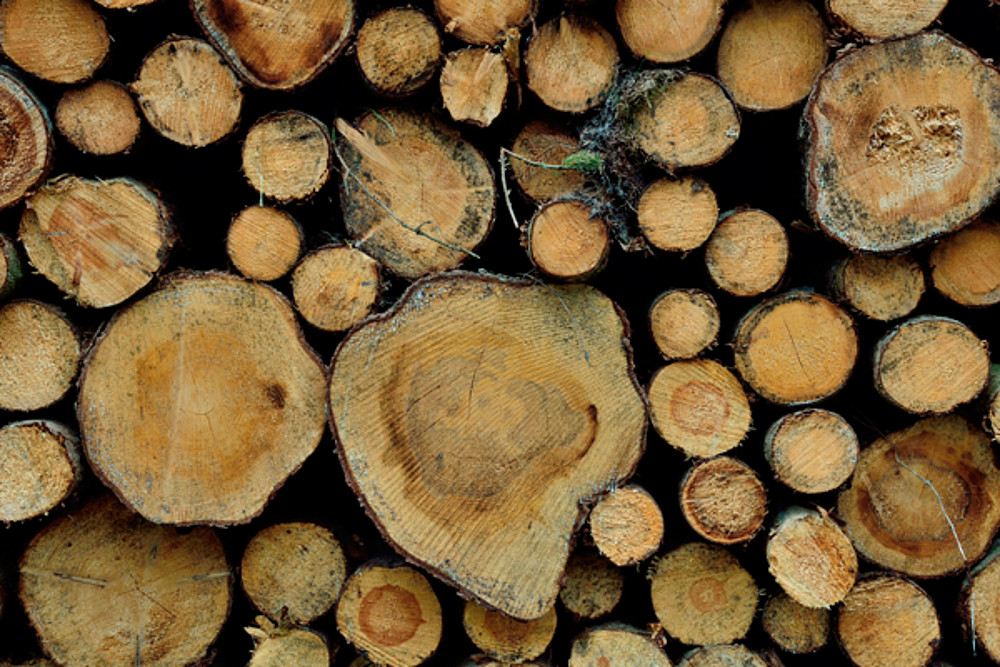
Bei Holzimporten liegt Österreich - nach China - weltweit im Spitzenfeld. Foto: Peter Hill/<a href="http://www.pixelio.de">pixelio.de</a>

Bei Holzimporten liegt Österreich - nach China - weltweit im Spitzenfeld. Foto: Peter Hill/<a href="http://www.pixelio.de">pixelio.de</a>

Studie der Uni Graz bestätigt Österreich als zweitgrößten Holz-Importeur weltweit

In Österreich nimmt die Abhängigkeit von Importen der Land- und Forstwirtschaft zu. Besonders sichtbar wird dies beim Bau- und Rohstoff Holz: Laut aktuellen Zahlen ist Österreich nach China der zweitgrößte Importeur von Holz weltweit. WissenschafterInnen des Instituts für Systemwissenschaften, Innovations- und Nachhaltigkeitsforschung (ISIS) an der Karl-Franzens-Universität Graz haben in einer Studie erstmals die Daten von Ernte und Import sowie von Verbrauch und Export für alle land- und forstwirtschaftlichen Güter gegenübergestellt.

„Die Abhängigkeit Österreichs von Importen in diesen Bereichen nimmt seit 1995 stetig zu. So verdoppelte sich zum Beispiel die Lücke zwischen heimischen Biomassekonsum und Ernte im Zeitraum 1995 bis 2010“, erklärt Ao.Univ.-Prof. Dr. Alfred Posch, Wissenschafter am ISIS. „Der Verbrauch überstieg in diesem Zeitraum die heimische Extrahierung um 5,4 Millionen Tonnen. Die entstandene Lücke muss natürlich durch Importe gedeckt werden.“ Drastisch sichtbar wird die Situation bei Holz: Gut ein Drittel der Menge, die in Österreich verarbeitet wird, muss bereits importiert werden. Die Statistiken der Studie zeigen, dass Österreich mit einem absoluten Importvolumen von etwa 8,1 Millionen Festmeter nach China mit 37,8 Millionen Festmeter und vor Schweden (7,3 Millionen Festmeter) der zweitgrößte Holzimporteur der Welt ist. Überraschend ist auch, dass bereits 17 Prozent der verfügbaren Holzmenge in Österreich direkt verbrannt werden, ohne vorher der Säge-, Papier- und Plattenindustrie als Rohstoff gedient zu haben. „Im Sinne der Nachhaltigkeit keine begrüßenswerte Entwicklung. Ist doch die stufenweise Nutzung von Holz im Sinne der Umweltschutzes und der Arbeitsplätze zu bevorzugen“, so Posch. 

Da Österreich nicht über eine gesamte detaillierte Statistik der land- und forstwirtschaftlichen Güter verfügt, mussten Daten erhoben und angepasst werden. Ergebnis der Studie ist daher auch, dass Österreich eine profunde Datenbasis braucht, um zielsichere Biomassepolitik zu betreiben. „Steigender Verkehr durch Biomasseimporte schont das Klima nämlich auch nicht“, betont Posch.

created by Konstantinos Tzivanopoulos

Related news

The future of Styria as a knowledge region is at risk

It is reported that 500 million euros are to be cut from Styrian universities. University vice-chancellors fear that this will sacrifice the development and competitiveness of the region as a centre for science, culture and business in favour of short-term cost-cutting targets.

A good winter for honeybees: mortality rate in Austria below ten per cent

20 May is World Bee Day. Local beekeepers can celebrate it with confidence this year, as their colonies have come through the winter relatively well.

Whistles against division: Rivka Saltiel experienced both unrest and solidarity in the US

Rivka Saltiel, a geographer from the University of Graz, has been working as a visiting professor in Minneapolis for the past five months and has witnessed first-hand the state of emergency and the deadly raids carried out by the immigration agency ICE. She reports on the collective solidarity of the population, the resistance to the President’s attempts to divide the community, and the power of informal social networks that ensure day-to-day provision and safety. These practices of solidarity are also relevant for Europe.

Record of reported species: Styria wins the global City Nature Challenge

Observers in Styria recorded 5,158 different animals, plants and fungi as part of the international City Nature Challenge between 24 and 27 April 2026. This saw the region take first place in the "species" category. Ostrava in the Czech Republic made the most observations, with just under 140,000, whilst the San Francisco Bay Area had the highest number of participants, namely 3,019.

Begin of page section:
Additional information:

University of Graz
Universitaetsplatz 3
8010 Graz
Austria
  • Contact
  • Web Editors
  • Moodle
  • UNIGRAZonline
  • Imprint
  • Data Protection Declaration
  • Accessibility Declaration
Weatherstation
Uni Graz

End of this page section. Go to overview of page sections

End of this page section. Go to overview of page sections

Begin of page section:

End of this page section. Go to overview of page sections