



Begin of page section:
Page sections:

  • Go to contents (Accesskey 1)
  • Go to position marker (Accesskey 2)
  • Go to main navigation (Accesskey 3)
  • Go to sub navigation (Accesskey 4)
  • Go to additional information (Accesskey 5)
  • Go to page settings (user/language) (Accesskey 8)
  • Go to search (Accesskey 9)

End of this page section. Go to overview of page sections

Begin of page section:
Page settings:

English en
Deutsch de
Search
Login

End of this page section. Go to overview of page sections

Begin of page section:
Search:

Search for details about Uni Graz
Close

End of this page section. Go to overview of page sections


Search

Begin of page section:
Main navigation:

Page navigation:

  • University

    University
    • About the University
    • Organisation
    • Faculties
    • Library
    • Working at University of Graz
    • Campus
    Developing solutions for the world of tomorrow - that is our mission. Our students and our researchers take on the great challenges of society and carry the knowledge out.
  • Research Profile

    Research Profile
    • Our Expertise
    • Research Questions
    • Research Portal
    • Promoting Research
    • Research Transfer
    • Ethics in Research
    • Commission for Scientific Integrity
    Scientific excellence and the courage to break new ground. Research at the University of Graz creates the foundations for making the future worth living.
  • Studies

    Studies
    • Prospective Students
    • Students
    • Registration for Study Programme (Winter semester 2026/27)
  • Community

    Community
    • International
    • Location
    • Research and Business
    • Alumni
    The University of Graz is a hub for international research and brings together scientists and business experts. Moreover, it fosters the exchange and cooperation in study and teaching.
Topics
  • Sustainable University
  • Researchers answer
  • Work for us
Close menu

End of this page section. Go to overview of page sections

Begin of page section:
You are here:

University of Graz News Starke Argumente

End of this page section. Go to overview of page sections

Tuesday, 10 May 2016

Starke Argumente

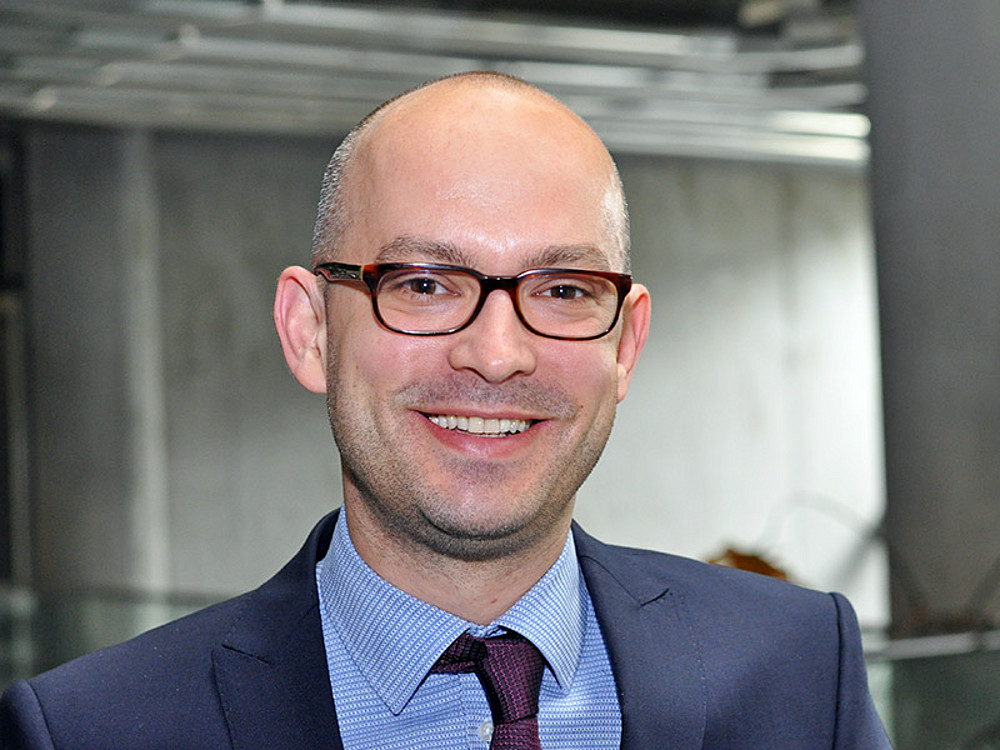
Rechtsphilosoph Matthias Klatt lehrt und forscht seit diesem Studienjahr an der Uni Graz. Foto: Uni Graz/Eklaude ©Uni Graz/Eklaude
©Uni Graz/Eklaude

Rechtsphilosoph Matthias Klatt lehrt und forscht seit diesem Studienjahr an der Uni Graz. Foto: Uni Graz/Eklaude

Matthias Klatt ist seit Oktober Professor für Rechtsphilosophie, Rechtssoziologie und Rechtspolitik an der Uni Graz

Welches Recht ist auch gerecht? Wie argumentieren JuristInnen? Was erlaubt die Verfassung? Das sind einige Fragen, denen sich Matthias Klatt widmet. Der Hamburger Rechtsphilosoph, der ein dichtes internationales Netzwerk pflegt, lehrt und forscht seit Oktober an der Karl-Franzens-Universität Graz. Er engagiert sich bereits eifrig in der Neugestaltung der Fakultät und des Jusstudiums. Dass seine Forschungsbereiche hier auf sehr fruchtbaren Boden treffen, hat den Job in der Steiermark „unglaublich attraktiv“ gemacht. „Die Schaffung eines Grundlageninstituts ist sehr spannend, und ich freue mich, das maßgeblich mitgestalten zu können“, betont Klatt. „Dieses Bewusstsein für den Wert der Rechtsphilosophie findet man selten.“ Damit setze die Universität auch ein klares Zeichen für den Wert des rechtswissenschaftlichen Studiums, deren Auslagerung an Fachhochschulen derzeit politisch diskutiert wird. „Grundlagenfächer bieten die Basis für eine breite, wissenschaftlich fundierte Ausbildung, die in der Praxis gefragter ist als reines Faktenwissen. Wir haben den Fachhochschulen voraus, dass wir den Blick aus der Adler-Perspektive vermitteln können.“
Auch im Bereich der Menschenrechte findet Klatt, der zusätzlich eine Lehrbefugnis im Fach Völkerrecht erworben hat, in Graz zahlreiche Anknüpfungspunkte. Aktuell arbeitet er an einer Publikation zum Thema Recht auf Rechtfertigung: „Gerechtigkeit besteht auch darin, dass der Staat den BürgerInnen die Gründe für seine Maßnahmen erklärt“, führt er aus. Darüber hinaus entwickelt er gerade die Veranstaltungsreihe „Graz Jurisprudence Talks“. Dafür möchte er sein internationales Netzwerk nutzen und Koryphäen aus der Rechtsphilosophie sowie dem internationalen Verfassungsrecht zu Fachvorträgen für Studierende und Interessierte nach Graz holen.

created by Dagmar Eklaude

Related news

Internationally up-to-date: University of Graz offers new degree programmes in art studies

From the Old Masters to AI art – three newly designed degree programmes offer students at the University of Graz fresh perspectives on artistic production. In addition to historical art, the programmes place a greater emphasis on contemporary and global developments. The registration period is open.

The Nazi elite school Napola: Historian seeks memories and personal documents

They were to be brought up to become the future elite of National Socialism: boys and girls aged ten and over who, following the ‘Anschluss’ of Austria to the German Reich, attended a so-called Napola (short for Nationalpolitische Lehranstalt; also known as NPEA, Nationalpolitische Erziehungsanstalt). There were nine such institutions in what is now Austria between 1939 and 1945.

Heat-resistant: Eva Preinfalk explains how cities can protect their residents

Certain demographic and some occupational groups are particularly vulnerable to high temperatures. A range of measures is needed to provide relief for everyone, explains climate economist Eva Preinfalk.

Baby health: University of Graz is seeking study participants to investigate early risk factors

Why does the body composition of babies vary so much? Some children gain a significant amount of fat mass within a few weeks, whilst others show hardly any change over the same period. “At the same time, initial observations suggest that fat distribution in all babies may follow a similar pattern, regardless of their total body fat,” explains Marco Höfler from the Institute of Movement Sciences, Sport and Health at the University of Graz. He is coordinating the research project ‘Small Bodies – Big Questions’, for which participants are currently still being sought: pregnant women and babies up to four weeks old.

Begin of page section:
Additional information:

University of Graz
Universitaetsplatz 3
8010 Graz
Austria
  • Contact
  • Web Editors
  • Moodle
  • UNIGRAZonline
  • Imprint
  • Data Protection Declaration
  • Accessibility Declaration
Weatherstation
Uni Graz

End of this page section. Go to overview of page sections

End of this page section. Go to overview of page sections

Begin of page section:

End of this page section. Go to overview of page sections