



Begin of page section:
Page sections:

  • Go to contents (Accesskey 1)
  • Go to position marker (Accesskey 2)
  • Go to main navigation (Accesskey 3)
  • Go to sub navigation (Accesskey 4)
  • Go to additional information (Accesskey 5)
  • Go to page settings (user/language) (Accesskey 8)
  • Go to search (Accesskey 9)

End of this page section. Go to overview of page sections

Begin of page section:
Page settings:

English en
Deutsch de
Search
Login

End of this page section. Go to overview of page sections

Begin of page section:
Search:

Search for details about Uni Graz
Close

End of this page section. Go to overview of page sections


Search

Begin of page section:
Main navigation:

Page navigation:

  • University

    University
    • About the University
    • Organisation
    • Faculties
    • Library
    • Working at University of Graz
    • Campus
    Developing solutions for the world of tomorrow - that is our mission. Our students and our researchers take on the great challenges of society and carry the knowledge out.
  • Research Profile

    Research Profile
    • Our Expertise
    • Research Questions
    • Research Portal
    • Promoting Research
    • Research Transfer
    • Ethics in Research
    • Commission for Scientific Integrity
    Scientific excellence and the courage to break new ground. Research at the University of Graz creates the foundations for making the future worth living.
  • Studies

    Studies
    • Prospective Students
    • Students
    • Welcome Weeks for First Year Students
  • Community

    Community
    • International
    • Location
    • Research and Business
    • Alumni
    The University of Graz is a hub for international research and brings together scientists and business experts. Moreover, it fosters the exchange and cooperation in study and teaching.
Topics
  • Sustainable University
  • Researchers answer
  • Work for us
Close menu

End of this page section. Go to overview of page sections

Begin of page section:
You are here:

University of Graz News Lavendelduft und Meeresluft

End of this page section. Go to overview of page sections

Wednesday, 27 July 2016

Lavendelduft und Meeresluft

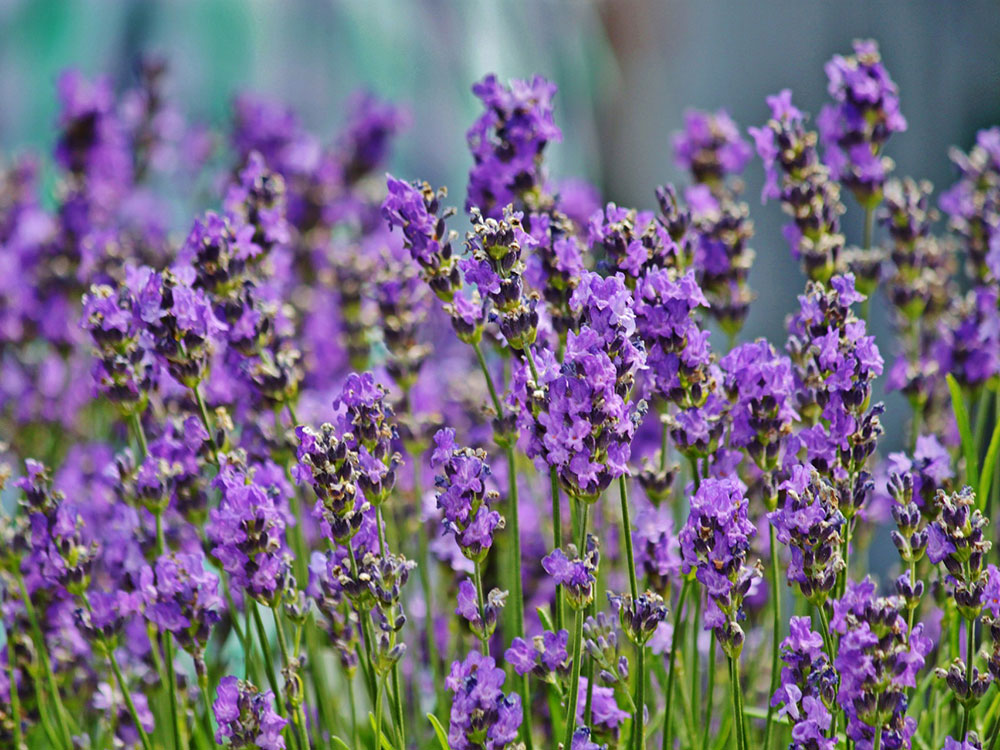
Den Duft des Lavendels oder den Geruch des Meeres können nicht alle Menschen gleich intensiv wahrnehmen. Die Uni Graz sucht daher Testpersonen für eine Riechstudie. Foto: Pixabay

Den Duft des Lavendels oder den Geruch des Meeres können nicht alle Menschen gleich intensiv wahrnehmen. Die Uni Graz sucht daher Testpersonen für eine Riechstudie. Foto: Pixabay

Uni Graz sucht Testpersonen für Riechstudie

Die süße Würze der Pinienhaine, das einmalige Aroma des Lavendel, den charakteristischen Duft des Meeres: Nicht jeder Mensch kann den Urlaub im Süden mit allen Sinnen genießen. Wie Riechstörungen entstehen und therapiert werden können, wird derzeit an der Karl-Franzens-Universität Graz erforscht. Das Institut für Psychologie sucht für diese Studie Testpersonen im Alter von 18 bis 45 Jahren, die durch ihre Teilnahme detaillierte Informationen über ihre Geruchsfunktion erhalten.
Die gesamte Untersuchung dauert eine Stunde bis maximal 90 Minuten. Die ProbandInnen nehmen an einer standardisierten Geruchstestung teil und füllen einen Fragebogen aus. Weiters erfolgt eine kurze Entnahme von Nasenschleimhautproben. Die Testpersonen dürfen an keinen neurologischen, psychiatrischen oder sonstigen schweren Erkrankungen sowie weder an akuten Erkältungen, Allergien noch Polypen leiden.

Kontakt:
Jennifer Kern und Dipl.-Psych. Johanna Reichert
Institut für Psychologie der Uni Graz
Tel.: 0664/5959745
E-Mail: geruchsstudie(at)gmx.at

created by Dagmar Eklaude

Related news

University of Graz: Working together to make Styria a sustainable centre of learning

Round table calls for sustainable funding for the 2028–2030 performance agreement period between the five Styrian universities and the federal government.

How can we teach using YouTube and AI? The University of Graz is strengthening media education in schools

A journey through the blood vessels using VR headsets brings biology lessons to life. An interactive quiz brings physics to life. The YouTube video explains the First World War. Whilst mobile phones are increasingly being banned from the classroom, social media platforms, apps and AI are playing an ever-greater role in knowledge transfer at school. But how can teaching with media be made even more effective? What are the challenges in media-based teaching? At the University of Graz, researchers are discussing these issues at a conference being held in Austria for the first time.

Jurassic Sounds: Biologist reconstructs insect songs from 165 million years ago

It was apparently not just the roars of the dinosaurs that made up the soundscape of the animal world during the Jurassic period. Crickets and grasshoppers communicated through a variety of songs and high-pitched sounds, as Thorin Jonsson from the Institute of Biology at the University of Graz discovered together with colleagues from the universities of Lincoln, Bristol (UK), Beijing (China) and Tempe (USA). The findings on what are so far the oldest traces of sound on Earth have just been published in the journal PNAS.

EU funding boosts international exchange between universities

The University of Graz is further expanding its international study opportunities through the European university alliance Arqus and is taking the lead in two key projects. In future, students will benefit from even more joint degree programmes and from simplified recognition of academic achievements through the Joint European Degree Label.

Begin of page section:
Additional information:

University of Graz
Universitaetsplatz 3
8010 Graz
Austria
  • Contact
  • Web Editors
  • Moodle
  • UNIGRAZonline
  • Imprint
  • Data Protection Declaration
  • Accessibility Declaration
Weatherstation
Uni Graz

End of this page section. Go to overview of page sections

End of this page section. Go to overview of page sections

Begin of page section:

End of this page section. Go to overview of page sections