Begin of page section:
Page sections:

  • Go to contents (Accesskey 1)
  • Go to position marker (Accesskey 2)
  • Go to main navigation (Accesskey 3)
  • Go to sub navigation (Accesskey 4)
  • Go to additional information (Accesskey 5)
  • Go to page settings (user/language) (Accesskey 8)
  • Go to search (Accesskey 9)

End of this page section. Go to overview of page sections

Begin of page section:
Page settings:

English en
Deutsch de
Search
Login

End of this page section. Go to overview of page sections

Begin of page section:
Search:

Search for details about Uni Graz
Close

End of this page section. Go to overview of page sections


Search

Begin of page section:
Main navigation:

Page navigation:

  • University

    University
    • About the University
    • Organisation
    • Faculties
    • Library
    • Working at University of Graz
    • Campus
    Developing solutions for the world of tomorrow - that is our mission. Our students and our researchers take on the great challenges of society and carry the knowledge out.
  • Research Profile

    Research Profile
    • Our Expertise
    • Research Questions
    • Research Portal
    • Promoting Research
    • Research Transfer
    • Ethics in Research
    • Commission for Scientific Integrity
    Scientific excellence and the courage to break new ground. Research at the University of Graz creates the foundations for making the future worth living.
  • Studies

    Studies
    • Prospective Students
    • Students
  • Community

    Community
    • International
    • Location
    • Research and Business
    • Alumni
    The University of Graz is a hub for international research and brings together scientists and business experts. Moreover, it fosters the exchange and cooperation in study and teaching.
Topics
  • Sustainable University
  • Researchers answer
  • Work for us
Close menu

End of this page section. Go to overview of page sections

Begin of page section:
You are here:

University of Graz News Communication between man and machine: high expectations of artificial intelligence

End of this page section. Go to overview of page sections

Friday, 24 October 2025

Communication between man and machine: high expectations of artificial intelligence

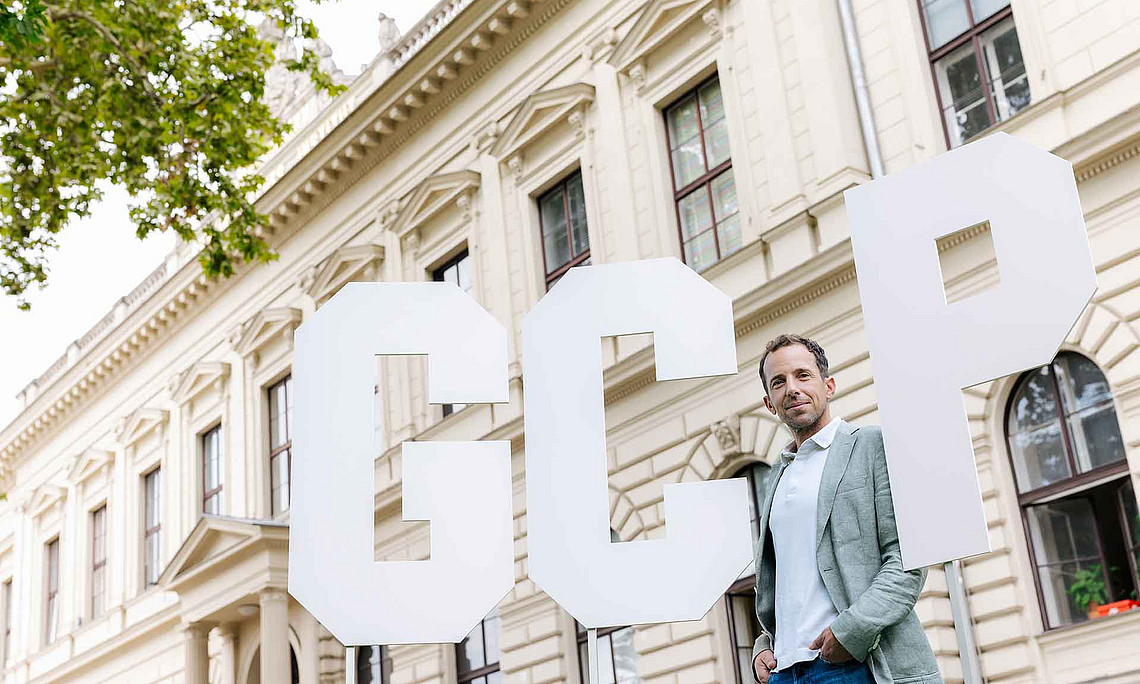
Markus Kneer

Markus Kneer deals with ethical issues surrounding artificial intelligence. Photo: Uni Graz/wildundwunderbar

AI chatbots are part of everyday life, but how do we define successful communication? In the "NIHAI" project, the University of Graz is researching expectations of AI, cultural differences and ethical standards in order to make the interaction between humans and machines more beneficial for everyone.

Social media has revolutionised the way we communicate, but it also contributes to the spread of conspiracy theories and fake news. And now large language models, commonly known as AI, are also coming into play. This threatens to exacerbate the situation. This is because AI chatbots enable a new type of communication between humans and machines that feels like a real conversation.
ChatGPT, Claude, Gemini or Mistral often give answers to queries that sound very correct. And they are often even correct - but not always. As a result, AI developers are constantly working on newer, even better models with higher response accuracy. At the same time, users are trying to develop better instructions for the AI in order to get more accurate answers. There is even a name for this: Prompt engineering.
"But with all the hype surrounding AI, there is one question that is receiving little attention," says AI ethicist Markus Kneer from the University of Graz. "What actually constitutes successful communication between humans and AI?". He is addressing this issue in the international project "NIHAI - Norms in Language-based Human-AI Interaction".

Study with 3000 participants

The fact is: in conversations with friends, family or even strangers, most people are okay if the information is not 100 per cent accurate. It's different with AI systems: "People place very high demands on machines." The research team found this out in a preliminary study with more than 3,000 participants. The question asked of the test subjects: "Imagine you are at the airport and ask at the counter which gate your flight to Paris departs from. The answer is: Gate 42."
There are four possible scenarios:
A. The person at the counter doesn't know and guesses and the answer is wrong.
B. The person says gate 42 because the flight normally departs from gate 42 - but this could be wrong.
C. The person doesn't know but guesses correctly by chance.
D. The person knows 100 per cent that it is gate 42 and the answer is correct.

"Most participants didn't like answers A and C, where the person guesses," explains AI ethicist Kneer. Answer D, where the person knows the correct answer, was rated as successful communication. Things get really interesting in case B, says Kneer: "Even if the answer was wrong - as long as the person has a good reason for the statement, the communication is considered successful."
So with humans, people are lenient if things don't fit 100 per cent. And with AI? "When these interactions take place with a chatbot, people only accept 100 per cent factually correct and truthful information as successful," explains the researcher. And when people realise that a chatbot is perhaps even deliberately providing false information, their trust in the machine is completely lost

Influenced by the West

But the NIHAI project is digging even deeper and thinking outside the box: what about cultural differences? A lot of AI research and development is quite 'WEIRD' - that stands for Western, Educated, Industrialised, Rich and Democratic. "The applications are often tailored to a Westernised group and to Indo-European languages," explains Kneer. "This also has an impact on how we use AI."
This difference has a major influence on the use of AI tools. "In our project, we also want to find out how we can make AI communication really good and useful for as many people as possible, regardless of where they come from or what language they speak," says the AI ethicist. The results will then be translated into concrete recommendations for the developers of these tools.

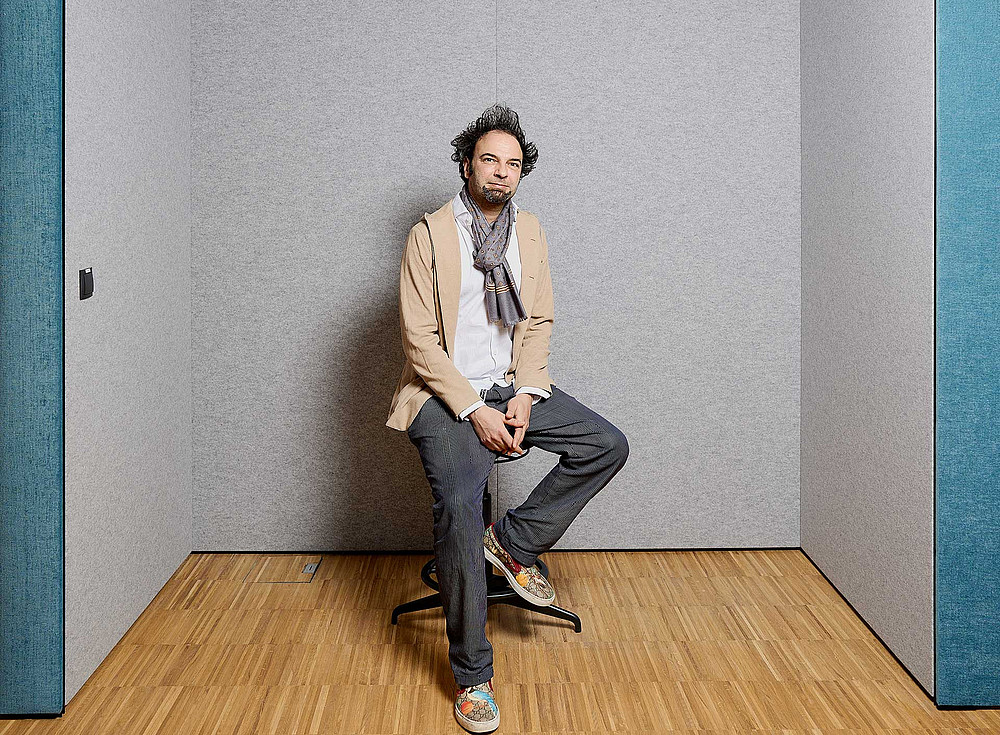
Markus Kneer deals with ethical issues relating to artificial intelligence. Photo: University of Graz/wildundwunderbar


created by Roman Vilgut

Related news

Superti-Furga will becomefounding director of the CORI Institute in Graz

The Austrian Academy of Sciences (ÖAW) is establishing a new flagship centre for research into metabolic diseases in collaboration with the three universities in Graz. This innovative research approach combines mathematics and experimental biology with artificial intelligence

A match for life

Stem cell donations save lives. However, the only way to determine who is ultimately compatible with whom is through a testing process. Pharmacist Marion Mußbacher explains the mechanisms behind this. On 6 May 2026, the ÖH and the charity “Geben für Leben” are calling for people to come forward for typing at the University of Graz.

Mild Research Night: Around 750 visitors travelled around the world at the university

Lovely weather and a wide range of research topics drew visitors to the University of Graz last Friday. Highlights included a journey around the globe in eight stops, a ‘speed-dating’ session with books, insights into Alfred Wegener’s Greenland expedition, and guided tours of the democracy exhibition at the UniGraz@Museum.

Career Booster: How the Research Careers Campus supports researchers

They are innovative, creative and productive – researchers who have not yet been appointed to a professorship make a massive contribution to a university’s research output. To provide them with even better support on their career path, the University of Graz has established the Research Careers Campus. The official launch took place on 22 April 2026 with a ‘festival’.

Begin of page section:
Additional information:

University of Graz
Universitaetsplatz 3
8010 Graz
Austria
  • Contact
  • Web Editors
  • Moodle
  • UNIGRAZonline
  • Imprint
  • Data Protection Declaration
  • Accessibility Declaration
Weatherstation
Uni Graz

End of this page section. Go to overview of page sections

End of this page section. Go to overview of page sections

Begin of page section:

End of this page section. Go to overview of page sections